
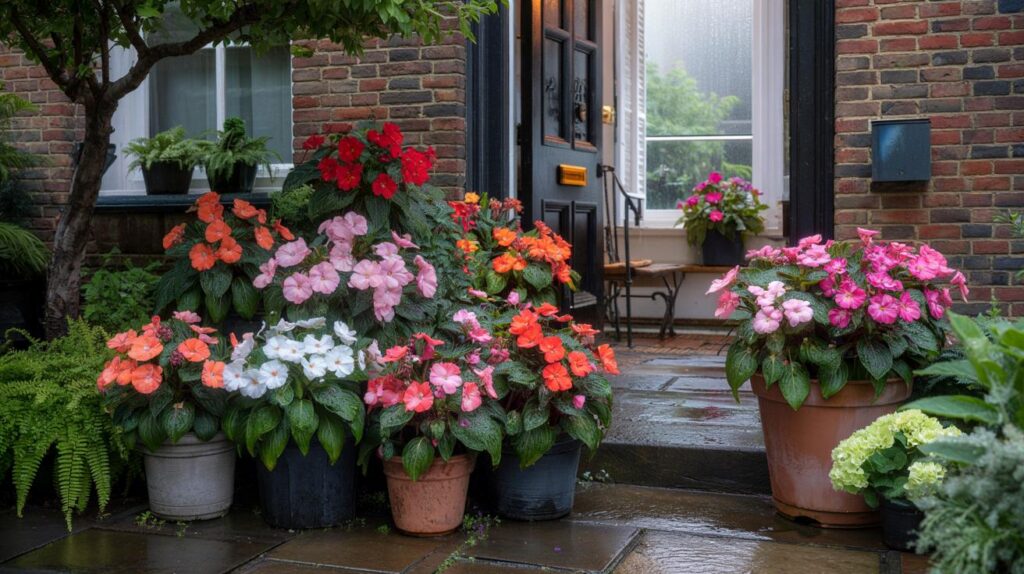
Rising bills, shrinking plots and soggy forecasts haven’t stopped households chasing colour from January to December. The answer sits in deep shade.
Across patios, balconies and north-facing windowsills, one modest plant is quietly rewriting the rules on year-round flowers in Britain. It smiles through drizzle, shrugs off dim light, and keeps going when others clock off for winter.
What makes impatiens a 12-month worker
Impatiens—often called busy Lizzies—flower for months on end in bright shade and mild conditions. Unlike sun-hungry bedding, they keep producing buds when temperatures hover around 10°C. That single figure matters. Keep them above it and you’ll see colour whatever the calendar says. Let frost touch them and they stop.
For continuous blooms, treat 10°C as the red line, and shade as a friend rather than a compromise.
They come in reds, corals, pinks, apricots, whites and bicolours. Thick, succulent stems handle wind on exposed balconies. Pet-safe planting areas cope better too, as the plants bounce back after the odd paw or football.
Where they thrive (and why shade wins)
Impatiens prefer dappled light under trees, beside fences, or on the east or north side of buildings. They perform in spots where geraniums sulk. Indoors, they suit bright rooms without harsh midday sun.
- Light: bright shade or filtered sun, 4–6 hours is perfect.
- Temperature: steady 12–21°C gives best flowering; absolute minimum 10°C.
- Humidity: average home levels work; avoid hot, dry radiators.
Containers suit them well. A 25–30 cm pot supports a dense mound for a doorway or table. Window boxes fill fast, softening brick and balustrade. In beds, they knit around hostas, ferns and hydrangeas to brighten dark corners.
Planting and potting recipe
They like moist, fertile soil that drains freely. Waterlogging stops roots breathing. Dry dust starves buds. Address both with this simple mix.
Use 2 cm of gravel or clay beads for drainage, then a peat-free compost enriched with slow-release feed.
Step-by-step
- Pot layer: 2 cm of pebbles or clay beads.
- Compost: peat-free, with 20–30% fine bark or perlite for airflow.
- Feed: slow-release granules at label rate, then liquid feed every 2–3 weeks in season.
- Planting depth: set crowns level with the compost surface; do not bury stems.
- Spacing in beds: 25–30 cm apart for a closed canopy in 6–8 weeks.
Watering and feeding by numbers
Consistency produces more buds than sporadic soakings. Aim for even moisture, never sodden compost.
- Check daily in hot spells; water when the top 2 cm feel dry.
- Typical drink: 200–300 ml per 15 cm pot; 800–1000 ml per 30 cm pot.
- Fertiliser: balanced liquid (e.g., 6-6-6 or 8-8-8) every 14 days from March to October.
- Deadheading: usually unnecessary; plants self-shed spent petals.
- Pinching: nip soft tips once in spring to promote branching.
Cold snaps and how to ride them
Outdoor plants falter below 10°C. Move pots to a porch, conservatory or bright hallway when a chill arrives. Gardeners in coastal or city microclimates sometimes keep flowers outdoors all winter, but most of Britain needs shelter.
| Month | Task | Target |
|---|---|---|
| Jan–Feb | Keep frost-free indoors | 12–18°C, light watering |
| Mar | Resume feeding | Liquid feed every 2 weeks |
| Apr–May | Harden off and plant out | Nights consistently above 10°C |
| Jun–Aug | Water and trim lightly | Even moisture, compact shape |
| Sep–Oct | Take cuttings, pot backups | 7–10 days to root in water |
| Nov–Dec | Bring pots back inside | Bright shade, minimal feed |
Varieties to look for in shops
Modern breeding has broadened colours and improved health. You’ll find packs from around £3 in spring, or larger plants at £5–£8.
- Impatiens walleriana (busy Lizzie): classic bedding form; thrives in shade; many mildew‑resistant lines.
- New Guinea impatiens (Impatiens hawkeri): larger leaves and flowers; handles brighter spots; premium price.
- Beacon series: raised for downy mildew tolerance; wide colour range.
- Imara series: strong garden performance and disease resistance for beds and boxes.
Choose mildew‑resistant series—Beacon or Imara—if you’ve had issues with busy Lizzies in past seasons.
Common setbacks and quick fixes
Leaves yellowing
Likely overwatering or poor drainage. Lift the plant, add a drainage layer, and water only when the top 2 cm are dry.
Scorched petals
Too much direct sun. Shift to bright shade or filter midday light with voile or a trellis.
Droop in the afternoon
Heat stress. Water in the morning so roots face the day hydrated. Mulch pots with fine bark to slow evaporation.
Downy mildew history
If you lost plants in prior years, avoid reusing infected compost. Plant resistant series and keep foliage dry by watering at the base.
How to multiply plants for free
Take 7–10 cm tip cuttings from healthy shoots. Strip lower leaves, place in water or damp seed compost, and keep warm and bright. Roots form in 7–10 days. Pot on after a fortnight. A single mother plant can supply a dozen new ones before summer.
What “year-round” really means for you
In a frost‑free porch or heated conservatory, impatiens will flower through winter with modest light and regular watering. On sheltered London balconies or coastal patios with winter lows near 10–12°C, they often keep going, pausing only during cold snaps. In colder districts, bring containers indoors from November to March to maintain blooms, then return them outside in spring.
Costs, care time and realistic gains
- Starter cost: from £3 for a 6‑pack of small plants; £1.50–£3 for seeds; £5–£8 for established 12 cm pots.
- Time: 5–10 minutes per container twice a week for watering and checks.
- Payoff: flowers for up to 50 weeks a year in frost‑free spots, dense colour in deep shade, and minimal deadheading.
Extra ideas to stretch colour and resilience
Pair impatiens with evergreen structure so winter displays don’t look flat: dwarf ferns, heucheras and small ivy offer year‑round leaves while blooms carry the colour. Slip a few solar path lights among pots to lift evening displays when daylight fades early.
Try a micro‑hedge of impatiens along a front step for curb appeal. Five 3‑litre pots spaced 30 cm apart create an instant ribbon of colour. In September, lift two of them indoors to guarantee winter flowers while the rest keep the path bright until the first cold night.



Never thought shade could look this good—£3? I’ll try the Beacon series on my north-facing sill. Will they really keep blooming if I hold nights above 10°C? Thanks for the crystal-clear care tips! 🙂
Isn’t this setting us up for heartbreak when a cold snap hits? I lost busy Lizzies to downy mildew before. ‘50 weeks’ of flowers feels… optimistic without a porch or conservatory.