
Cold mornings, weak pressure, and rising bills push households to rethink bathroom upkeep, hunting quick fixes that don’t cost the earth.
As autumn bites, more of us want a hotter, fuller spray without swapping kit or splashing cash. A simple kitchen staple, heated correctly, now leads the charge against the grit and grime throttling your morning routine.
Why limescale strangles your shower
Hard water leaves calcium carbonate behind wherever it flows. Showerheads take the brunt because narrow jets slow water and trap particles. Over weeks, crystals grow, block nozzles, and skew spray patterns. You turn the tap. Pressure feels wrong. Needles of water shoot sideways. The centre plume weakens.
Tell-tale signs you can spot in a minute
- Chalky white crust around nozzles and the faceplate.
- Jets that spray at odd angles or sputter.
- Flow that drops from a typical 8–10 L/min to a feeble trickle.
- Musty smells from biofilm building inside the head.
Most homes in England live with hard or very hard water. That means frequent build-up and faster wear. Ignore it and you risk poor hygiene, ugly staining, and premature failure of the head and its seals.
A blocked showerhead is rarely broken. It is coated. Dissolve the coating and the pressure returns.
The hot white vinegar method that melts deposits
White vinegar is a weak acid that reacts with limescale. Heat speeds the reaction, so you need less scrubbing and no harsh abrasives. The acid lifts mineral deposits and loosens organic gunk. Chrome and many plastics tolerate it well if you avoid prolonged soaking of delicate finishes.
What you need and the timings that work
- 1 litre white vinegar (often 35p–£1 in supermarkets)
- A bowl or a sturdy plastic bag and an elastic band
- Very warm water from the tap or kettle-cooled
- An old soft toothbrush
- A microfibre cloth
How to do it in under an hour:
- Twist off the showerhead if you can. If not, use the bag method described below.
- Warm the vinegar. Do not boil it. Aim for hand-hot, roughly 40–50°C.
- Mix three parts vinegar with one part hot water in a bowl.
- Submerge the head fully for 30–60 minutes. Go longer for heavy crusting.
- Brush the nozzles lightly to lift remaining grit. Many modern silicone jets release scale with a quick rub.
- Rinse well, then run hot water through the head for 30 seconds.
- Dry the face with a cloth to slow fresh deposits.
A 30–60 minute soak in hot white vinegar dissolves limescale without scrubbing or scratching chrome.
No need to remove the head: the bag soak hack
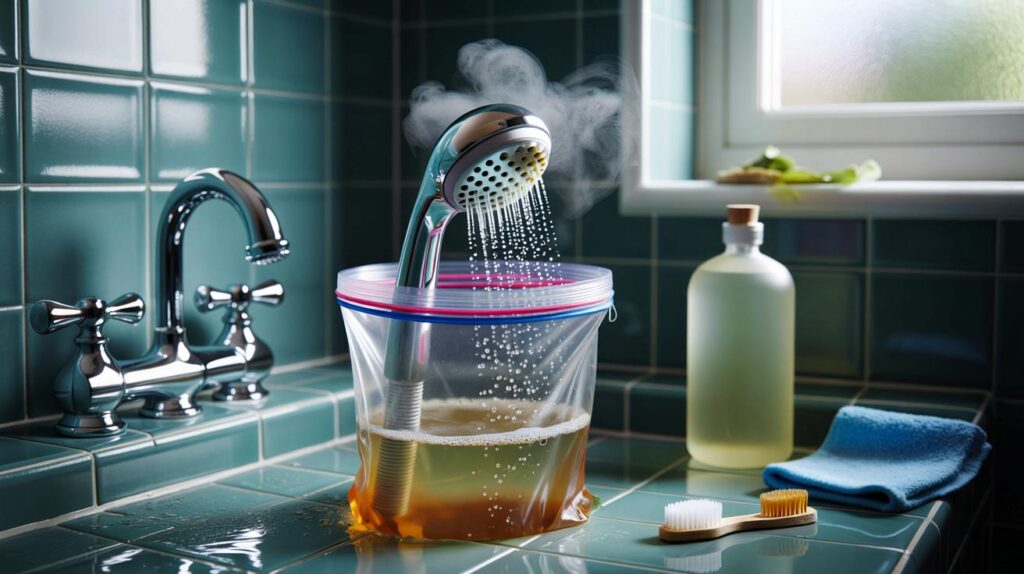
Short on tools or time? Fill a thick plastic bag with warm vinegar and slip it over the head while it stays on the hose or arm. Secure it with an elastic band so the faceplate sits under the liquid. Leave it for 20–40 minutes. Remove the bag, brush the jets, then run the shower hot for a minute. Wipe dry. This quick job before bed keeps morning pressure crisp.
Make it last: small habits that keep jets clear
- After the last shower of the day, switch to the hottest water and blast for 15 seconds to flush residue.
- Wipe the faceplate and taps with a dry cloth to break the cycle of wetting and crusting.
- Repeat a 20-minute vinegar bag soak every month in very hard water areas.
- Nudge silicone nozzles weekly with your thumb to dislodge early crystals.
Twenty minutes once a month prevents biofilm, curbs odours and keeps a steady 8–10 L/min flow in many homes.
What about other cleaners? The trade-offs
| Method | Typical cost | Soak time | Finish safety | Notes |
|---|---|---|---|---|
| Hot white vinegar | £0.35–£1 per litre | 20–60 min | Good on chrome/plastic | Avoid soaking natural stone, rinse seals well |
| Citric acid solution (5–10%) | £2–£4 per 500 g | 15–45 min | Very good | Odourless, handy if you dislike vinegar smell |
| Commercial descaler | £3–£6 per bottle | 5–20 min | Varies | Check label; some formulas are harsher on plating |
Health angle most people miss
Bacteria can settle inside a clogged head and form a slimy biofilm. Warm, standing water feeds that growth. Clear jets reduce water stagnation and discourage microbes. Always run the shower hot for 30 seconds after reassembly. Keep bathroom ventilation working so surfaces dry faster.
Compatibility and safety notes
- Do not mix vinegar with bleach or chlorine-based cleaners. That releases toxic gas.
- Keep acids off natural stone tiles or porous grout. Mask surrounding surfaces or remove the head first.
- Test vintage, gold, or oil-rubbed finishes on a hidden edge. Short soaks help protect delicate plating.
- If your head includes a replaceable mesh filter, rinse it separately to clear grit.
Why heat matters: the quick chemistry
Calcium carbonate reacts with acetic acid to form soluble salts and carbon dioxide. Warmth speeds the reaction and softens residue. That is why a hand-hot bath of vinegar beats cold soaking and scrubbing. Keep the liquid warm, not boiling, to protect seals.
What to do when cleaning does not help
If flow remains low after descaling, check the hose for kinks, the isolation valve for partial closure, or the shower’s eco restrictor. Aerating heads can trap grit in tiny filters; pop them out and rinse. Electric showers include inlet filters that may need a clean. If you rely on a combi boiler, verify hot water pressure at a kitchen tap to rule out a broader issue.
Costs, savings and a quick reality check
Vinegar costs pennies per treatment and cuts chemical use. Many households report their flow bouncing back from a sluggish 3–5 L/min to a comfortable 8–10 L/min after a single soak. That means warmer showers at the same mixer setting, so you spend less time running water to compensate for poor spray. The method also protects seals by avoiding abrasive pads that scratch chrome and invite faster build-up.
Going further: prevention for hard-water postcodes
Fit a simple inline limescale filter on the hose for a modest upfront cost and easy annual swaps. Consider a whole-house softener if scaling wrecks kettles, taps and heating; it reduces soap use and protects appliances, though it needs salt and periodic servicing. Magnetic gadgets promise miracles, but independent tests show mixed results. Regular hot-vinegar maintenance still wins for price and reliability.
A quick monthly routine you can stick to
Pick a date, say the first Sunday. Bag soak for 20 minutes. Rub the nozzles. Rinse, then blast hot water. Wipe the plate. Mark it in your phone. That rhythm keeps jets straight, odours away, and mornings calmer, without chemicals that sting the nose or the wallet.



Tried the hand-hot vinegar soak tonight—30 mins—and my presssure bounced from dribble to decent. Cost me 49p and five wipes. Cheers, this actually works!
Does heating the vinegar actually matter or is that just placebo? Any numbers on reaction speed vs cold? Curious before I start boiling kettles.