
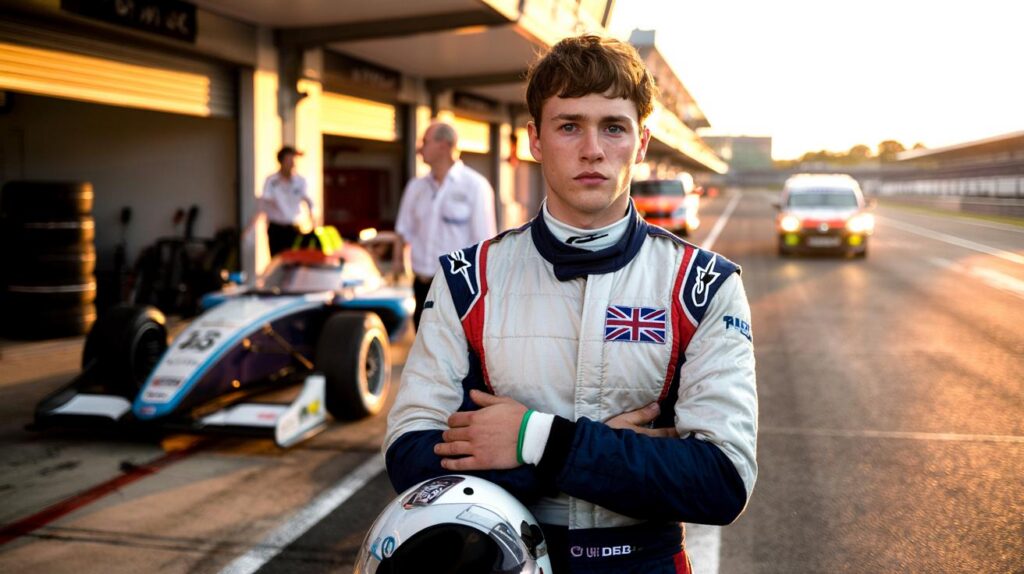
A title chase stalls, a paddock holds its breath, and a teenager faces a different kind of fight than wheel-to-wheel.
The British single-seater ladder has lost one of its brightest young names for now, as 18-year-old William Macintyre steps away from competition to begin treatment for cancers found in his brain and lungs. The GB3 front-runner confirmed the news to supporters, adding that specialists at Milton Keynes Hospital have set out a plan and that his goal remains to return to the cockpit when cleared.
A sudden halt to a promising season
Macintyre entered the 2025 GB3 campaign off the back of a strong rookie year, where he placed fifth overall with three victories and six podiums. That form carried into this season. After six races, he sat fifth again, only 11 points behind fellow Briton Deagen Fairclough. The title fight is currently led by Alex Ninovic, who has racked up six wins already.
Diagnosed with cancers in the brain and lungs, the 18-year-old has paused his season while a hospital-led treatment plan begins.
Elite Motorsport, his GB3 team, signalled full backing. Their statement highlighted Macintyre’s resolve and confirmed that support structures are in place for him and his family. The team framed this as a detour rather than an end, insisting his seat in their community remains.
Support across the paddock
Messages from peers arrived quickly. Young drivers chasing the same dream—Jak Crawford, John Bennett and Sebastian Montoya among them—sent public words of encouragement. Within junior single-seaters, athletes often share training camps, simulators and sponsors, producing a tight-knit environment that rallies when a driver faces a personal crisis.
Rivals on track, allies off it: fellow prospects voiced solidarity, reminding fans that talent and character are not mutually exclusive.
That solidarity extends beyond social media. Teams routinely adjust testing schedules, share simulator time, and coordinate welfare checks when a driver steps back. It ensures an athlete does not feel isolated while undergoing treatment or rehabilitation.
Where the GB3 fight stands
GB3 serves as Britain’s premier domestic step before FIA Formula 3. The machinery is quick, physical and unforgiving, with short weekends that punish errors. Macintyre’s absence reshapes the midfield and opens space for others to claim points.
- Six races completed in 2025.
- Macintyre currently fifth, 11 points off Fairclough.
- Championship leader Alex Ninovic has six wins.
- Elite Motorsport commit resources to their sidelined driver.
Career snapshot so far
| Season | Series | Standing | Wins | Podiums | Notes |
|---|---|---|---|---|---|
| 2024 | GB3 Championship | 5th overall | 3 | 6 | Rookie campaign, standout pace and racecraft |
| 2025 | GB3 Championship | 5th after 6 races | — | — | 11 points behind Deagen Fairclough; Alex Ninovic leads |
What dual brain and lung cancer means for treatment
Combined diagnoses like this lead specialists to tailor care very precisely. That plan can include a mix of surgery, radiotherapy, chemotherapy and targeted drugs, depending on the exact tumour types and locations. Hospital teams also balance anti-cancer therapy with neurocognitive protection, respiratory health and nutrition.
Racing drivers often arrive with high baseline fitness, which can help tolerance to therapy and recovery. Fatigue, changes to concentration, and reduced lung capacity can still follow certain treatments. That is why medical staff set milestones based on scans, bloodwork and neurological checks rather than fixed dates.
What a hospital-led plan typically covers
- Precise diagnosis confirmed by imaging and pathology.
- Sequencing of treatments to manage both brain and lung disease safely.
- Medication to handle symptoms such as headaches, nausea or breathlessness.
- Physiotherapy and light conditioning to preserve mobility and strength.
- Neurocognitive assessments to track memory, reaction time and focus.
- Regular reviews to refine the plan as the body responds.
Return-to-race considerations
No governing body sets a single rule for post-cancer return across all junior series. Instead, medical delegates and team doctors draw on fitness tests, imaging and neurocognitive screening. A driver needs to manage heavy braking loads, spikes in heart rate, and sustained heat stress. They also must demonstrate dependable reflexes and decision-making under pressure.
Some professional drivers have returned to elite competition after major illness by following staged goals: light cardio, simulator sessions with motion platforms, private test mileage, and then race weekends. The door stays open, but the timeline belongs to health, not the calendar.
A teenager’s resolve meets a community’s care
Macintyre’s message to fans stressed determination and patience. He intends to be back in a racing seat when doctors agree it is safe. Elite Motorsport have echoed that sentiment, pledging continuity and care. It underlines a truth about junior racing that you rarely see on timing screens: teams become families when careers hit turbulence.
Pause the lap times, keep the faith: the target is a clean bill of health before any green flag.
What you can do as a supporter
Supporters often want to act, yet the most useful steps are simple and respectful. They prioritise wellbeing and avoid pressure.
- Send messages of encouragement without asking for medical details.
- Celebrate past highlights to keep morale high during treatment.
- Be patient with silence; recovery brings good days and tough days.
- Follow team updates rather than rumours to stay accurate.
Context for GB3 fans tracking the season
GB3 often propels drivers into FIA F3 or high-profile endurance programmes. A points gap of 11 after six races remains manageable in a normal season, especially with reverse-grid opportunities and variable British weather. With Macintyre stepping aside, the chase for podiums becomes a chance for reserve and part-time drivers to learn circuits, set references in qualifying, and prove they can manage tyre temperatures over a short but intense stint.
If you follow the series, this is a moment to look at process as much as results. Set-up windows on British tracks can be narrow. Drivers who adapt quickly to gusting winds at places like Silverstone and Snetterton often bank surprise results. The learning curve is steep, and openings created by a reshuffled grid can change careers.
Staying grounded while looking ahead
Cancer care moves in measured steps. Scan intervals, treatment cycles and rest periods dictate the rhythm. Racing can wait. For Macintyre, the numbers that matter most now sit on hospital charts, not timing screens. When those turn the right way, the helmet and gloves will follow. Until then, the paddock’s messages say enough: take your time, stay strong, and come back when it feels right.



Health over lap times—stay strong, Will! Elite have your back and so do we 🙂
How does medical clearance work here—do GB3 delegates follow FIA F3 standards or purely team doctor + imaging sign‑off?