
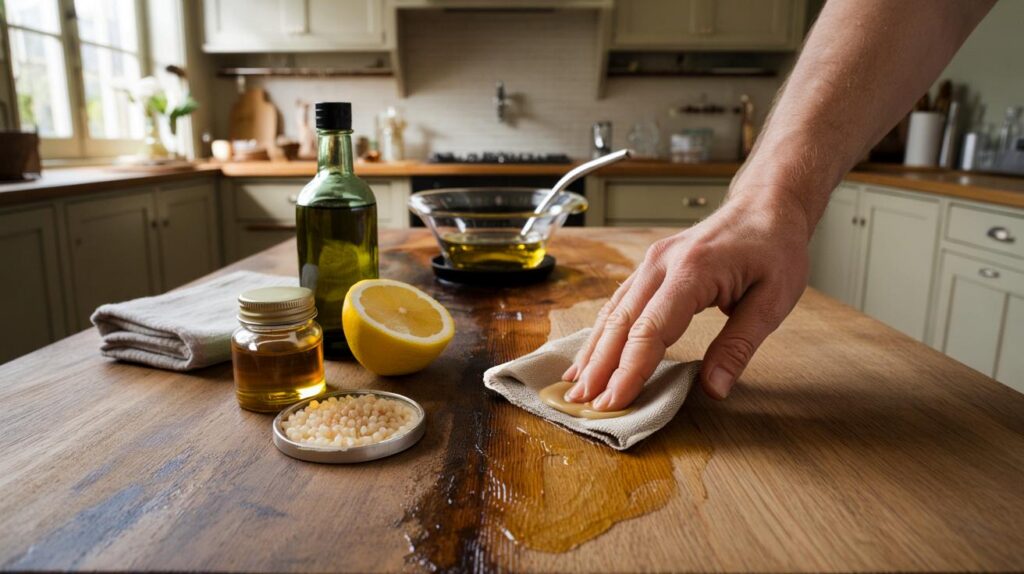
A thrifty, citrus-scented polish is slipping back into British homes, promising calmer living rooms and warmer, richer timber.
A blend of beeswax, olive oil and lemon is gaining traction among householders who want gentler care for oak, pine and beech. The recipe is bluntly simple, quick to mix, and cheap per jar. It also avoids silicone residues that can make later repairs harder. Here is how the method works, why it’s resurging, and where to use it without regrets.
Why a 3-ingredient polish is back
Cabinetmakers relied on natural waxes for centuries because they nourish wood fibres and leave a soft, hand-rubbed sheen. Many modern sprays rely on petroleum solvents and silicone to create fast shine. That shine can feel slick, but it often sits on top and can complicate refinishing. A kitchen-cupboard approach comes with fewer unknowns and a familiar scent.
The renewed interest ties to cost-of-living pressures and a push toward low-odour cleaning. A small batch covers multiple side tables and a bookcase. The finish feels warm rather than glossy, and it enhances the grain rather than masking it.
Three ingredients, nine minutes, about £1.50 per 100 ml, and no silicone film to fight later.
What you need
- 35 g beeswax pellets or shavings
- 70 ml extra-virgin olive oil
- 5–10 drops lemon or sweet orange essential oil
- Heatproof bowl over a pan (bain-marie)
- A clean glass jar with a lid
- Cotton cloths or microfibre towels
Vegan swap: use carnauba wax in the same weight. It is harder, so buff a little longer for the same glow.
How to make it in 9 minutes
| Step | Time | Tip |
|---|---|---|
| Wax melt | 5–7 min | Keep below 82°C to prevent scorching |
| Blend with oil | 1–2 min | Stir until uniformly translucent |
| Set in jar | 30–40 min | Lid on only after it cools to avoid condensation |
Application and finish
Prepare the surface
Dust first. If the wood feels rough, sand very lightly with 240-grit paper along the grain. Wipe away the powder. Test the balm on a hidden corner, especially on pale woods that can deepen a shade.
Build thin coats
Scoop a pea-sized amount onto a soft cloth. Work in small circles, then follow the grain to even the film. Leave the surface for 15 minutes. Buff with a clean cloth until the drag turns to glide. Repeat up to three times for busy tabletops and edges.
Thin coats avoid sticky patches. Aim for three light passes with 15-minute gaps and a brisk final buff.
What to expect
Grain lines sharpen. Dings look softer. The touch feels silky rather than slippery. A gentle citrus-beeswax scent fades within a day. Most pieces benefit from a refresh every 8–12 weeks; kitchen worktops or bannisters may want a monthly pass.
How it works on different woods
- Oak: the balm sits well in open grain and can mute hairline scratches.
- Pine: expect slight darkening; knots gain a mellow glow.
- Beech and maple: sheen rises quickly; use extra-thin coats to keep the colour even.
- Veneer: go gentle and keep moisture low around edges to prevent lift.
Safety and pitfalls
- Heat management: use a bain-marie, not direct heat. Keep children away from the hob during melting.
- Allergies: patch-test on skin if you are sensitive to citrus oils. Skip the essential oil for chopping boards.
- Finish compatibility: do not apply over sticky silicone sprays or uncured varnish. Clean first or wait until fully cured.
- Floors: avoid. It can create a slip hazard on treads and tiles.
No solvents, no microplastics, and an easy path to later repairs if you choose to sand and refinish.
Cost comparison and lifespan
| Polish | Approx. cost per 100 ml | Contents | Typical shelf life |
|---|---|---|---|
| Homemade beeswax balm | ~£1.50 | Beeswax, olive oil, citrus drops | 12 months in a cool cupboard |
| Mid-range branded spray | £3–£5 | Water/solvent, fragrance, silicone | 12–24 months |
Figures vary by retailer, but the homemade jar typically undercuts shop-bought options while offering a denser, buffable finish. The balm keeps best in an airtight jar away from sunlight. If it hardens in winter, warm the jar in your hands and stir.
Beyond furniture
Chopping boards, wooden spoons and salad bowls respond well to a food-safe variant. Leave out the citrus oil, apply sparingly, and buff until the board feels dry to the touch. Utensils regain a smooth surface that resists water spots. Repeat more often if they visit the sink daily.
Leather straps and old zips can also benefit from a pinhead of wax for glide. Rub a trace on a jolting drawer runner to quiet the scrape. On guitar fretboards, use a whisper only, then wipe thoroughly.
Care schedule that works
Plan a light wax every two months for living-room pieces. Dining tables may need an extra buff after parties. If a water ring appears, try warming the mark with a hairdryer on low and a soft cloth, then apply a fresh fingertip of balm to even the sheen. Deep dents still need steam and sanding, but the wax can soften sharp edges and make the damage less stark.
When to choose another finish
High-traffic counters and bathroom shelves face steam, soap and spills. A hardwax oil or varnish often wins there. Waxes shine in living spaces, musical instruments, drawer interiors and decorative panels. Keep the balm for these uses and you will see steady results with minimal effort.



I’ve used commercial sprays and regreted the silicone when refinishing. This beeswax + olive oil + lemon mix sounds like a sensible throwback. Any tips for keeping the balm from getting too hard in winter besides warming the jar? Also, for maple/beech you suggest extra-thin coats—does that mean wipe-on, wipe-off in under a minute? Great breakdown on the bain-marie and temp (below 82°C). This could actually save me close to £120 across our bookcases this year.
Genuine question: won’t olive oil eventually go rancid and smell? I’ve heard mixed advice and dont want a tacky film that grabs dust. Would mineral oil be a safer swap, or does it mess with the sheen? Also, how do you clean old silicone residue before applying this?