
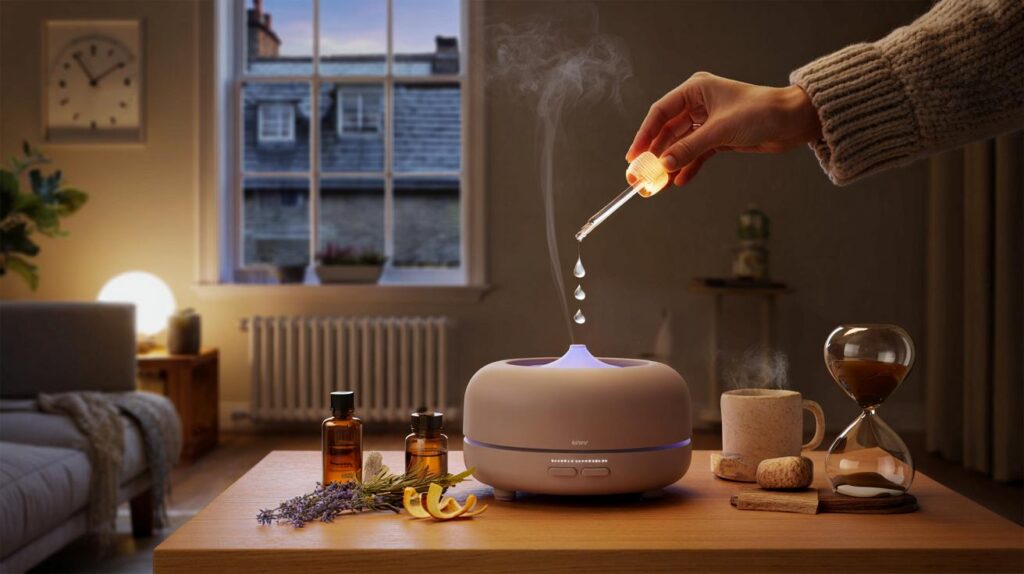
As nights draw in, a quiet home habit takes root. Soft light, low voices, and a scent that steadies the room.
Across the country, more households now switch on a diffuser at dusk. Many describe a swift, noticeable shift in mood, with anxiety easing and conversations slowing. Shops stack more blends on end caps. Social feeds hum with routines and recipes. The appeal is simple: a small bottle, a few drops, and a calmer evening.
What’s behind the new evening scent ritual
From décor item to nightly wind‑down
This started as a style choice. A glass vessel on a sideboard. A wisp of mist. It now reads as self‑care. People time their diffuser to start as the sky fades. The habit sits alongside tea, a book, or a short stretch. It sets the tone for the night. Scents frame space and help mark the switch from work to rest.
Those drawn to natural blends speak about control. They can dial intensity up or down, choose oil types, and decide when to stop. The effect feels personal, not imposed. That sense of agency matters at the end of a long day.
Three numbers shape many routines: 3 drops, 20–30 minutes, lights low. Small input, clear signal to the brain.
The science in your nose
How aroma nudges mood in minutes
Smell links straight to the limbic system. That network steers memory, threat response, and reward. A familiar scent can ease the body towards safety mode. Muscles let go. Breathing deepens. Thoughts move less quickly.
Lavender brings a floral, herbal note that many associate with rest. Citrus oils feel bright and sunny. Wood notes anchor a room and slow the pace. None of this needs to be overpowering. Gentle diffusion often works best.
Lavender’s calm, citrus lift: when to use what
A simple evening playbook
Lavender remains the first pick for night. It pairs well with a low lamp and a blanket. Citrus earns a place earlier, when energy still runs high. A brief citrus burst can shake off a grey mood without derailing bedtime. Later, switch to softer notes.
- At 7:30pm: 2 drops sweet orange to freshen the room and lift chatter.
- At 8:15pm: 3 drops lavender for quiet focus and gentle unwind.
- After 9pm: pause diffusion to keep air light before sleep.
| Oil | Key note | Best window | Suggested dose |
|---|---|---|---|
| Lavender (fine) | Floral, herbaceous | Late evening | 2–3 drops |
| Sweet orange | Juicy, sweet | Early evening | 1–2 drops |
| Lemon | Clean, zesty | Early evening | 1–2 drops |
| Grapefruit | Bright, tart | Social hours | 1–2 drops |
| Cedarwood | Dry, woody | Late evening | 1 drop with lavender |
Blends people rate at home
Two‑oil mixes that keep air clear
Keep blends lean. You want light scent, not a fog. A measured mix carries better and feels more intentional.
- Soft calm: 2 drops lavender + 1 drop cedarwood.
- Bright then slow: 1 drop lemon + 2 drops lavender, start at 8pm.
- Cosy chat: 1 drop sweet orange + 1 drop grapefruit + 1 drop lavender.
Less is more. A room should smell clean with a hint of character, not like a duty‑free aisle.
Safety checks and common mistakes
Quality, ventilation, timing
Choose pure, unadulterated oils. Read the label. Keep bottles away from heat and light. Turn the unit off after 30 minutes. Open a window for a few minutes if the room feels heavy.
Pets and small children need extra care. Some oils do not suit them. People with asthma or scent sensitivity should test one drop for five minutes. If a headache appears, stop and ventilate. Do not run a diffuser through the night. Do not point mist at your face.
- Start small: 1–2 drops, then adjust.
- Leave gaps: 20–30 minutes on, then off.
- Avoid stacking multiple candles, sprays, and oils at once.
- Skip diffusion right before a baby’s bedtime.
What changes when a scent sets the scene
Before and after snapshots
People describe early evenings that felt scratchy and flat. Phones stayed on. Work talk leaked into the lounge. After adding a short diffusion window, they report calmer chat, fewer screens, and a softer pace. The signal is subtle yet clear: the day is closing.
Guests notice too. A bright citrus in the first hour keeps the room sociable. Later, a shift to lavender coaxes voices down. This rhythm helps families and flatmates find common ground.
Build your evening signature
Routines you can tailor without fuss
Think of your scent as a soundtrack. Choose a lead note, add one support, and leave space. Rotate by season. If autumn brings heavy air, lean on orange and pine. When winter bites, add a hint of sandalwood for warmth. In spring, try a floral trace at low dose.
Keep a simple log for a week. Note the time, the oil, and how the room felt. You will spot which mixes steady you fastest. That record helps you set a repeatable plan.
Costs, kit, and a quick calculation
How much you actually spend per night
A 10 ml bottle often holds around 200 drops. If a bottle costs £10, each drop sits at about 5p. A three‑drop session lands near 15p. An ultrasonic diffuser sips power; a 30‑minute run usually costs less than a penny on a standard tariff. The habit scales well, even on tight budgets.
Two device types sit on shelves. Ultrasonic models use water and stay quiet. Nebulisers use air and deliver a stronger punch with no water. For small rooms and shared spaces, ultrasonic units feel gentler. For large rooms, short bursts from a nebuliser can carry well.
If you want to widen the effect
Breath, light, and timing cues
Pair scent with breath patterns. Try four seconds in, six seconds out, for three minutes. Dim lamps below eye level to cut glare. Set your phone to greyscale at 8pm. These cues stack. Together they tell your body that the day is easing off.
Add a weekend test. Run your routine at the same time across two evenings. Compare sleep and mood on the next mornings. This small trial helps you judge if 3 drops at 8pm moves the needle for you.



Is there any solid evidence behind the “3 drops, 20 minutes” routine? Curious if there are RCTs or if it’s mostly anecdotal. Not knocking it—just trying to seperate calm-from-placebo.