
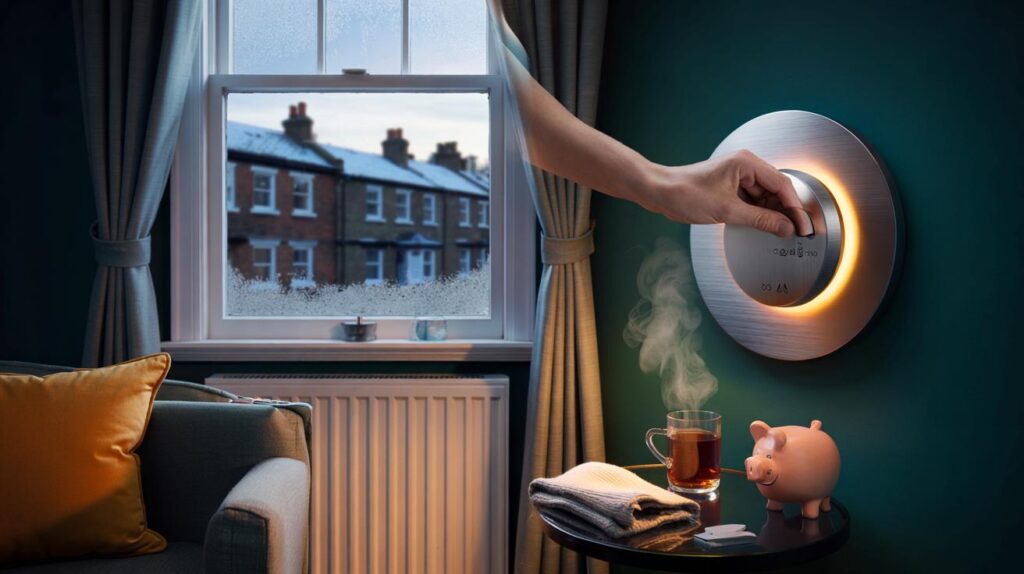
When cold bites and bills loom, small heating habits matter more than you think, especially when leaving an empty home.
Millions leave the house and twist the thermostat to off, chasing quick savings. The plan feels clever, yet the comeback costs can sting. A modest setback beats a hard stop, and the difference shows up on your meter and in your rooms.
Why switching off feels smart
Energy prices have been unpredictable. Households look for easy wins. Turning everything off seems the simplest action. No people at home means no heat needed, or so the logic goes. The snag is how buildings behave when temperatures drop. Walls cool, floors chill, and the air gets damp. Restarting from cold forces your system to work harder than holding a mild baseline.
Cutting heat completely often triggers a costly “recovery sprint”. A steady 16°c baseline avoids that spike and calms your bill.
What the physics says
Homes lose heat through walls, windows, roofs and draughts. The loss rate rises as the temperature difference grows. When you switch off, indoors drifts towards outdoor temperatures. Fabric cools and moisture can condense on chilly surfaces.
When you return, the heating must warm air and heavy materials. That is thermal mass at work. Radiators or a boiler deliver a burst of energy to lift the building back to comfort. That burst pushes short-term consumption higher than a steady, lower setting would have done.
Engineers call the better approach a “setback”. You lower, rather than kill, the heat. Real-world tests on leaky homes often show a setback using less energy across the day than on–off cycling. Every degree of reduction typically trims heat demand by roughly 6–10 percent during the setback period.
The setback sweet spot: 3–4°c
Aim to drop your setpoint by 3–4°c when you leave for work or head out for the evening. Keep lived-in rooms near 16–17°c while away. Hold bedrooms around 14–16°c if unoccupied. That range preserves comfort on return and reduces the recovery effort.
| Situation | Recommended setpoint while away | Typical saving band |
|---|---|---|
| Out for 2–6 hours | 16–17°c | 4–8 percent of heating used in that period |
| Workday absence (8–10 hours) | 15–16°c | 6–12 percent of daily heating |
| Overnight | 15–16°c living rooms, 14–16°c bedrooms | 5–10 percent across the night |
Real money: quick bill maths
Take a typical gas-heated semi with annual space heating of £900. Lowering by 3°c for 10 hours per weekday saves roughly 9–15 percent during those hours. That translates to £45–£75 across a heating season, before any weekend adjustments.
Add a weekend routine and school runs, and savings can nudge £80–£120. A heat-pump home with good controls still benefits, though the setback should be smaller. Gas and electricity prices vary, so your meter provides the clearest verdict.
As a rule of thumb, each 1°c reduction while you are away can trim 6–10 percent of heat used in that window.
The hidden risks of letting rooms go cold
Cold surfaces meet moist indoor air and create condensation. That moisture feeds mould and damages paint. Rooms dropped below 14–15°c for hours feel clammy on return. Pipes in voids and lofts face a higher freezing risk during snaps of frost. Elderly or very young occupants need warmer baselines than healthy adults.
Health comfort bands to keep in mind
- Most healthy adults feel comfortable at 18–20°c when at rest.
- Vulnerable people often need 20–21°c in main rooms.
- Bedrooms can sit cooler, yet a damp chill harms sleep and lungs.
Gas boiler, heat pump, or storage heaters: set your strategy
If you use a gas or oil boiler
A 3–4°c setback works well. Use thermostatic radiator valves to close spare rooms part-way. Schedule heating to lift the setpoint 30–45 minutes before you return.
If you use a heat pump
Heat pumps run best with steady low flow temperatures. Choose a small setback of 1–2°c. Larger drops can lengthen recovery and reduce efficiency. Keep doors open to let gentle heat circulate.
If you use electric storage heaters
Do not switch off charge unless the next day is warm. Reduce the input dial slightly if you will be out. Use the output dial only when you need heat now, not as a master control.
Do this before you step out
- Turn the main thermostat down by 3–4°c rather than off.
- Close curtains and blinds at dusk to cut losses through glass.
- Shut doors to rooms you seldom use, but keep a trickle of warmth flowing.
- Bleed radiators that gurgle or feel cool at the top.
- Move sofas 10–15 cm away from radiators to clear the airflow.
- Air rooms briskly for 5–10 minutes to refresh stale, moist air without chilling the fabric.
- Fit a draught excluder to leaky letterboxes and gaps under doors.
Think “low and steady”. Avoid “off and blast”. Your home and your meter prefer the first approach.
Smart controls that stop the guesswork
Programmable thermostats make setbacks automatic. Set weekday and weekend times. Add geofencing if available so the system lowers heat when you leave and lifts it as you head home. Thermostatic radiator valves with schedules let you tailor bedrooms and box rooms. A smart meter in-home display helps you compare a week of steady setbacks against a week of on–off runs.
Fabric first: cheap fixes that work now
Seal obvious draughts with silicone or foam strips. Add a rug on bare floors to reduce foot-level chill. Clip secondary glazing film to rattly single panes. Line chimney balloons in unused fireplaces to stop cold air sinking in. None of these changes needs a contractor, and each lowers the heat loss rate that drives your boiler to work harder.
When “off” does make sense
If you leave for several days, reduce setpoints to 12–14°c in living spaces. Protect pipes in lofts and garages with a frost-guard setting. Fridges and freezers need ventilation, so avoid sealing kitchens airtight. Tell neighbours if extremely cold weather is forecast while you are away.
Extra context that helps decisions
Condensation forms when warm, moist air touches a cold surface below its dew point. Showering, cooking and drying clothes indoors raise humidity. A steady 16–18°c keeps surfaces warmer than the dew point, which prevents droplets and mould. A compact dehumidifier can help in small flats where ventilation is limited.
Not sure how your home behaves? Run a simple test. For three weekdays, use a 4°c setback while away and log gas or electricity use plus room temperatures. For the next three weekdays, try an off–on routine. Compare total kwh and note comfort on return. The calmer line on your meter usually points to the better plan for your property.



Isn’t “leave it at 16°C” just old boiler lore? If it’s 0°C outside, won’t I lose more heat by holding 16 than letting it drift down and reheating later? The ‘recovery sprint’ claim sounds plausible, but have you got measured kWh comparisons for identical days? My thermostate already has eco mode—curious how that factors in.
Big thanks—this finally explains why my hall walls felt clammy after switching off all day. I tried a 4°C setback with TRVs half-closed and scheduled a 30‑minute preheat; the house feels calmer and the smart meter spikes are smaller. Roughly £8–£10 down per week in Jan/Feb on a leaky 1930s semi. Not scientific, but I’m convinced.