
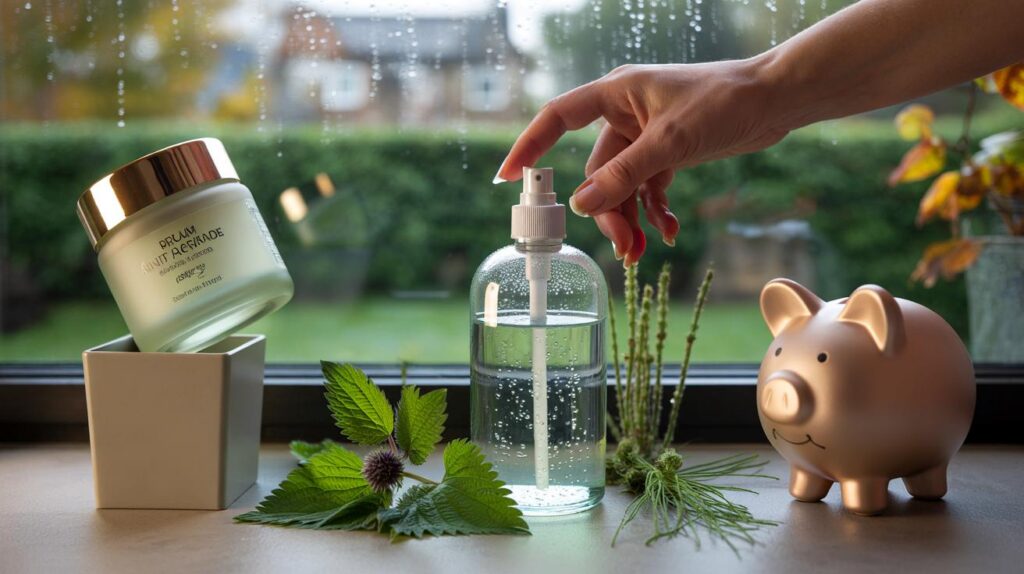
As temperatures dip and mirrors turn frank, a quieter beauty shift is rising from gardens, parks and hedgerows across Britain.
Across social feeds and bathroom shelves, people are swapping jars for jars-of-ideas: kitchen-brewed toners made from common plants. The pitch is simple. Skip the glossy claims. Use minerals and chlorophyll from nettle and horsetail to nudge glow, bounce and resilience, especially as autumn stress hits the skin.
Why the ‘miracle cream’ story is losing its shine
Each season brings a new promise to smooth wrinkles and revive tired complexions. Most formulas rely on hydration, occlusion and pleasant textures. They feel lovely. They rarely rebuild deeper structures in any measurable way.
Much of the instant “lift” people feel after premium cream comes from water-binding ingredients and a brief massage, not lasting collagen gains.
Consumers see a quick glow, then a plateau. The skin drinks in moisture, yet lines still etch in by evening. That gap between sensation and structural change fuels a search for alternatives that work with the skin’s own rhythms.
What botanicals can deliver that jars rarely do
The mineral case: silica, potassium and chlorophyll
Horsetail (Equisetum arvense) is rich in plant silica, a building block linked with connective tissue resilience. Nettle (Urtica dioica) brings chlorophyll, flavonoids and a broad suite of minerals including magnesium, calcium and zinc. Used as a mild, water-based tonic, these plants help the skin hold water, support its barrier and resist dullness as weather flips from warm to wet and windy.
Plants bring silica and trace minerals that many face creams don’t supply in meaningful, water-soluble amounts.
This is not magic. It is a steady trickle of supportive nutrients at the surface, combined with a calming ritual that reduces tugging and over-cleansing. Autumn is a smart time for this approach because renewal slows, the lipid film thins and micronutrient demand rises.
Autumn skin under stress
Cooler air, central heating and gusty days draw water from the stratum corneum. Turnover lags. Pores look larger. Patches feel rough. A mineral-forward tonic before moisturiser can soften edges and make a modest, visible difference across two to four weeks.
Nettle and horsetail: what, where, when
How to recognise and source safely
- Nettle: serrated, opposite leaves; tiny stinging hairs; thrives at field edges and garden borders.
- Horsetail: jointed, reed-like stems; prefers damp ground near streams and ditches.
- Source dried herbs from health shops or reputable herborists if foraging is not your thing.
- Avoid roadsides and sprayed land. Rinse well. When in doubt, don’t pick.
A two-minute tonic: the simple method people are trying
What you need
- 1 tbsp dried nettle
- 1 tbsp dried horsetail
- 250 ml hot water, just off the boil
- 1 tsp apple cider vinegar (optional, for a skin-friendly pH)
- A clean bottle or small spray
Steep the herbs in hot water for 15 minutes. Strain. Cool to lukewarm. Add the vinegar. Decant into your bottle. Keep in the fridge and use within seven days.
How to apply for best effect
Use on clean skin morning and night. Mist generously or sweep with cotton. Don’t rub. Let it absorb, then seal with a bland moisturiser if you need extra comfort. Spent herbs can serve as a brief compress on the neck, hands or chest.
Typical timeline: day 7, a clearer tone; day 14, fewer dry patches; day 28, a subtly firmer feel and softer lines.
What people report after 7, 14 and 28 days
Week one often brings a fresher look and the appearance of smaller pores, thanks to better hydration and gentle acids from the vinegar. By week two, tightness fades and makeup sits more evenly. By week four, many notice a springier surface as consistent mineral contact supports the skin barrier and daily massage boosts microcirculation. Results vary, yet the direction of travel tends to be positive when people stick with the routine.
The money question: is your routine gobbling cash?
A single 50 ml anti-age jar at £80, replaced every six weeks, adds up to roughly £700 a year. Many buy serums on top. A weekly batch of nettle–horsetail tonic costs pennies. The gap matters during a cost-of-living squeeze.
| Feature | Premium anti-age jar | Nettle–horsetail tonic |
|---|---|---|
| Typical spend per year | £700–£900+ | £25–£60 (dried herbs + bottles) |
| Main action | Hydration, occlusion, fragrance | Mineral support, mild acid balance, hydration |
| Application time | 30–60 seconds | 30–60 seconds |
| Shelf life | 6–12 months | 7 days refrigerated |
| Environmental footprint | Heavy on packaging | Light, refillable bottle |
If you spend £80 every six weeks, that is £693 a year. Two jars a month pushes you beyond £1,900.
Risks, red flags and sensible limits
Patch test on the inner arm for 24 hours. Skip if your skin is flaring or broken. Store the tonic chilled and discard after a week to avoid microbial growth. Horsetail contains enzymes that can reduce thiamine if taken internally in large amounts; this recipe is topical only. People who are pregnant, breastfeeding or on complex dermatology plans should ask their clinician before changing routines.
Small choices that amplify results
Massage, cleansing and sun care
Use slow, light strokes for 20–30 seconds to boost microcirculation when you apply the tonic. Keep cleansing gentle to protect the lipid film. Wear broad-spectrum SPF in daylight, even as the weather cools. UV remains the leading cause of visible ageing.
Diet, sleep and a weekly micro-ritual
Skin needs building blocks. Aim for enough protein to support collagen turnover, plus dark greens, nuts and seeds for minerals. Omega‑3 sources help calm low-level redness. Prioritise regular sleep to stabilise repair cycles. Once a week, soak thin cotton in the tonic and press it over the face for three minutes to help hydration and softness.
If you want the benefits without foraging
City dwellers can buy dried nettle and horsetail from trusted herbal counters. Check the lot’s origin and storage date. If horsetail feels too astringent for your skin, swap half the measure for calendula flowers to add calm without losing the mineral lift. People with very reactive skin often do well with a weaker brew and shorter contact time.
A straightforward way to get started today
Make a 250 ml batch on Sunday night. Use it morning and evening for seven days. Take a quick photo on day one and day eight in the same light. If you see clearer tone and softer dryness, repeat for three more weeks and reassess before buying your next expensive jar. The numbers, and your mirror, will tell you whether to stick or switch.



Tried the nettle + horsetail tonic for two weeks and my tight, flaky bits chilled out. Love the fridge-fresh spritz, and I’m not missing the perfumey jars at all. The thiamine note is helpful—topical only, got it. Also appreciate the patch-test reminder. Might swap in calendula if horsetail feels too grabby. Wallet and skin both calmer 🙂
Is there any peer‑reviewed data on topical silica from horsetail actually improving barrier function, or are we mostly talking hydration + massage again? I’m open, but the sciense has to be there.