
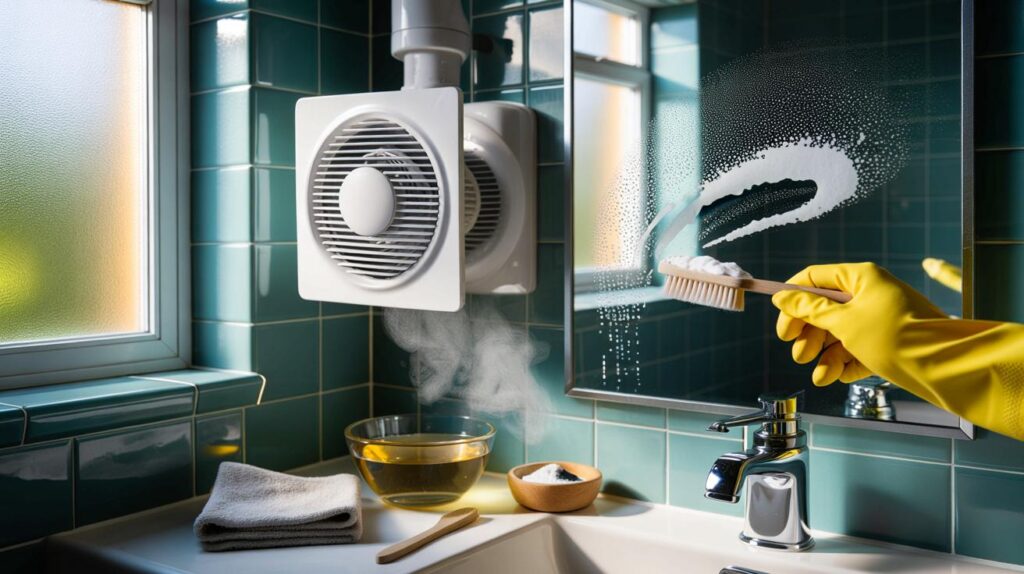
Soaring energy costs and steamy bathrooms meet an old cupboard solution, whispered across generations, with claims of dramatic damp relief.
An everyday cleaning routine, focused on airflow rather than fragrance, is being touted as a quiet fix for clingy moisture. The method relies on two familiar staples and a forgotten hero: the bathroom extractor that so often chokes on dust, fluff and soap haze.
The claim sweeping through British bathrooms
Households are reviving a thrifty pairing — white vinegar and bicarbonate of soda — to restore tired extractors and speed up drying after showers. The promise sits on two pillars. First, a cleaner grille and fan pull more air, cutting condensation on mirrors, tiles and paint. Second, less lingering moisture means less heating needed to banish the chill that damp air brings.
Advocates report up to a 70% drop in peak bathroom humidity after showers and as much as 25% less electricity used when airflow is restored.
These figures are anecdotal and will vary by home, but the physics are plain. Airflow falls sharply as dust blocks vents. A few minutes of targeted cleaning can recover much of the original performance without buying new kit.
How the method works in practice
Vinegar cuts greasy film and neutralises stale odours on the grille. Bicarbonate, used dry, lifts stubborn deposits from the fan blades without scratching. Together they strip away the drag that slows air movement, letting the extractor clear steam more quickly.
What you need
- 250 ml white vinegar and 500 ml warm water for a cleaning solution
- 30 g bicarbonate of soda for the fan blades
- Optional swap: 125 ml lemon juice in place of vinegar
- An old toothbrush, microfibre cloths, a small bowl and a timer
Step-by-step in twenty minutes
- Switch off power at the consumer unit. Remove the extractor grille carefully.
- Mix vinegar with warm water. Submerge the grille for 15 minutes to loosen film.
- Dust the exposed fan. Sprinkle bicarbonate on the blades and gently brush for 10 minutes.
- Rinse the grille and wipe the fan housing with a damp cloth. Dry everything with microfibres.
- Reassemble only when all parts are fully dry. Restore power and test airflow.
Always isolate the circuit before touching a fan. Never soak the motor or wiring. Only the removable grille gets a bath.
Does it really cut humidity by 70%?
A cheap digital hygrometer can settle the question at home. Place it at head height in the bathroom, away from the direct shower plume. Take three readings: before a shower, at the steamiest point, and 20 minutes after the fan has run. Repeat the same routine after a deep clean. Many readers will see a striking fall in the peak and a faster return to baseline.
A typical pattern might look like this: baseline 55% RH, post-shower peak 85% RH, 20-minute value 70% RH. After cleaning, the peak may only hit 70–75% RH, with the 20-minute value dropping towards 60%. That is a large functional improvement even if the headline 70% reduction refers to the drop from the highest spike to the lower post-clean peak.
| Option | Upfront cost | Time per session | Effect on post-shower RH | Noise | Notes |
|---|---|---|---|---|---|
| Vinegar + bicarb fan clean | £2–£4 in supplies | 20–30 minutes | Moderate to strong reduction | No change | Restores airflow; repeat every 1–2 months |
| Commercial vent cleaner | £4–£8 | 15–20 minutes | Similar outcome | No change | Check product safety around electrics |
| Plug-in dehumidifier | £80–£200 | Runs 1–3 hours | Strong reduction | Audible hum | Best for homes with persistent damp |
| Open window during shower | Free | During and after shower | Moderate in windy, cool weather | Silent | Less effective on still, humid days |
Energy and money: where the 25% saving might come from
Bathroom extractors usually draw 8–20 W. A clean unit may not slash the fan’s own electricity by a quarter, but it can finish the job faster. If an extractor clears steam in 20 minutes rather than 35, that is a 40% cut in runtime. The bigger prize lies with heating. Damp air holds less heat and makes rooms feel colder, nudging the thermostat upwards. Quicker drying reduces that clammy chill, which can shave real money off winter bills.
Here is a simple example. A family runs its 15 W fan for 30 minutes after each daily shower. Yearly fan energy is about 2.7 kWh. Cleaning that lets it finish in 18 minutes would drop use to 1.6 kWh. The saving is small in pounds but the benefit compounds with warmer, drier walls needing less heat. That is where “up to 25%” may show up for some households, especially those battling chronic condensation.
Let the extractor run for 20 minutes after every shower. Use a plug-in timer if the switch has no overrun.
Keeping it working month after month
Build a simple rhythm. Mark a repeating date every two months and set a phone reminder. Many people pick the first Sunday of even-numbered months. Light dusting of the grille each week reduces the need for deep sessions.
Some readers add small fabric sachets filled with rice to drawers and cupboards to tame odours. These will not dehumidify a bathroom in any meaningful way, but they can freshen a window ledge. For moisture control in small spaces, calcium chloride tubs or silica gel are more effective.
Small habits that speed drying
- Keep the bathroom door closed during the shower and open it afterwards to release damp air.
- Squeegee tiles, screens and mirrors to remove surface water that would otherwise evaporate slowly.
- Heat the room to at least 18–20°C before bathing to reduce condensation on cold surfaces.
- Check that the duct run is clear and the exterior vent flap moves freely.
- Wipe seals and grout with a mild detergent weekly to deter mould growth.
- Avoid drying laundry in the bathroom unless mechanical ventilation is strong.
Risks and when to call a professional
If the fan rattles, squeals or fails to start after cleaning, stop and speak to an electrician. Water-stained ceilings, persistent black spots on grout, peeling paint or a musty smell beyond the bathroom suggest wider ventilation problems. Tenants with uncontrolled damp should log issues with landlords, as many UK properties require maintained mechanical ventilation under building regulations.
Extra context for readers
Relative humidity between 40% and 60% is a healthy target for homes. Below that, air can feel parched and irritate airways. Above that, mould spores thrive and dust mites multiply. A £10 hygrometer gives hard feedback, turning guesswork into a measurable routine.
If budget allows, consider a fan with a humidity sensor and overrun timer. These models ramp up when steam rises and switch off automatically when targets are met. For the rest, vinegar and bicarbonate remain a low-cost way to reclaim airflow. The key is regularity, a dry finish after each clean, and a steady habit of venting after every shower.



Tried this today—white vinegar soak and bicarb on the fan blades—and the mirror cleared in half the time. Definately noticed less clammy air after 20 mins. Thanks for the clear safety notes about isolating power.