
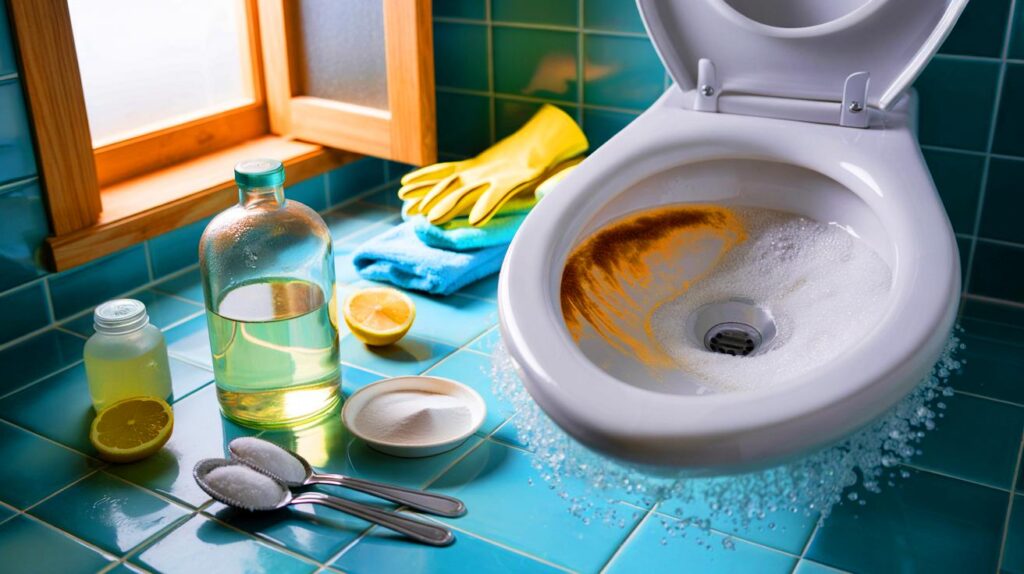
Households across the UK are staring down stained bowls and rising bills, prompting a fresh look at humble cupboard staples.
Hard water, busy lives and pricey products have turned the toilet into a recurring battle. A growing number of cleaners now champion a gentler, cheaper routine that targets minerals rather than masking marks. It replaces strong acids and heavy fragrances with kitchen basics, and it works because it matches the chemistry of the stain.
Why your toilet stains keep returning
Most marks aren’t dirt. They’re minerals trapped on porcelain. Limescale builds when hard water dries on the bowl, especially under the rim and around the waterline. Iron leaves orange streaks. Tannins in some water supplies create tea-coloured rings. Low, infrequent flushing lets residues sit and harden. The result: scuffs that outlive your strongest bleach.
Stop scrubbing at the surface. Treat the minerals causing the marks and the stains stop coming back.
That approach needs a mild acid to dissolve scale, plus mechanical agitation to lift residue. It also needs time on the surface. Speed alone rarely wins against months of mineral build-up.
The £1.20 fix making waves
A simple, budget routine is spreading because it hits the chemistry head-on. It pairs white vinegar with bicarbonate of soda, then adds patience and a brush.
- Pour 500 ml of white vinegar slowly around the rim so it clings to the sides.
- Sprinkle three level tablespoons of bicarbonate of soda over the wet porcelain.
- Let the fizz work for five minutes to soften scale and loosen dirt.
- Scrub the bowl thoroughly, especially under the rim and around the waterline.
- Leave the mixture to rest for 15–20 minutes, then flush twice.
The reaction breaks up limescale and shifts organic films. The fizz is helpful, but the soak time does the heavy lifting. Avoid overloading the bowl; too much powder can create excessive foam.
Heavy limescale? Turn up the heat
Stubborn crust needs warmth and time. Heat the vinegar gently on the hob until hot, not boiling. Pour it in, again coating the sides. Close the lid and leave it overnight. In the morning, scrub and flush. Warm acid dissolves minerals more quickly, especially in hard-water regions.
Finish the job: not just the bowl
Germs and grime spread via touch points. Wipe the seat, lid, flush button and the door handle with a vinegar-dampened microfibre cloth. For scuffs, dust bicarbonate of soda onto the cloth and rub lightly. Rinse and dry. This step cuts odours and reduces the chance that fresh residues will stick to newly cleaned porcelain.
When stains still won’t budge: citric acid to the rescue
For thick mineral deposits, citric acid steps in. It is a food-grade solid that dissolves limescale faster than vinegar and is gentler on surfaces than strong bathroom acids.
- Make a 5–10% solution (50–100 g citric acid crystals in 1 litre warm water).
- Apply generously to the bowl and under the rim. A squeeze bottle helps.
- Scrub, then leave it to sit for 30–60 minutes.
- Scrub again and flush. Repeat on very old scale.
Never mix acids with bleach. Combining bleach with vinegar or citric acid can release choking chlorine gas.
Wear gloves. Ventilate. Keep pets and children away while it works. Citric acid also revives dull taps and showerheads; rinse well after treatment.
What works best, and when
| Method | Typical cost per clean | Contact time | Best for | Key risk |
|---|---|---|---|---|
| Vinegar + bicarbonate | £0.40–£0.70 | 15–20 minutes | Weekly build-up, light stains | Excess foam if overused |
| Hot vinegar soak | £0.60–£0.90 | Overnight | Hard-water rings, rim scale | Steam burns if overheated |
| Citric acid solution | £0.30–£0.50 | 30–60 minutes | Thick mineral deposits | Do not mix with bleach |
Why people are switching now
Budgets are tight. A typical family using branded gels weekly can spend £90–£150 a year on toilet cleaners. Vinegar, bicarbonate and citric acid cut that dramatically. They store well. They travel without spill-prone caps. They also avoid heavy perfumes that can irritate sensitive lungs.
There is an environmental nudge too. Mild acids break down in wastewater. They are kinder to septic systems than strong hydrochloric formulas. Fewer plastic bottles go to the bin when you buy staples in larger packs.
What your water is telling you
Colour and texture offer clues. Orange streaks often signal iron. White, chalky deposits point to calcium limescale. Blue-green marks suggest copper corrosion from pipework. Black spots can be mould in damp, low-ventilation rooms.
Quick diagnostic checklist
- Orange or brown streaks: target with citric acid; flush more often to prevent settling.
- White, rough crust: use hot vinegar or a longer citric soak; scrub under the rim.
- Blue-green smears: call a plumber if persistent; check for corrosive water.
- Grey film and odour: improve airflow; clean the seat, hinges and button weekly.
Extra tips and common mistakes
- Don’t mix bleach with any acid, including vinegar or citric acid.
- Avoid abrasive stones on modern glazed porcelain; they can dull the finish.
- Descale the rim jets: hold hot vinegar-soaked paper under the rim for 10 minutes, then brush.
- Rinse the brush after use and let it dry; a dirty brush re-seeds the bowl.
- Low-flush loos need more frequent quick cleans; stagnant water marks faster.
- Measure your powders; more product rarely means better results.
The winning formula is simple: the right acid, enough time, consistent scrubbing, and safe handling.
A practical money check for your home
Run a two-month trial. Clean weekly using 500 ml vinegar and three tablespoons bicarbonate. Add a citric acid soak once a month if your area has very hard water. Track costs. Many households report under £2 a month for supplies. That approaches a £50–£100 annual saving against premium gels, without sacrificing hygiene.
If you manage a rental or a large family bathroom, set a rota and print the step list by the toilet. Add a reminder to open the window and wear gloves. Small habits stop stains forming, which saves time and cash every single week.



Skeptical here: is hot vinegar safe for the loo’s rubber seals and metal fixings? My plumber said acids can degrade them over time. Anyone got a 6–12 month result, longterm?