
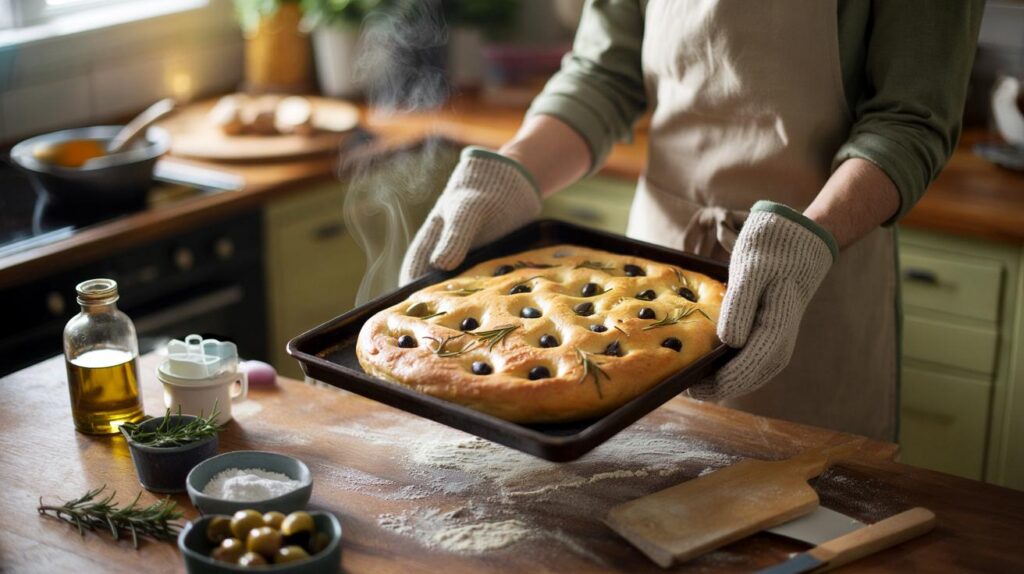
The colder weeks invite warm trays, briny olives and herby perfume rising from the oven. Friends gather. Plates empty fast.
Across Britain, a soft olive-and-rosemary focaccia has become the low-fuss centrepiece of autumn drinks. It needs simple kit, a hot oven and a short list of store-cupboard staples. The result brings sunny flavours to a dark evening without raiding your wallet or your time.
Why this focaccia is everywhere right now
Rising prices shape what people serve. Hosts want generous sharing food that feels special yet costs less than a round at the pub. This tray-bake bread ticks every box. It feeds 6 to 8 people, uses one bowl and bakes in roughly 25 minutes at 220°C. The texture lands between crisp and pillowy. The flavours are clean: grassy oil, resinous rosemary, and olives that bring salt and tang.
Seven everyday items, one hot tray, 25 minutes of bake time at 220°C. Cost per tray: about £3.80–£5.00.
The core formula
- 500 g strong white flour (type 55 or standard bread flour)
- 320 ml warm water
- 10 g fine salt
- 10 g caster sugar
- 15 g fresh baker’s yeast or 7 g fast-action dried yeast
- 40 ml extra-virgin olive oil, plus more for the tin
- 1 good handful pitted green or black olives, chopped
- 2 sprigs fresh rosemary, needles stripped
Numbers that matter
| Hydration | 64% (320 ml water to 500 g flour) |
| Salt | 2% of flour weight (10 g) |
| Oven temperature | 220°C, fan if available |
| Active time | 10 minutes mixing and kneading |
| First rise | About 60 minutes in a warm spot |
| Bake time | 20–25 minutes, until deep gold |
| Cost estimate | £3.80–£5.00 per tray, depending on olive oil and olives |
| Servings | 6–8 as nibbles; 4–6 as a side |
From bowl to tray in under an hour
Knead, rest, repeat
Stir yeast and sugar into the warm water. Let it froth lightly. Combine flour and salt in a large bowl. Pour in the yeast mixture and 30 ml of the oil. Work the dough by hand for 8–10 minutes. Aim for soft and slightly tacky. Grease the bowl. Tuck the dough in, smooth side up. Cover and place somewhere warm and mild, such as an oven with the light on or near a radiator. The dough should double in roughly one hour.
Olives and rosemary, then dimples and oil
Tip the risen dough onto a lightly floured surface. Press gently with fingertips to deflate only a little. Scatter chopped olives and rosemary needles. Fold the dough over itself a few times to lock the flavour in. Oil a deep baking tin or tray. Stretch the dough to fit without tearing. Brush the top with 10 ml oil. Rest for 20 minutes while the oven heats to 220°C. Press dimples across the surface with oiled fingertips. Add a few extra olives and rosemary sprigs for aroma.
Bake hot, serve warm
Slide the tray onto the middle shelf. Bake for 20–25 minutes until the crust turns burnished gold and the kitchen smells of pine and fruit. Lift the bread to a rack. Brush with a final sheen of oil. Leave five minutes before cutting to keep the crumb tender.
For a crisp crust and soft centre, bake at 220°C with a small pan of hot water on the oven base.
Texture tricks that give lift
Short, confident kneading builds enough gluten to trap steam. A warm, covered rise supports lightness. Gentle handling keeps air pockets intact. Dimpling prevents large bubbles and creates shallow pools that hold oil and herb aroma. Steam in the oven slows crust formation, so the loaf rises more before it sets. If the top colours too fast, tent with foil for the last five minutes.
Make it yours without overspending
Small additions, big flavour
- Sprinkle a pinch of flaky sea salt before baking for delicate crunch.
- Add 20 g grated Parmesan or Pecorino for a savoury finish.
- Thread in 30 g sliced sun-dried tomatoes for sweetness.
- Use a touch of chilli flakes or a twist of black pepper for heat.
Keep the base formula intact. Change toppers according to what you already have. That keeps cost per tray low and avoids waste.
Serving ideas that please a crowd
What to plate beside it
Slice into thick fingers and serve warm with small bowls of olive oil for dipping. Pair with thinly sliced cured meats, such as prosciutto or mortadella, and gentle cheeses like mozzarella or young gorgonzola. For a lighter spread, add marinated artichokes, grilled peppers and capers. It also suits autumn bowls: pumpkin soup, roasted tomato soup, or a leafy salad with a sharp vinaigrette.
What the numbers tell you
A 64% hydration dough stays easy to handle yet bakes soft. Salt at 2% seasons the crumb and supports structure. The 7 g measure for dried yeast tracks a standard UK sachet, which simplifies shopping. Baking at 220°C gives rapid oven spring and a crackly crust without drying the inside. Dimples improve even cooking by equalising thickness across the tray.
Plan ahead and waste less
Leftovers keep well in a tea towel or airtight box for a day. Refresh at 160°C for 6–8 minutes to revive the crumb. Stale pieces make excellent croutons when cubed and toasted with a spoon of oil. Day-old slices also press well in a panini maker with cheese and greens. The dough itself tolerates an overnight chill in the fridge; this deepens flavour and lets you bake fresh just before guests arrive.
Practical extras for busy hosts
Cost, time and swaps
- Budget check: a tray averages £3.80–£5.00 using supermarket flour, basic olives and mid-range oil.
- Energy tip: bake once, serve twice. Use the hot oven to roast vegetables for sides as the bread cools.
- Allergens: wheat and gluten are present. Dairy-free by default unless you add cheese.
- Yeast swap: use 15 g fresh yeast if stocked; double the rise watchfulness, as fresh yeast works briskly.
- Herb swap: thyme or sage stands in for rosemary when supplies run low.
Short on time? Mix at lunch, chill the dough, then bake straight after work. Warm bread by 7pm, zero rush.
Want a lighter crumb? Add a brief rest called an autolyse: mix flour and water, wait 20 minutes, then add yeast, salt and oil. The dough strengthens faster and needs less kneading. For a deeper flavour, leave the shaped dough to proof in the fridge for 8–12 hours, then bake from cold, adding two extra minutes. Both routes fit weeknights and free your hands for other prep.
For those counting, a 30 x 20 cm tray yields about 12 bite-sized squares. That covers a typical gathering of eight with room for seconds. If you scale up, keep the ratios steady and let internal cues guide you: the dough should feel springy, the top should glow golden, and the base should sound hollow when tapped. Keep a small jug of oil and a few rosemary sprigs nearby. You will want that gloss and perfume as guests reach for another piece.



Just tried this tonight at 220°C for 25 mins—crisp edges, pillowy middle, total cost £4.06. The rosemary/olive combo is a weeknight win. House smells amazing 🙂
Isn’t 64% hydration a bit low for foccacia? I usually go 70–75% for more open crumb. Does the steam pan compensate, or is the tighter crumb intentional here?