
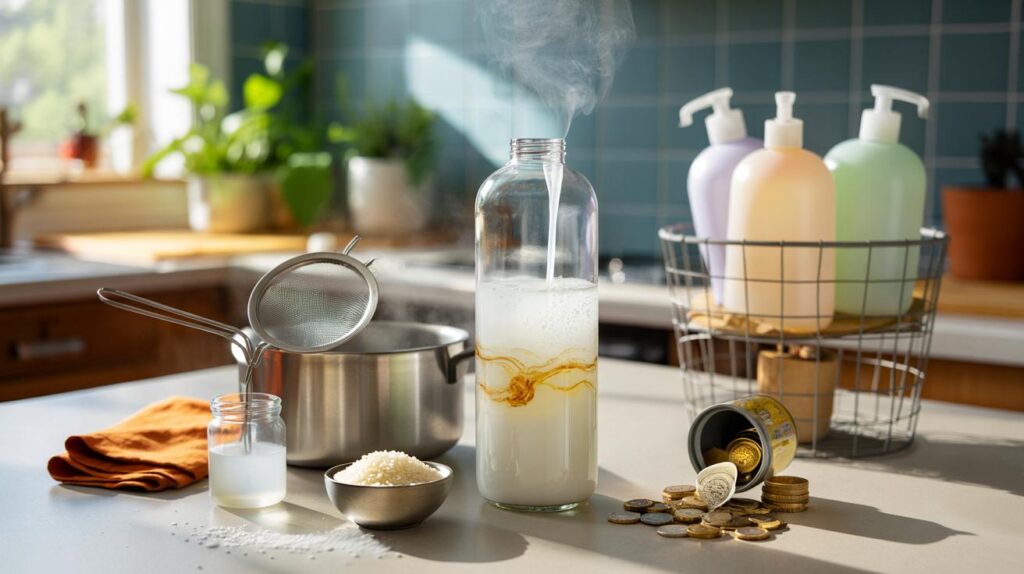
As heating clicks on and budgets tighten, bathroom shelves face a quiet shake-up from an ingredient already in your kitchen.
Across the country, glass bottles are replacing plastic pumps, and an unlikely hero is driving the change: rice. This pantry staple now doubles as a silky cleansing milk, with fans claiming calmer skin, less waste and real savings. I put it to work for an autumn routine and watched the numbers — and the plastic — drop fast.
Why rice is trending in your bathroom
Cold air, central heating and hurried commutes sap moisture and leave complexions touchy. Many turn red, tight and dull by late October. Rice steps in with a familiar yet underrated mix of starches, B vitamins and natural sugars. These compounds soften the feel of skin and help it hold on to water beneath the surface.
Rice water forms a sheer, breathable film. That film reduces moisture loss after cleansing and takes the sting out of harsh weather. It also glides over make-up, lifting pigment without that drag you get from foamy cleansers. Add a light plant oil and you get slip, nourishment and a gentle finish.
Rice water lays down a thin, comforting film that reduces moisture loss and helps skin feel settled, not stripped.
What it does for skin in cold weather
Short days and indoor heat often produce a reactive T‑zone and thirsty cheeks. The rice-and-oil pairing targets both. Starch calms; oil dissolves mascara and sunscreen; the combination leaves skin soft rather than waxy. Users report fewer flare-ups and a more even tone within a week of nightly use.
The 3-step recipe that costs pennies
You do not need lab gear. A saucepan, a sieve and a clean bottle are enough. The batch below fills roughly a 150 ml bottle.
- 50 g white rice (organic if you like)
- 350 ml low‑mineral water
- 2 tablespoons light plant oil (jojoba, sweet almond or sunflower)
Step 1: Simmer rice and water for about 15 minutes, until the grains soften and the liquid turns milky. That cloudiness is starch dispersing.
Step 2: Strain through a fine sieve or clean cloth to collect the rice water. For a silkier texture, blend the warm liquid for 10–15 seconds.
Step 3: Stir in the oil until evenly combined. Decant into a clean glass bottle with a wide neck. Chill in the fridge.
Keep it simple: three ingredients, one pan, five minutes of hands-on time — and no plastic pump to throw away.
Storage and safety
This is a fresh product. Store it in the fridge and use within 5–7 days. If it smells sour or separates oddly, bin it and make a new batch. Patch-test on the jawline before full use, especially if you have a nut or rice sensitivity. If you want longer shelf life, use a cosmetic preservative that suits water‑based formulas, and follow the maker’s dosage.
The money maths: how €180 stacks up
I used to buy one 200 ml bottle of cleansing milk each month at around €15. That is €180 a year, plus 12 plastic bottles. The homemade version costs dramatically less per batch. Here is the breakdown.
| Item | Shop cleanser | Homemade rice milk |
|---|---|---|
| Cost per 150–200 ml | €12–€18 (avg €15) | €2.20–€2.80 (rice €0.15, oil ~€2.10, water negligible) |
| Annual outlay (12 bottles) | €180 | ~€30 |
| Plastic bottles per year | 12 | 0 (reuse glass) |
| Shelf life | 12–24 months unopened | 5–7 days refrigerated |
Even if you choose pricier jojoba, the saving lands near €150–€180 a year. Switch to sunflower or grapeseed and the gap widens. That is real cash back in your pocket during the most expensive months.
One bottle a month at €15 replaced by a €2.50 homemade batch yields around €150–€180 saved per year.
How to use for best results
- Shake before use; natural separation is normal.
- Apply a small palmful or soak a washable pad.
- Massage in slow circles on dry skin for 30–60 seconds.
- Rinse with lukewarm water; follow with a soft towel and your usual moisturiser.
- Heavy eye make-up: hold a soaked pad over lashes for 10 seconds, then sweep.
The finish feels light, not greasy, thanks to the starch film. The faint rice scent fades quickly. Skin looks calmer after the very first clean.
Who should try it, and who should tweak it
Dry or sensitive faces usually welcome the gentle slip and the absence of fragrance. For combination skin, use jojoba, which imitates skin’s natural lipids and leaves a clean finish. For very dry cheeks, sweet almond gives extra comfort. Acne‑prone readers can thin the batch with more rice water and choose grapeseed oil, which is lighter.
If your eyes sting with oils, avoid the lash line and remove mascara separately. Anyone with a rice allergy should skip this recipe. Those with perioral dermatitis or active eczema should take advice from a clinician before trying any new cleanser.
Why glass bottles and rice milk cut waste fast
Bathroom plastics add up: micellar waters, lotions and eye make‑up removers often arrive in separate bottles. A single 150 ml glass bottle can manage your nightly cleanse for the week, then cycle again. You buy rice by the kilo, not in single‑use pumps, and your oil lasts months.
Swap 12 plastic bottles a year for one glass bottle you refill every week — small change, big habit shift.
Variations, tweaks and smart add‑ons
You can tailor this to the season and your skin. A teaspoon of vegetable glycerine adds a touch more glide in deep winter. A rice‑water‑only toner also works: keep a small bottle chilled and swipe after cleansing to calm flushed patches. Leftover cooked rice can become a one‑off body polish: mash with a splash of water and a drop of oil, then rinse well.
Want longer shelf life without heavy additives? Look at gentle, widely used cosmetic preservatives suitable for water‑based formulas, such as lactobacillus-ferment blends or potassium sorbate with a correct pH. Follow manufacturer guidance and keep tools clean. If you prefer to skip preservatives, stick to small batches, refrigerate and remake weekly.
A quick savings check you can run tonight
Count how many cleanser bottles you buy in a year and their price. Multiply for your annual total. Then price a month of homemade batches: rice cost per 50 g, plus 30 ml of your chosen oil. Most households land near €2–€3 a week. Even with two weekly batches, you still undercut supermarket bottles by a wide margin and reduce trips to the bin.
What the science suggests
Rice water contains starches and B‑group vitamins that improve the feel of skin after cleansing. Cosmetic chemists note that this film‑forming action reduces tightness and supports barrier comfort. The oil phase dissolves make‑up and sunscreen in a way that water alone cannot. This dual action helps skin look clearer without the squeak — a good match for shorter, colder days when irritation tends to spike.



Just made a batch and my skin didn’t freak out for once — plus my bathroom looks chic with a little glass bottle. €2.50 a week and calmer cheeks? I’m in. Thanks for the step‑by‑step! 🙂
I’m intrigued but worried about spoilage. A 5–7 day shelf life seems tight — how do you keep bactieria out without a preservative? Also, does blending warm liquid increase oxidation or make it seperate faster?