
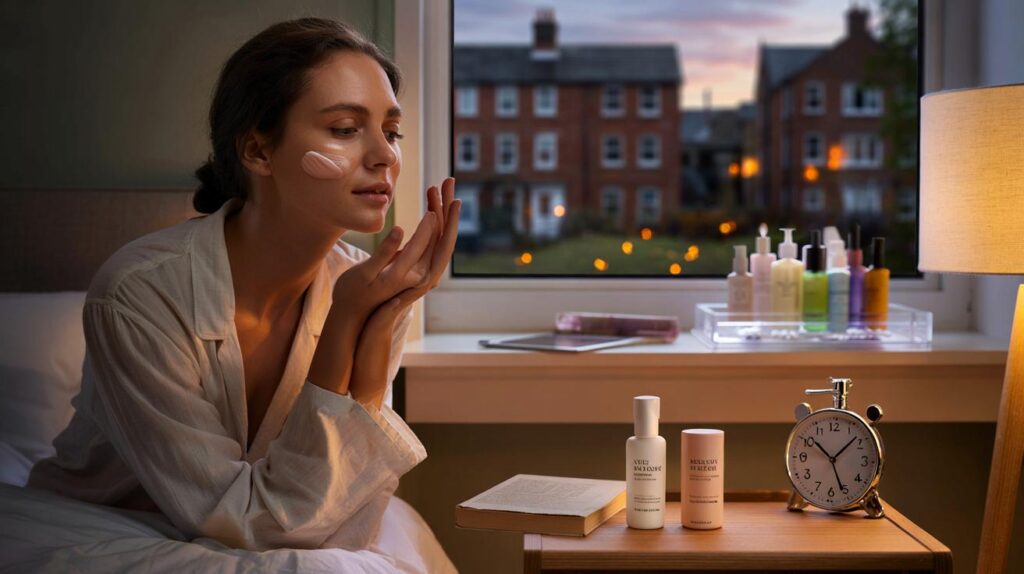
The beauty aisle is overflowing, wallets are thinning, and faces look tired as autumn light fades across the UK.
As temperatures dip and lights go out earlier, a growing number of people are swapping crowded bathroom shelves for one nightly habit. The move promises calmer complexions, smaller bills and a fresher wake-up call. Dermatologists and sleep scientists say the shift makes sense.
A crowded shelf, a tired complexion
As autumn arrives, many people stack products to fight dryness and dullness. Serums pile over acids, creams smother over masks, and the skin barrier waves a white flag. The result looks familiar: a grey cast, tight cheeks, redness around the nose and a sting after cleansing.
Overloading the face with layers can confuse the barrier, provoke irritation and mute natural radiance.
Shoppers chase claims, extend routines and hope a new bottle will fix last week’s flare-up. The skin reads the cocktail as noise. It tries to defend, then overreacts. That loop sends people back to the till. This season, a simpler pattern is taking the place of the product hunt.
The one habit stealing the spotlight
Sleep has walked on stage as the most reliable beauty move most of us ignore. Night-time gives skin space to repair daily wear, restore the barrier and smooth texture without a drop of actives. A 20-minute wind-down at 22:30 often proves more valuable than another layer of brightening serum.
Switch off at 22:30, wind down for 20 minutes, and let biology handle the heavy lifting until morning.
What changes when you sleep
- Circulation rises, delivering oxygen and nutrients to the epidermis.
- Collagen and elastin production step up during deep stages of sleep.
- Barrier repair accelerates, reducing transepidermal water loss by morning.
- Inflammation markers fall, which can calm redness and help blemishes settle.
- Melatonin rises in darkness and acts as an antioxidant inside the skin.
In one UK poll, 93% of people reported brighter tone and softer texture after a full, phone-free night.
Blue light late in the evening delays melatonin and shortens deep sleep. That shift shows up on your face as stubborn puffiness and a patchy glow the next day. Put simply, your screen can age your look faster than the weather outside the window.
Your 20-minute wind-down at 22:30
Think of it as a short pre-sleep routine that clears noise and sets up recovery. Keep it repeatable, not perfect.
- Dim lights and silence notifications across all devices.
- Rinse with lukewarm water and a gentle, fragrance-free cleanser. Pat dry, don’t rub.
- Massage a pea-sized moisturiser for one minute to boost circulation.
- Stretch neck and shoulders, then sit for five slow breaths: four in, six out.
- Place phone in another room. Read a few pages on paper to cue sleepiness.
If you use essential oils, test first and avoid undiluted oils on skin. A single drop of lavender on the pillow suits many, not all. Sensitive eyes and airways may prefer an open window and cool room instead.
Five traps that wreck a good night
- Late caffeine after 15:00, even as “decaf” can contain stimulants.
- Heavy dinners after 20:00 that keep the gut busy when you want to rest.
- Screens in bed sending blue light into tired eyes.
- Stuffy rooms; crack a window for ten minutes to reset the air.
- Ruminating about tomorrow; jot a list, close the notebook, and park it.
Fewer bottles, more results
People who simplify often keep three basics: a gentle cleanser, a plain moisturiser and a daily SPF. Everything else becomes optional. That change trims irritation risk and cuts waste. It also frees cash for better bedding, blackout curtains or a bedside lamp with warm light.
What you could save by cutting extras
| Product | Typical monthly spend | Keep or cut |
|---|---|---|
| Toner with acids | £9–£12 | Cut for now |
| Sheet masks (4 per month) | £8–£16 | Cut |
| Second serum | £15–£25 | Cut |
| Basic cleanser | £4–£8 | Keep |
| Moisturiser | £5–£12 | Keep |
| Daily SPF | £6–£12 | Keep |
Dropping three non-essentials can save £32–£53 per month and reduce the chance of overreactive skin.
A one-week skin reset
Set a 22:30 bedtime with a 20-minute wind-down. Keep your routine minimal. Track your face, not your products.
- Day 1–2: Calm the routine, stop new actives, log sleep and morning skin notes.
- Day 3–4: Add a brief face massage at night to lift blood flow without extra products.
- Day 5–6: Remove evening screen time; wake without an alarm if possible on one morning.
- Day 7: Compare notes. Most people report softer texture, less redness and easier make-up wear.
If blemishes spike as you strip back, resist the urge to rebuild the old stack. Use a gentle spot treatment on the area only, then continue the sleep-first plan for another week.
Who benefits most
People with dehydrated skin often see quick gains. Night repair helps the barrier hold onto water, so cheeks feel less tight by breakfast. Those with redness tend to notice fewer flare-ups when they limit acids at night. For acne-prone faces, quality sleep lowers stress hormones that drive oil and inflammation.
Shift workers and new parents can still tap the habit. Aim for consistent sleep windows, protect dark exposure before bed, and use a 15–20 minute nap early in the afternoon to restore alertness without wrecking night-time rest.
How to pair sleep with a minimal routine
Morning
- Splash with water or a very mild cleanser if you exercised.
- Use a moisturiser that suits your skin type.
- Finish with broad-spectrum SPF 30 or higher, even on cloudy days.
Evening
- Cleanse once with lukewarm water and a gentle cleanser.
- Apply moisturiser while skin is still slightly damp.
- Start your wind-down: lights low, phone away, stretch, read, breathe.
Keep it boring and repeatable. Consistency beats complexity for a calmer, clearer complexion.
Extra angles worth knowing
Retinoids can still work in a sleep-first plan. Use a pea-sized amount twice a week after your moisturiser if your skin tolerates it. Skip on nights after sun exposure or if your face feels sore. Patch test behind an ear for 48 hours before you begin.
Nutrition shapes sleep and skin together. Aim for a protein source and colourful vegetables at dinner, stop alcohol three hours before bed, and drink water earlier in the day rather than late at night. Your skin shows the benefit when you avoid 03:00 wake-ups and wake rested.
Seasonal timing matters. As clocks change and daylight drops, move the wind-down earlier by 15 minutes for a week. That small shift keeps your body clock steady and prevents the groggy, puffy look many people blame on “autumn skin”.
Finally, track two numbers for a fortnight: hours slept and morning skin feel on a 1–5 scale. Most readers see the graph move together. When sleep climbs, texture and tone improve. When late-night scrolling creeps in, dullness returns. The pattern nudges better choices without another product haul.



Tried the 22:30 wind-down for a week and my skin actually looked less grey by Friday. Fewer bottles, better sleep, and I saved a cheeky tenner by skipping sheet masks 🙂 Thanks for making ‘boring’ feel doable.