
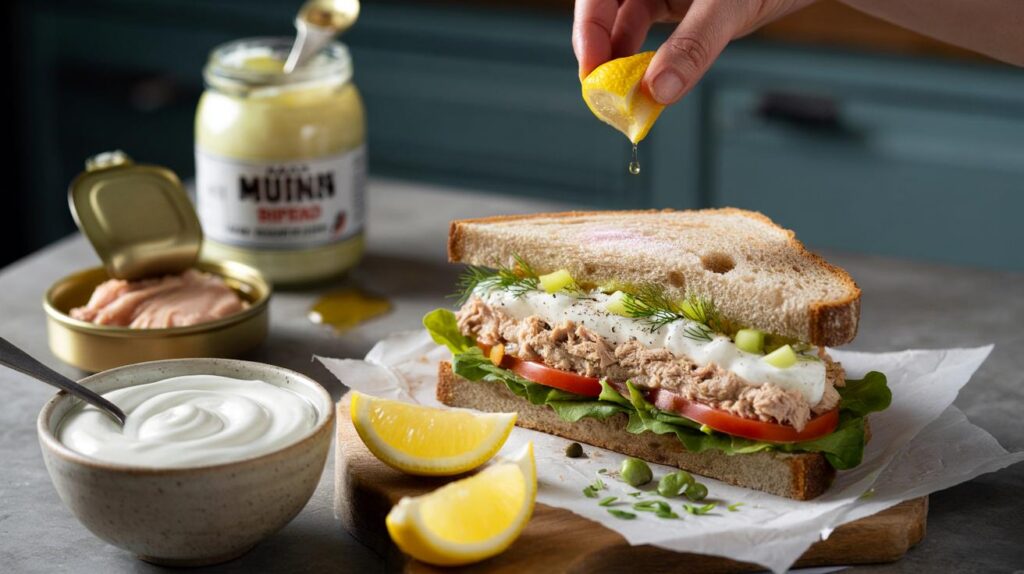
With lunchtime budgets tight and appetites rising, tiny changes to everyday sandwiches can lift flavour, cut calories and keep you fuller.
Across British kitchens, a humble fridge staple is quietly replacing mayonnaise in tuna sandwiches. The switch brings creaminess without the heaviness, adds a touch of tang, and boosts protein. The result is a faster, fresher sarnie that feels more satisfying, with fewer kilojoules and a brighter taste.
The one-jar swap that makes tuna shine
Greek yoghurt is the unlikely hero. Thick, spoonable and naturally tangy, it binds tuna beautifully while keeping the filling light. Its lactic acidity perks up fish, much like a squeeze of lemon, while its richness stands in for mayo. You still get that smooth mouthfeel, only with extra protein and a cleaner finish.
Swap two tablespoons of mayonnaise for Greek yoghurt and trim roughly 150–180 calories from a standard tuna sandwich.
Tinned tuna can taste dry on its own. Mayo solves the texture problem but loads the bread with oil. Greek yoghurt brings moisture and balance without the oil overload. Choose a style that suits your taste: fat-free for the leanest option, 2% for gentle richness, or 5% for a fuller, more indulgent finish that still undercuts mayo on calories.
How to make a 2-minute creamy tuna filling
- Drain a 145g tin of tuna packed in water for a cleaner, fresher flavour.
- Stir in 2 tablespoons of Greek yoghurt until the fish is just coated.
- Season with salt and cracked black pepper.
- Add brightness with 1 teaspoon of lemon juice or a pinch of zest.
- Spread onto wholemeal bread and add crisp leaves or sliced tomatoes.
For extra richness without mayo, whisk in 1 teaspoon of good extra-virgin olive oil or a dab of Dijon mustard.
Taste, texture and why the swap works
Greek yoghurt gives structure because it’s strained, which concentrates milk proteins and reduces water. That thick texture grips the tuna, prevents sogginess, and delivers a silken bite. A gentle tang lifts savoury notes in the fish and cuts through the oiliness that can linger in tuna packed in oil.
Fans of classic deli tuna may prefer a 2% or 5% yoghurt, which softens the tang and leans creamier. If you enjoy a sharper edge, go fat-free and add lemon. Either way, seasoning matters. A pinch of salt and acidity transforms the bowl from plain to punchy.
Quick flavour upgrades
- Fresh crunch: finely diced celery, spring onion or cucumber.
- Briny lift: capers, chopped gherkins or a few olives.
- Herb hit: dill, parsley, chives or tarragon.
- Heat: a shake of chilli flakes or a small spoon of harissa.
- Umami: a smidge of anchovy paste or a few drops of Worcestershire sauce.
Numbers that matter at lunchtime
Here’s how two tablespoons (about 30g) measure up. Figures are typical values and vary by brand.
| Ingredient (2 tbsp) | Energy (kcal) | Fat (g) | Protein (g) | Sugars (g) |
|---|---|---|---|---|
| Mayonnaise (standard) | 180–200 | 20–22 | 0 | <1 |
| Greek yoghurt, 5% fat | 30–40 | 2–3 | 3–4 | 1–2 |
| Greek yoghurt, 2% fat | 20–30 | 1–2 | 3–5 | 1–2 |
| Greek yoghurt, fat-free | 15–25 | 0 | 5–6 | 1–2 |
Choosing yoghurt over mayo preserves creaminess while adding 3–6g of extra protein to your sandwich filling.
Make it your way
If you love a deli-style richness, blend 2 tablespoons of 5% yoghurt with 1 teaspoon of olive oil. Prefer a lighter bite? Use fat-free yoghurt, lemon juice and chopped herbs. For a family batch, scale up in a mixing bowl, then store in the fridge in a sealed container and assemble fresh so your bread stays perky.
Serve on rye with cucumber ribbons, in a seeded wrap with rocket, or piled onto a jacket potato with sweetcorn. For a warm twist, top a slice of wholemeal with the yoghurt-tuna mix, add grated cheddar and grill for a speedy melt.
Shopping, prep and storage tips
- Pick tuna packed in water when mixing with yoghurt; it tastes cleaner and seasons more predictably.
- Drain tuna thoroughly to avoid watery filling; press the lid firmly to squeeze out excess liquid.
- Season to taste at the end; yoghurt’s tang can mask salt at first, so taste and adjust.
- Chill the filling for 15 minutes before assembling for a firmer texture.
- Refrigerate leftovers and eat within two days; keep sandwiches chilled if packing for work or school.
Health angles worth noting
Greek yoghurt brings live cultures and extra protein that help you feel satisfied longer. For many readers counting energy, that 150–180 kcal saving at lunch adds up across the week. If dairy is a hurdle, try lactose-free Greek-style yoghurt, which keeps the thick texture. Those with milk allergies should skip the swap.
Tuna remains a lean protein powerhouse. A 145g drained tin often provides around 30g of protein with minimal carbs. Aim to vary fish choices across the week. If you’re pregnant or serving young children, choose tinned light tuna more often than albacore and follow national guidance on portions.
When you still want mayo
If you crave a classic mayonnaise note, use a hybrid. Stir 1 teaspoon of mayo into 2 tablespoons of yoghurt. You get the familiar flavour, a silkier texture, and still shave off most of the calories compared with an all-mayo mix.
A two-minute upgrade: the yoghurt swap delivers creaminess, tang and a leaner plate without feeling like a compromise.
Ideas that go beyond a sandwich
The same yoghurt trick lightens tuna pasta salad, turns leftover roast veg and tuna into a quick pitta filling, and makes a speedy dip when whisked with lemon and herbs. Use it as a topping for baked sweet potatoes, or fold through couscous with chopped peppers and dill for a packed-lunch bowl that travels well.
For a simple kitchen test, make two half-sandwiches: one with mayo, one with yoghurt. Note mouthfeel, acidity and how you feel two hours later. Many readers report the yoghurt version sits lighter while still tasting indulgent. That small daily change can help manage energy across the afternoon without sacrificing flavour.



Did the swap today—lighter, still creamy. Didn’t miss mayo.
Does the tang clash with tuna for anyone else? Mine turned a bit wattery. Maybe I overmixed or didn’t drain the tin enough—any tips to keep it thick?