
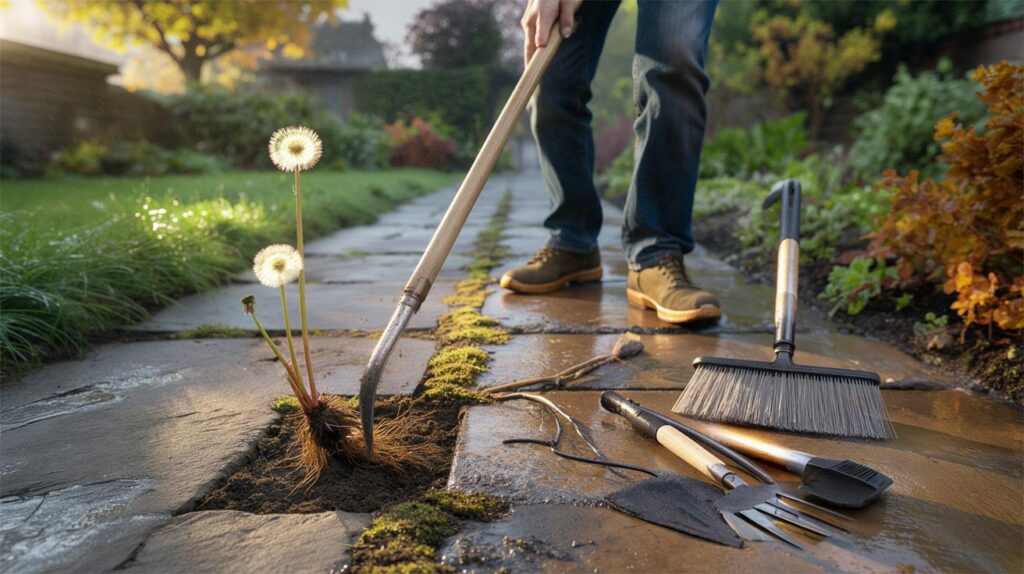
As evenings draw in, homeowners say weekends feel lighter, not heavier, thanks to small changes in garden upkeep this autumn.
Across the UK, a quiet shift is under way on drives, paths and patios. Gardeners tired of sore backs and harsh sprays are turning to simple, low-cost tactics that cut effort and keep surfaces clear. Retailers report brisk sales of long-handled weeders and mulch, while community groups share step-by-step routines timed to autumn rain. The promise is modest but compelling: cleaner paths, less strain, fewer chemicals.
Backs saved, paths cleaned: the autumn switch gathering pace
This season brings cooler light and softer soil, and with it a surge in no-fuss maintenance. Hardware buyers say sub-£30 tools are leaving shelves faster than last year. Physiotherapists also note a seasonal spike in patients seeking advice on joint-friendly yard work. The link is obvious. People want tidy edges and safe footing without spending Sundays bent double.
Many households now split weeding into short, regular slots. They time the job for the day after rain, when roots give way easily. They use taller tools, sit on low stools, or pad knees on a simple kneeler. The fix is not glamorous, yet it works because it respects the season and the body.
Fifteen-minute sessions after rainfall, once or twice a week, pull up fresh growth before it sets seed and spreads.
The timing advantage
Moist ground loosens weed crowns and runners. You lift more plant with less force. Damp joints between paving open slightly, so a narrow blade slides in and flicks out moss. Dry spells have their moment too: a brisk sweep removes debris before it mats and harbours seeds.
Tools under £30 that do the hard yards
Simple gear changes reduce strain and improve accuracy. Shoppers gravitate to tools that reach into cracks and lift whole roots in one movement.
- Long-handled knife weeder (£18–£29): slices under crowns and lifts them intact from joints.
- Hand claw or three-tine cultivator (£7–£15): loosens gravel and frees runners without heavy digging.
- Kneeler pad or foldable stool (£8–£25): keeps posture neutral and joints cushioned on wet ground.
- Fine-blade crevice tool (£6–£12): clears moss in tight spots between setts or slabs.
- Stiff broom with wire edge (£10–£20): sweeps grit and organic litter to reduce germination sites.
Set a timer. Work one section per session. Stop before fatigue sets in. Return after the next shower for quick wins.
Mulch as a barrier, not an afterthought
After the first tidy-up, a light layer on exposed soil slows regrowth markedly. Think of mulch as a shield that blocks light from new seedlings and protects soil from compaction. Laid in late October or November, it also buffers roots from early frost and softens the look of borders and path edges.
Depth matters. Aim for 4–5 cm. Spread evenly, then sweep hard surfaces so loose pieces do not migrate and create slip hazards. Choose a material that suits each spot and the look you want.
| Material | Typical cost per m² | Best for | Approximate lifespan |
|---|---|---|---|
| Shredded bark | £4–£7 | Shaded borders and tree bases | 12–18 months |
| Wood chips | £3–£6 | Play areas, informal paths | 18–24 months |
| Dry lawn clippings | £0 | Vegetable rows between crops | 6–10 weeks |
| Gravel (6–10 mm) | £7–£12 | Drive edges, formal paths | 5–10 years |
| Slate chippings | £10–£16 | Contemporary planting, rain-prone sites | 7–12 years |
| Lava rock (pouzzolane) | £12–£18 | Heat-tolerant borders, drainage zones | 10+ years |
Why it works now
Autumn weeds slow growth but have not set winter rosettes in most areas. The mulch layer blocks light before seedlings harden off. It also fills micro-gaps where grit and leaf fragments might settle and germinate. On slopes, use chunkier materials that interlock and resist washout.
Dry stone paths rise again as rain tests old hardstanding
With wetter spells hitting many regions, permeable surfaces matter. Dry stone and other mortar-free builds let water drain into a compacted base instead of sheeting across slabs. That reduces puddles, algae films and the slip risks that follow. It also limits the moist, warm crevices that weed seeds love.
The approach is older than kerbs and concrete, yet it adapts well to small urban gardens. A stable base of compacted fines topped with a thin bedding of sharp grit supports stones set with tight, irregular joints. The surface looks natural, sheds water evenly and needs little more than a seasonal sweep.
How to set it up without drama
- Lay 8–10 cm of compacted aggregate as a free-draining base.
- Add 1–2 cm of sharp grit as a bedding layer for levelling.
- Place stones so each bears weight on at least three points.
- Keep joints narrow; brush in grit, not soil, to avoid seed beds.
- Allow small pockets for low sedum if you want a soft edge.
Materials with a lighter footprint
Local stone reduces haulage and blends with existing walls. Granite setts suit high-traffic strips. Sandstone flags feel warmer underfoot. In coastal zones, dense limestone resists salt staining. Suppliers now publish quarry sources and water use, which helps buyers assess impact alongside price.
Small routines that add up to big gains
Homeowners who report the cleanest paths follow a simple loop and stick to it. They keep sessions short, materials ready and ambitions realistic.
- Weekly: a 10–15 minute pass after rain with a crevice tool and broom.
- Monthly: top up bare spots with 1–2 cm of mulch where soil peeks through.
- Seasonal: in late autumn, lay a fresh 4–5 cm layer on borders and path edges.
- Twice a year: lift a few edge stones to check for invasive roots and clear them.
One bag of mulch and one budget tool can change the effort curve for the next six months.
What to skip and what to watch
Salt-vinegar mixes corrode metal and damage soil structure. Sodium chlorate is banned. Bleach harms pets and discolours stone. High-pressure washers strip jointing material and drive seeds deeper. Choose hot water, a stiff brush and patience for algae. Wear gloves and stable footwear on slick surfaces.
Mind posture. Keep the spine neutral. Swap hands often. Work in sections you can finish in a single kettle’s boil. Kneel on padding, not bare stone. A timer prevents overdoing it when motivation spikes.
A quick cost-and-time check for a typical home
Take a 25 m path at 1 m wide. That is 25 m². A 4 cm bark layer requires roughly 1 m³, or about 15 standard 70-litre bags. At £6 a bag, the spend sits near £90. Add a £22 long-handled weeder and a £10 kneeler, and the kit comes to roughly £122 in year one. The weekly routine takes 15–20 minutes. Compare that with two heavy clean-ups a season, each taking two hours and a rental pressure washer fee. The lighter route saves joints and often money by year two, as mulch needs only topping up in thin patches.
If you rent or plan changes next year, go mineral on edges and organic near beds. The mineral layer lifts easily. The organic layer feeds soil if you convert the area to planting in spring.
For households with mobility limits
Longer handles reduce crouching. A wheeled garden seat eases transitions. A magnetic parts tray keeps metal tools within reach on handrails. Bright edging stones aid visibility in low light. If steps are involved, add coarse-grit strips to risers and keep brooms by each entrance so sweeping happens in short bursts.



Swapped the pressure washer routine for a £22 long‑handled weeder and a £10 kneeler. Timing it the day after rain is the cheat code: roots slide out, joints don’t crumble, and I’m not broken by Sunday night. Took 15–18 minutes to clear 12m of path. The stiff broom with wire edge is underrated—less debris, fewer seedlings next week.