
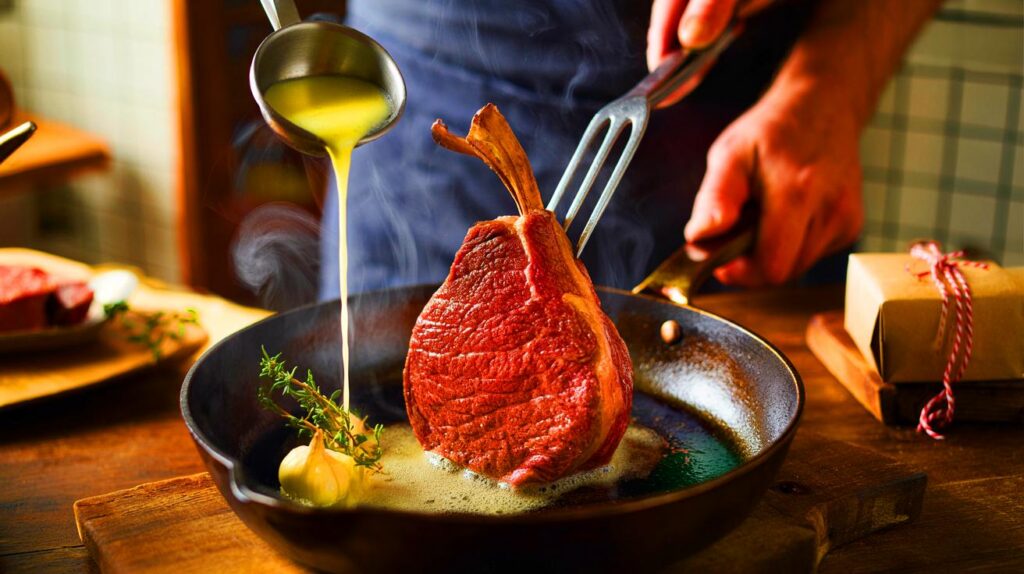
Whispers at the counter point to a small, pear-shaped cut: scarce, silky, and gone by noon in many shops today.
Ask around and you’ll hear about a lean, hidden muscle that eats like a luxury steak yet rarely hits the display. It sits inside the hind leg, stays tender because it barely works, and rewards quick, hot cooking.
What butchers mean by “poire de boeuf”
Poire de boeuf is a compact, pear-shaped muscle taken from the inner hind leg. It’s one of those “butcher’s cuts” that insiders grab before it reaches the counter, alongside favourites like onglet, bavette and the spider steak. Fibres are short, marbling is discreet, and the mouthfeel is soft without being bland.
Its texture lands between fillet and rump: delicate fibres, a touch more flavour than fillet, and a clean, juicy chew.
The muscle does very little work, so it stays supple. Light marbling brings savoury depth without the fattiness of ribeye. In the pan or on a grill, it browns fast, releases aromatic juices, and stays moist when served rare to medium-rare.
Why supply is tight and why you rarely see it
Yield is tiny. From a full-grown animal you get barely enough for a small dinner party.
Only about 750 g per hind leg — roughly 1.5 kg per animal — so regular display stock is unlikely.
Because the pieces are small, butchers often earmark them for regulars or slice them to order. Standing orders help. A quick call a day or two ahead usually secures the cut and allows proper trimming.
Where it sits on the animal
The muscle nestles on the inner face of the thigh, a protected area shielded from heavy work. That sheltered position explains its gentle texture and fine grain. Once separated and trimmed of silverskin, it forms tidy steaks or a neat mini joint for roasting.
How to ask for it at the counter
- Ask by name: “poire de boeuf”, one of the butcher’s cuts from the inner hind leg.
- Request full trimming, ready to cook, with silverskin removed.
- For pan or grill: a thicker, even piece for a strong sear.
- For plancha or wok: thin slices across the grain for fast flashes of heat.
- For fondue or skewers: clean, uniform cubes.
- For a mini roast: a neatly tied piece of about 650–700 g to serve four.
Best tip: order ahead. This cut vanishes early, and careful trimming takes time.
Fast cooking rules that keep it tender
High heat and short timings suit this cut. A heavy pan, dry surface, and a measured rest do the work.
Pan and grill playbook
Pat the meat dry, season with salt 30 minutes in advance, then heat a cast-iron pan until it smokes. Add a neutral oil, lay the meat away from you, and sear hard. Flip once. Finish with a knob of butter and a smashed garlic clove, basting constantly. Rest, then slice across the grain.
Target rare to medium-rare. Overcooking tightens the grain and dulls the gentle flavour.
Mini roast method for four
For a 650–700 g joint, brown on all sides in clarified butter, about four minutes per face, then transfer to a moderate oven at 170–180°C until the centre reaches 52–55°C. Tent with foil and rest six to eight minutes before carving. The pan juices make a quick sauce: deglaze with a robust red, add a knob of butter, reduce to a gloss, strain and spoon over.
Plan timing around a simple schedule: about 25 minutes of prep, roughly 20 minutes of hot cooking, then a short rest. If you dry-brine the joint uncovered in the fridge for 8–12 hours, the crust browns more evenly and the seasoning penetrates.
A quick guide to times and temperatures
| Thickness | Sear time (per side) | Target core temp | Rest time |
|---|---|---|---|
| 2 cm steak | 1½–2 minutes | 48–50°C (rare), 52–54°C (med-rare) | 3–4 minutes |
| 3 cm steak | 2½–3 minutes | 50–52°C (rare), 54–56°C (med-rare) | 5 minutes |
| 4 cm steak | 3–4 minutes + brief edge sear | 52–54°C (rare), 56–58°C (med-rare) | 6–8 minutes |
| 650–700 g joint | 4 minutes per face, then oven | 52–55°C at centre | 6–8 minutes |
Flavour boosters and simple sides
Clarified butter lifts browning and keeps aromas clean. A quick herb baste at the end—thyme, rosemary, bay—adds perfume without masking the meat. A spoon of mustard stirred into the deglaze delivers bite. For a celebratory plate, think pommes parisiennes and a short red-wine reduction from a Malbec-rich wine region. For weeknights, watercress salad, pan juices and crisp potatoes do the job.
Marinades are optional. A soy, garlic and black pepper splash suits thin slices for plancha or wok. For cubes, a 30-minute bath in olive oil, lemon zest and paprika works before skewering. Keep acids brief to avoid softening the surface.
If your butcher is out, smart swaps
- Onglet (hanger): loose grain, deep flavour, loves rare cooking.
- Bavette (flank/skirt): bold taste, slice thinly across the grain.
- Spider steak: tiny, marbled, best flashed hot.
- Flat iron (featherblade): fine texture when the seam is removed.
- Rump cap (picanha): carve into steaks and manage the fat cap for rendering.
Each behaves differently. Adjust times and slice across the grain to keep tenderness in check.
Buying, budgeting and safety
Expect limited availability and a premium over standard rump. Independent UK butchers often price butcher’s cuts in the mid to upper bracket per kilogram, reflecting trimming time and scarcity. Ask for well-aged beef, ideally 21–28 days, which rounds off the flavour and helps tenderness.
Store in the coldest fridge shelf, unwrapped on a rack for a few hours if you plan to cook the same day, or loosely wrapped for up to two days. For leftovers, chill within an hour, slice thin, and serve cold with horseradish or warm gently in a sauce to avoid drying.
Practical extras that make a difference
Grain direction and carving
Note the direction of the fibres before cooking. After resting, rotate the piece so your knife crosses the grain at a right angle. Thin slices amplify tenderness and keep juices where they belong.
Heat management and smoke
Use high-smoke-point oils for the initial sear. Add butter late to baste. If using a grill, preheat until the grates shimmer, then clean and oil them. For indoor pans, crack a window and let the pan heat fully before the meat touches metal; premature contact steams rather than sears.
Order ahead, cook hot and fast, slice across the grain, and aim for 52–56°C at the core. That’s the winning pattern.
Nutritional and pairing notes
Poire de boeuf is relatively lean yet protein-rich. Pair with peppery greens and a starch that soaks up juices—buttered mash, crushed potatoes or a warm lentil salad. A structured red with good acidity balances the richness; think Malbec-led blends or a firm Cabernet Franc.
Risk and reward
The main risk is overcooking. Because the grain is fine, extra minutes can firm the bite. The reward is a steak-night texture from a modest, easily handled piece, with minimal waste and quick turnaround from pan to plate. If you can’t see it in the window, ask; regulars do, and that’s how this soft-spoken cut keeps winning fans.



Tried this last night with a 3 cm piece from my local indie butcher—salted 30 mins, cast-iron smoking hot, 2.5–3 mins per side, butter/garlic baste, rested 5. Hit 54°C and it was insanely tender. Definately ordering ahead next time; trim was spotless and zero waste. Cheers for the timings!
Is “poire de boeuf” the same as eye of knuckle or heart of rump in UK terms? My butcher looked blank. If I say inner hind leg, pear-shaped muscle, will they get it—or should I ask for a neatly tied mini joint around 650–700 g?