
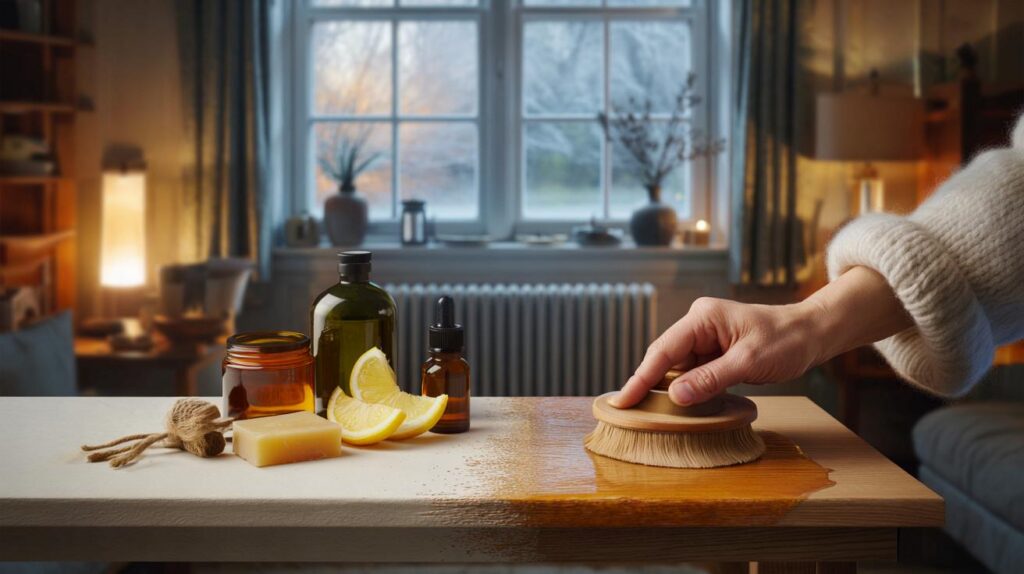
A quiet home trend is spreading from kitchen drawers to living rooms, with jars of golden balm reviving faded oak and pine.
Behind the rise sits an old-fashioned mix of beeswax, olive oil and lemon that cuts costs, avoids harsh aerosols, and brings back that warm, hand-rubbed glow on furniture many of us thought was gone for good.
What is driving the craze
Households facing higher bills are swapping spray cans for a pot-and-cloth routine that takes minutes. The promise is simple: feed dry timber, deepen colour, and tame scuffs without plastic shine or silicone residue. Cabinetmakers knew the trick long before supermarkets lined up propellant polishes. Today the method returns, not as nostalgia, but as a practical fix you can make on the hob.
The polish uses just three familiar ingredients. It nourishes wood fibres, seals pores against humidity and leaves a soft, low-sheen finish.
The three ingredients and why they work
Beeswax: the breathable shield
Beeswax forms a thin, breathable barrier that repels moisture and dust. It buffs to a satin glow and adds gentle depth to grain. It softens around 60 °C and should not be overheated. Carnauba, a plant wax, can replace part or all of the beeswax if you want a harder coat and extra scuff resistance.
Olive oil: the carrier and conditioner
Olive oil loosens the wax and carries it into surface fibres. It improves spread and reduces streaks. Use a fresh, light olive oil rather than a peppery extra-virgin if you worry about scent. For kitchenware that touches food, a neutral food-safe oil is a sound swap.
Lemon essential oil: the cleaner touch
A few drops lift greasy fingerprints and add a bright citrus note. Lemon oil can also help cut old wax haze during the first coat. Sensitive noses can dial it back or choose sweet orange. Skip essential oils on baby furniture and pet items.
| Ingredient | Amount for 100 ml batch | Typical UK cost per batch |
|---|---|---|
| Beeswax | 35 g | £1.10 |
| Olive oil | 70 ml | £0.70 |
| Lemon essential oil | 5–10 drops | £0.25 |
| Total estimated cost | — | £2.05 |
How to make it in ten minutes
- Set a heatproof bowl over a small pan of simmering water. Keep the water just below boiling.
- Add beeswax and warm gently until fluid. Aim for low heat; push past 80 °C and you risk darkening the wax.
- Stir in olive oil slowly. Keep the mixture moving until it turns clear and even.
- Take off the heat. Add 5–10 drops of lemon oil. Stir and pour into a clean glass jar.
- Let it cool for half an hour. The texture should set like soft butter.
Thin coats beat thick ones. Work small areas, allow 10–15 minutes between coats, then buff until the cloth slides.
Application that delivers results
Prep makes the difference
Wipe the surface with a barely damp cloth and let it dry. For thirsty tabletops, a light rub with 240-grit paper smooths rough spots and opens the grain for better take-up. Test a hidden patch on pale woods such as ash or beech, as wax can deepen tone slightly.
Coats, timing and buffing
Load a cotton rag with a pea-sized dab and massage in circles, then follow the grain. Leave 10–15 minutes. Buff with a clean cloth until your palm feels minimal drag. Two or three thin passes beat one heavy smear. Repeat every two to three months in dry homes, monthly in heated rooms with lots of sun.
Where it shines
Solid oak, pine, walnut and teak respond well. It revives frames, shelving, dresser fronts and stair rails. For chopping boards, skip essential oils and use a food-safe variant. Avoid lacquered, polyurethane or factory-matt finishes unless you plan to keep waxing that surface in future, as wax can alter sheen.
How much you could save
A common branded wax tin, 200 ml, sits around £9. Many homes use roughly 1.4 litres of polish a year if they care for several rooms and refresh quarterly. Shop-bought cost: about £63. A homemade batch costs near £2 per 100 ml, or around £28 for 1.4 litres. That puts a typical saving at roughly £35 a year.
Frequent aerosol users see bigger gaps. A 300 ml can at £3 used every fortnight totals £78 a year. Switching to the jar method at £10–£28 for the same coverage brings potential savings near £50–£68, depending on habits and house size.
The money case stacks up fastest in homes with children, pets and high-traffic surfaces that demand regular touch-ups.
Expert tips from restorers
- Warm the room. Cold wood tightens pores and slows absorption.
- Use two cloths. One for application, one dry for a brisk final buff.
- Add 10 percent carnauba for tabletops. It hardens the blend and resists cup rings better.
- Leave waxed surfaces 24 hours before heavy use to let the coat settle.
- Refresh high-wear edges first. Chair arms and drawer fronts benefit from quick, targeted passes.
Care, safety and storage
Keep your jar cool and sealed. Label the blend and date it. Store rags flat after washing to avoid heat build-up. Essential oils can irritate skin, so use gloves if you are sensitive. Beeswax has a gentle scent; if you prefer a near-neutral finish, use minimal lemon oil and air the room.
Do not melt wax over direct flame. A simple bain-marie keeps temperatures steady and reduces risk. If you spill, let the wax set, lift the sheet and clean residue with a small amount of white spirit, then wash with mild soap.
When not to wax
Loose veneer, lifting joints and water-damaged tops need repair, not polish. Wax can mask problems and slow later glue work. If you plan to spray a modern varnish in future, avoid waxing now; silicone-free wax still affects adhesion. For outdoor timber, choose oils made for weather exposure and UV.
Going further
Try a side-by-side test on a tired bedside table. Mask half, wax the other, then photograph in natural light. You will see grain definition sharpen and haze drop. Track how long the sheen lasts across weeks. Small trials like this help you tune the ratio and the number of coats for your climate.
If you live with allergy concerns, swap lemon oil for a faint rosemary infusion made by warming a few sprigs in the olive oil and straining. For a vegan path, a carnauba–sunflower oil blend works well, though it sets firmer and may need a touch more heat during melting.



Does olive oil go rancid on wood over time? My last DIY mix smelt a bit off after a month—maybe I used the wrong oil?
Tried the beeswax + olive oil + lemon on my tired pine shelves—10 mins and the grain popped. Smells clean and no plasticky shine. Definately keeping this in a jar for winter touch-ups 🙂