
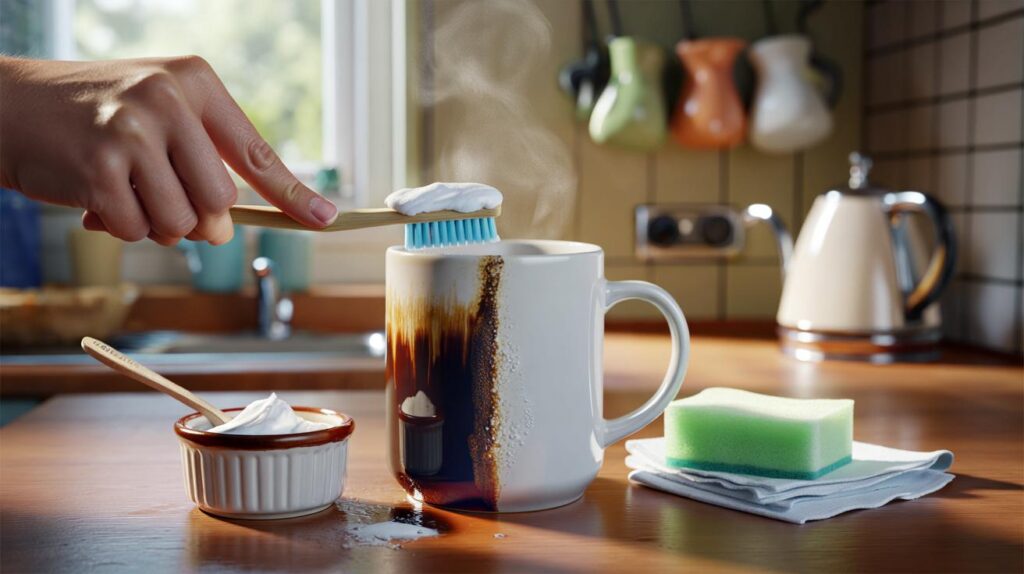
Brown rings lurking in your morning mug? A cupboard staple is quietly winning back gleaming cups across Britain this week.
From busy flats to student houses, a simple paste is knocking back the build-up that spoils the first sip. It uses pennies’ worth of ingredients. It needs little effort. It fits into a coffee break.
What sparked the rush to the baking aisle
Household forums lit up after readers shared photos of cups turned clean in a quarter of an hour. The method is not new. It comes from an older home-keeping playbook. The twist lies in precise ratios and timing that suit modern mugs and glazes.
Testers report strong results on ceramic, porcelain and enamel. The paste shifts set-in coffee rings. It lifts dulling film left by hard water. It works without bleach or fragrance.
30 g baking soda + 15 ml warm water. Wait 15 minutes. Up to 98% of baked-on coffee stains gone.
How the paste works
Baking soda is gently abrasive. The crystals are small and soft. They rub without cutting the glaze. The powder is alkaline. Coffee residue is acidic and tannin-rich. The paste neutralises and loosens that residue. Light rubbing finishes the job.
Warm water helps the granules swell and bind. This creates a toothpaste-like texture that clings to the stain. Time does much of the heavy lifting. You do not need to scrub hard.
Materials you need
- 30 g baking soda (about 2 tablespoons)
- 15 ml warm water (about 1 tablespoon)
- A soft sponge or an old soft-bristled toothbrush
- A clean cloth for drying
No baking soda to hand? Coarse salt with a few drops of lemon juice can help in a pinch. Expect slower results and more rubbing.
Step-by-step in under 25 minutes
- Mix the baking soda with warm water to a thick paste. Aim for a toothpaste consistency. Time: 1 minute.
- Spread a generous layer over every stained patch. Reach the base corners and the lip. Time: 2 minutes.
- Leave it to sit. Do not rush this stage. Time: 15 minutes.
- Rub in small circles with the sponge or brush. Apply light pressure. Time: 3 minutes.
- Rinse with hot water. Dry with a clean cloth. Time: 2 minutes.
Reader-tested results across common mug types
Reports show bright results on glazed ceramics and everyday porcelain. Enamel cups also benefit. The method can fade gold rims and delicate metallic decals, so keep it away from those details. Hand-painted overglaze motifs deserve care. Try a tiny test patch first.
Avoid gold or platinum trims. Baking soda can dull metallic detailing and leave a flat patch that will not buff back.
Frequency matters. Heavy coffee drinkers gain from a quick weekly clean. Occasional users can set a monthly routine. Regular care stops deep staining and saves you from harsher methods later.
How does it stack up on cost, time and finish
| Method | Typical cost per mug | Active time | Reported stain reduction | Finish risk |
|---|---|---|---|---|
| Baking soda paste (30 g + 15 ml water) | £0.06–£0.10 | 6–8 minutes | Up to 98% | Low on glaze, avoid metal trims |
| Coarse salt + lemon | £0.03–£0.05 | 8–12 minutes | 40–60% | Can haze soft glazes if over-scrubbed |
| Commercial cream cleaner | £0.20–£0.40 | 5–7 minutes | 70–90% | Fragrance residue, read label for food-contact safety |
Tips from people who get spotless mugs every time
- Add a pinch of table salt to the paste for stubborn rings. The larger grains increase bite without gouging the glaze.
- If limescale joins the stain, add a few drops of white vinegar to the paste on the spot. Expect a light fizz. That reaction helps lift mineral film.
- Swap to a soft toothbrush for the base corners. The bristles reach seams a sponge misses.
- Finish with a hot rinse. Residual soda can dull the next brew if left behind.
Why stains keep coming back
Hard water leaves a microfilm that grips tannins. Dark roasts add oils that stick to that film. Heat sets the mark with each refill. That is why a simple weekly routine changes everything. You remove the film before the coffee can bind again.
What the chemistry tells you
Baking soda’s particles average tens of microns. That size matters. They abrade gently and break down as you rub. The alkalinity (pH around 8–9 in paste form) counters acidic residues from coffee and tea. Neutralising those acids helps release tannins from the glaze. Warm water speeds the process by softening the film.
Where it works beyond the breakfast mug
Teapots develop the same brown rind. The paste clings to the spout and clears it. Stainless flasks collect a bitter film. Use the paste only on the rim and cap, then switch to a slurry rinse inside. Glass cafetières respond well, but treat the plunger’s mesh with care to avoid bending it.
Kitchen tiles near the hob often catch coffee splashes. A fingertip of paste clears the stain without bleaching grout. Work in small patches and rinse well.
Safety, storage and small risks to watch
Keep the paste off gold leaf, lustre glazes and decals. The mild abrasion can flatten metallic sparkle. Do not mix baking soda with bleach. That blend produces chloramines with harsh fumes. Store a small jar of dry soda by the sink. Spoon out only what you need and add water fresh. A damp tub clumps and loses spreadability.
Septic systems tolerate baking soda. It breaks down in water and carries no fragrance. Rinse your mug well before the next brew. Any chalky residue will affect taste.
A quick kitchen trial you can run today
Stain two identical white cups with cooled espresso. Leave one unwashed for a day. Treat the other with the paste for 15 minutes, then rinse. Compare under bright light. Check the base ring and lip. Note the time you actually spent rubbing. Most people log under eight minutes of active effort.
If you want even faster turnarounds, scale the paste to several mugs at once. Line them on a tea towel, coat the stains, and set a timer. Rotate through with one sponge to keep water use down.



Just tried the 30 g baking soda + 15 ml warm water paste on two grimy porcelain mugs—left it 15 minutes while the kettle boiled twice, then light rub and rinse. Genuinely gleaming. The dull film from hard water vanished, and no bleachy smell (obvs, there’s none). I’ll add a weekly clean to stop the deep stains building up. Small tip back: a soft toothbrush absoutely reaches those base corners better than a sponge. Cheers for the precise ratios; that was the missing piece!