
A cold snap, rising bills and stale air have pushed households to hunt for fixes that tame creeping damp at speed.
Now a nineteenth-century blend from Provence is back in British kitchens, shared in neighbourhood groups and viral posts. Supporters say four accessible ingredients can lift stains within 48 hours while letting old walls breathe. The mix aims to dry fabric, not trap moisture, and that difference matters in older terraces and cottages.
Why a Victorian trick is trending again
Record rain, steep energy costs and widespread mould reports have left many homes with peeling paint, musty smells and dark patches. Builders point to a common mistake: sealing a damp wall with plastic paints or waterproof coatings. That can hold water in the masonry and drive stains back through. The revived approach relies on breathability. It comes from lime-based plasters still used in Provence farmhouses and in historic British buildings.
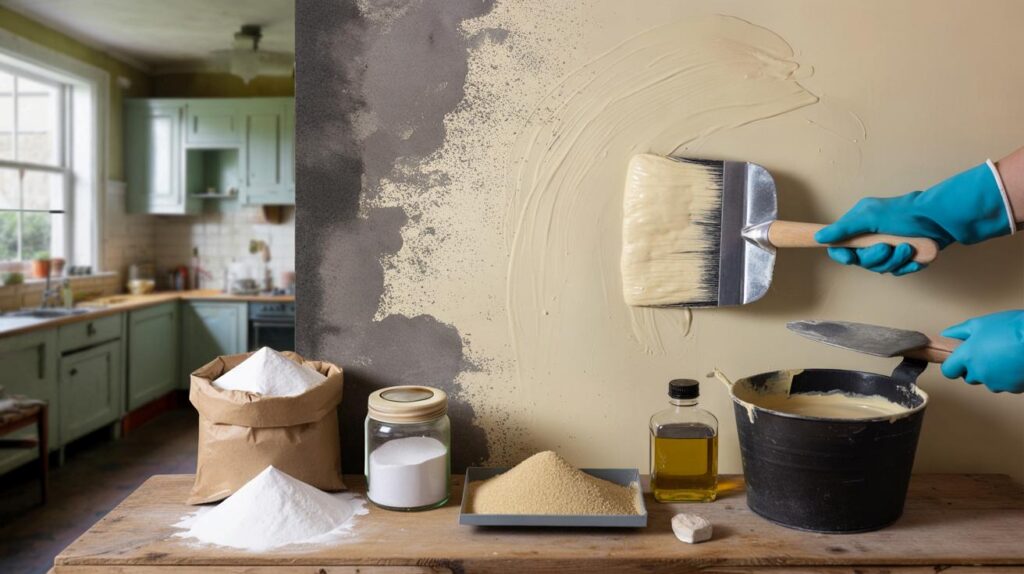
In simple terms, the method mixes slaked lime with fine sand for structure, borax for mildew control, and a dash of oil to help repel liquid water while allowing vapour to pass. Traditionalists reach for olive oil; many DIYers use boiled linseed oil. Stripped-back ingredients, clear method, quick turnaround.
Let walls breathe, not sweat: the lime mix aims to release trapped moisture while tidying visible stains within 48 hours.
The four ingredients and what they do
| Ingredient | Typical amount | Role |
|---|---|---|
| Slaked lime (hydrated lime) | 2 kg | Creates a vapour-open binder that draws out moisture and limits mould growth through high pH |
| Fine silica sand | 3 kg | Adds body and texture so the mix grips brick and traditional plaster |
| Borax or borax substitute | 250 g | Raises pH and hinders fungal activity; many shops sell a “borax substitute” (sodium sesquicarbonate) |
| Olive oil or boiled linseed oil | 500 ml olive oil or 300 ml linseed | Gives gentle water shedding without blocking vapour |
Wear gloves and a dust mask while mixing. Keep borax and substitutes away from children and pets. Ventilate the room.
How people apply it at home
- Dry days help. Pick a spell without driving rain. Open trickle vents and windows where safe.
- Brush back flaking paint and any glossy, impermeable coatings. A stiff brush or scraper works best.
- In a bucket, combine lime and sand. Stir in the borax. Mix thoroughly for a few minutes.
- Drizzle in the oil while mixing until you get a smooth, spreadable mortar.
- Work small areas, about two square metres at a time. Press the mix into joints and hollow spots.
- Finish with light circular strokes to even the surface. Aim for a thin, continuous coat.
- Leave the wall to dry naturally for at least 48 hours. Keep the room aired. Avoid heaters blasting directly at the surface.
Do a hidden test patch first. If the mix powders or slides, the substrate may need more prep—or a different approach.
What to expect in 48 hours
Most users report a quick shift in smell within two days as the surface dries and the lime starts to set. Stains soften in tone, then fade as the wall releases moisture. Over a week, rooms feel less stuffy. After a month of regular airing, new tide marks usually stop appearing if the source is condensation or minor penetration.
Many repeat the treatment every seven to ten years on exposed walls. That schedule matches the way older homes were maintained before plastic paints took over.
Costs, coverage and how it stacks up
Households weigh this method against dehumidifiers and proprietary sealers. A typical batch like the one above can cover roughly 6–8 m², depending on texture. Shop prices vary, but a rough basket looks like this:
| Item | Typical UK price |
|---|---|
| Hydrated lime, 5 kg | £8–£12 |
| Fine sand, 10 kg | £4–£8 |
| Borax or substitute, 500 g | £3–£6 |
| Boiled linseed oil, 500 ml | £6–£10 |
That places the outlay for a first attempt near £20–£30 if you already have a bucket and a stiff brush. Running a mid-size dehumidifier can add £40–£80 a year in electricity, depending on tariffs and use. Many homes end up combining both: the lime layer to free the wall, a small dehumidifier to keep winter humidity under 60%.
When this works—and when it won’t
This mix shines when condensation and lightly penetrating damp mark internal plaster or lime render. It also helps where dense coatings stopped an old wall from breathing. It will not cure a burst pipe, broken gutters, rotten pointing or rising damp from a failed damp proof course. Fix leaks and drainage before you pick up a brush.
Modern gypsum boards and cement tanking don’t love lime-based coats. So stick to brick, stone and traditional plasters. Listed homes often require breathable finishes; this method aligns with that idea, but check local rules before major work.
Never seal a wet wall with plastic paints. Breathable finishes let vapour leave the masonry and reduce future staining.
Health, safety and mould risk
Mould triggers asthma and can irritate eyes and skin. Wear gloves and a mask when cleaning. Avoid dry brushing heavy mould; damp-wipe first to stop spores going airborne. Lime is alkaline and can irritate skin, so wash splashes quickly. Keep the room vented during drying. If black mould covers large areas or returns fast, speak to a qualified surveyor.
Practical extras that boost results
- Ventilation: run extract fans on a timer; crack windows after showers and cooking; use lids on pans.
- Heat evenly: one warm room next to a cold one can drive condensation on shared walls.
- Furniture gap: keep wardrobes 5 cm off external walls so air can move.
- Measure: a £10 hygrometer shows if rooms sit above 60% relative humidity for long periods.
A real-world way to test the idea at home
Pick a patch behind a fridge or inside a cupboard on an outside wall. Strip back paint to a matte, porous surface. Apply a palm-sized circle of the mix. Note the smell and surface feel after 48 hours, then again after one week. If the test patch dries, lightens and stays steady, scale up. If it stays clammy, track down leaks, gutters and pointing before you commit.
Why this old recipe still resonates
Lime-based finishes let homes manage moisture the way they were built to. The four-ingredient blend borrows that logic, adds a mild fungicidal boost, and gives households a way to act fast without sealing walls in plastic. Used alongside better ventilation and basic maintenance, it offers a practical route to calmer air and cleaner paintwork—often within two days.



Tried the lime + sand + borax mix this weekend on a musty box room. By Monday the smell had dropped and the wall looked less blotchy. Cost me ~£22 and a sore arm. Tip: go thin and keep the window cracked. Not a silver bullet, but it’s definately better than slapping on plastic paint. Cheers for the clear steps!
Is borax actually safe to use indoors long term? The article says ventilate, but with kids + cat I’m wary. Also, won’t olive oil in the mix go rancid or attract dust over time?