
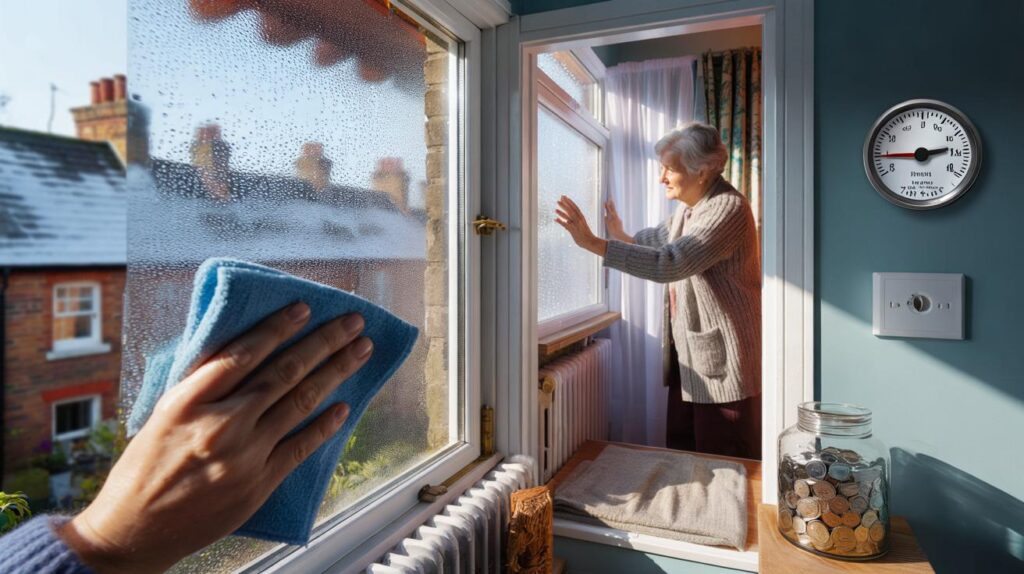
As frost creeps in and bills bite, households are turning to a humble habit that tames damp and calms draughts.
It began as a faded note in a family notebook. Now it is turning heads because it blends steady warmth with fresh air. The idea sounds old-fashioned, yet the logic tracks modern science on humidity, heat loss and comfort.
How the constant-heat trick works
The core move is simple: hold a stable indoor temperature and ventilate briefly, twice a day. That pairing dries the air, keeps walls above the dew point, and stops condensation from clinging to cold glass and plaster. Dry air needs less heat to feel cosy. Your boiler cycles less. Your rooms stop yo-yoing between too hot and too chilly.
Set 19–20°C all day and night. Air the home twice daily for 10 minutes with a cross-breeze. Keep surfaces warm and dry.
This constant-heat approach suits British terraces and semis with mixed insulation. It cuts the energy spikes that come from reheating cold rooms, and it curbs damp that saps warmth from walls and fabrics.
What you need at home
- Central heating or radiators with reliable controls and thermostatic radiator valves
- Two or three thick wool throws to act as gentle baffles near cold windows
- Door draught excluders for external doors and under-used rooms
- A simple timer or phone alarm to schedule airing times
- An indoor thermometer and, ideally, a humidity meter (target 40–60% RH)
- A microfibre cloth for quick window wipe-downs on frosty mornings
Avoid unflued gas heaters and do not cover electric fan or convector heaters. If you drape a throw near a radiator, leave a gap for airflow or use a purpose-made rack.
Step-by-step for busy households
Set and forget the temperature
Dial in 19–20°C on your room thermostat and leave it. Turn TRVs down in rarely used rooms to 16–17°C to reduce waste while keeping fabric temperatures safe from condensation.
Create warm paths near cold glass
Hang or place thick throws close to window areas to guide warmth across cold surfaces. You are not insulating the whole room with a blanket; you are nudging warm air to kiss the glass and nearby walls, which reduces misting.
Seal the gaps that howl
Fit draught excluders at the base of external doors and around letterboxes. Keep internal doors closed, then open only those that help the intended airflow.
Vent with intent
Air twice daily, 10 minutes each time. Open two opposite windows to form a quick cross-breeze. Fresh air in, stale moist air out. The walls stay warm; the air is replaced fast.
Let storage breathe
Do not overfill wardrobes and cupboards. Leave space for airflow so cold corners do not trap moisture behind coats and boxes.
| Time | Action |
|---|---|
| 07:30 | Check thermostat at 19–20°C, wipe any window mist with a microfibre cloth |
| 09:00 | Open two opposite windows for 10 minutes to clear overnight moisture |
| 16:00 | Second 10-minute airing before the evening heating peak |
| 22:00 | Close internal doors, ensure draught excluders are in place, TRVs set |
Why stable warmth can cut costs
Cold walls act like sponges. Moisture condenses on them, and the damp surface steals heat from the room. Keeping surfaces above the dew point breaks that cycle. Your boiler then works steadily instead of surging to recover lost heat each morning and evening. That steadier burn can be more efficient, particularly with condensing boilers operating in their sweet spot.
Aim for 40–60% relative humidity. Drier air reduces condensation, mould risk and the “clammy chill” that pushes you to turn the dial higher.
The method won’t fix gaping gaps in insulation. Yet many homes feel markedly warmer once the air is drier and surfaces stop sweating. People often report clearer windows within days and less musty odour in back bedrooms.
What people report after two weeks
- Windows stay clear except in very cold snaps, and any mist wipes away in seconds
- Rooms feel evenly warm with fewer hot-cold swings across the day
- Less condensation behind furniture and inside wardrobes
- Lower boiler cycling, with quieter operation and fewer sudden gas spikes
Savings vary widely by house type and behaviour. Where heating was previously used in short bursts with heavy condensation, households have reported 15–20% lower consumption after switching to steady heat and timed airing.
Safety notes and common pitfalls
- Never cover electric convectors, gas heaters or fan heaters with fabric
- On water-filled radiators, use a drying rack or keep throws a short distance away to allow airflow
- Avoid airing during severe smog or heavy smoke; choose a later window
- If you see persistent damp patches, pull furniture 5–10 cm from external walls
- Asthma or respiratory issues at home? Keep humidity near 50% and clean window seals regularly
A quick back-of-the-envelope saving
A typical British home uses around 12,000 kWh of gas a year, most of it for heating. If the constant-heat method trims 15–20% of the heating portion, the cut might be 1,500–2,000 kWh. At 7p per kWh, that equates to roughly £105–£140 a year. In a draughtier house, the gain can be higher; in a well-sealed flat, lower. Add the comfort boost and the value rises further.
Small tweaks that multiply the benefit
Tune your boiler for condensing mode
Lower the flow temperature on modern boilers to about 55–60°C if your radiators still keep rooms at 19–20°C. That helps the boiler condense more often, improving efficiency while you maintain steady heat.
Use doors as valves
Keep internal doors shut to hold warmth. During airing, open just enough doors to create a clean breeze path between two windows, then close again.
Add low-cost moisture control
Fit lids when cooking, run the extractor during showers, and hang laundry in a well-ventilated room. Reducing indoor moisture means fewer minutes of airing to achieve the same result.
The science in plain terms
Warm air holds more moisture. When that air touches a cold surface, water drops out as condensation. If you stop surfaces from getting very cold by keeping a steady background temperature, and you purge moist air quickly with short, sharp ventilation, the droplets never form or vanish fast. Less wetness on walls means less heat loss through evaporation. Comfort rises without cranking the thermostat.
If you only try three things this week
Keep it simple: steady 19–20°C, two short airings, dry windows, calm bills. Track humidity; aim for 40–60%.
Extra pointers for different homes
In small flats, cross-ventilation may need a door cracked rather than two opposite windows. In large houses, stagger airing by floor so you do not chill the whole building at once. If you work from home, take your airing break between calls and let the fresh air reset the room. For households with variable schedules, set phone alarms so the routine sticks.
Pair the routine with smart TRVs if you can. They trim setpoints in spare rooms automatically and keep living areas steady at 19–20°C. Add a £10 humidity meter to gain instant feedback: when the reading creeps above 60%, increase the next airing window or run the extractor after showers.



Anyone tried this in a 1930s semi with single‑glazed bay winodws? If I hold 19–20°C all day, do TRVs at 16–17°C in spare rooms actually stop condensaton there, or just waste gas?
Not buying it. Physics says heat loss is proportional to delta‑T; more hours hot = more loss. Show meter data pls.