
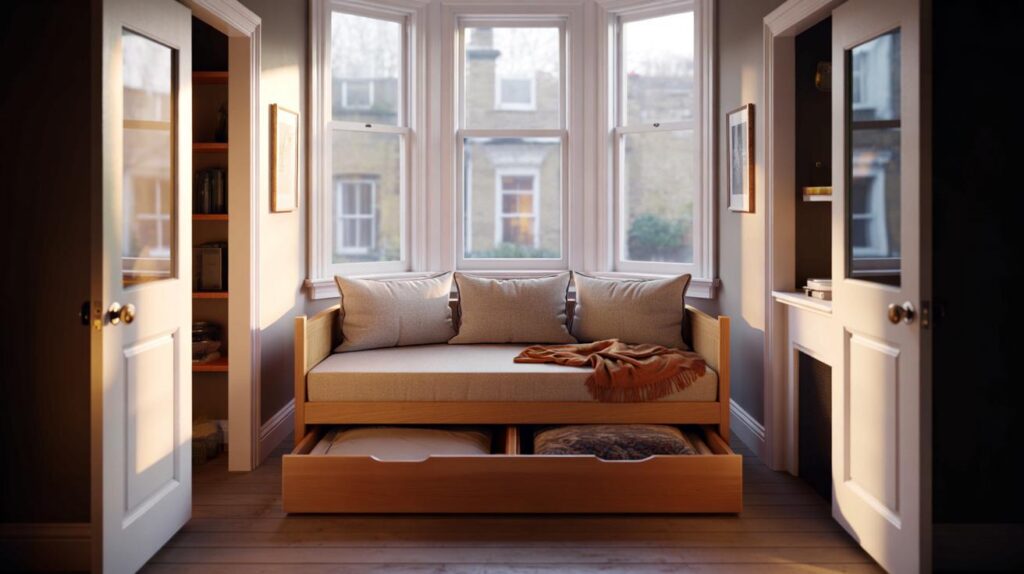
Across tight British homes, a forgotten furniture tweak is reshaping how families host, revise and rest, without knocking down walls.
A grandmother-grade daybed method is moving from folklore to front room, reclaiming as much as 40% of wasted floor. Households under pressure from rent, energy bills and boxy layouts now use one compact piece to switch a lounge from daytime sofa to night-time guest bed in minutes.
The old trick making a new comeback
The daybed has deep European roots. In the 18th century, compact homes relied on a méridienne to merge elegance and utility. Today’s version keeps that spirit. It looks like a sofa by day. It sleeps one adult at night without unfolding metalwork or a clunky mechanism. You set it once and swap the textiles to change its role.
What has changed is need. Living rooms double as home offices. Spare rooms became nurseries. Friends still need a place to stay. A single, sensibly sized daybed delivers seating, a reading nook and an instant guest bed without eating the room.
Turn a 12 m² lounge into a dual-use zone by pairing sofa seating and a single bed in one 90 × 190 cm footprint.
How the 40% figure stacks up
Most living rooms lose swathes of space to awkward corners, unused window bays and walkways wider than they need to be. A daybed hugs a wall and compresses several functions into one compact rectangle. You keep circulation on the opposite side and reclaim a surprising chunk for real use.
| Home type | Typical dead space | Daybed footprint | Space re-used | Notes |
|---|---|---|---|---|
| Studio, 12 m² lounge | 3–5 m² along walls and under windows | 0.9 × 1.9 m (1.71 m²) | Up to ~40% of previously idle zones | Seats three by day, sleeps one adult |
| Terrace, 15 m² front room | 4–6 m² in corners and bay | 0.9 × 1.9 m (1.71 m²) | 25–40%, depending on layout | Pairs well with narrow bookcases |
| Box room, 7 m² | 1–2 m² behind doors and under sill | 0.9 × 1.9 m (1.71 m²) | 20–30% as a compact guest room | Best with under-bed drawers |
Keep walkways at 75–85 cm. Park the daybed tight to one wall so people and daylight do the rest.
What you need and what it costs
You can buy a ready-made daybed, but a simple DIY build keeps costs lean and sizing precise. The core kit follows tried-and-true dimensions.
- Solid wood frame, 90 cm × 190 cm (oak or beech works well)
- Firm mattress, 15 cm deep (a futon also suits frequent sitting)
- Three to four cushions, 60 cm × 40 cm, to form a backrest
- Removable, washable cover in linen or heavy cotton
- Throw, 150 cm × 200 cm, for warmth and a visual layer
- Optional: pull-out drawers beneath for bedding and books
Budget guide, if you choose basic materials and a weekend build:
- Frame timber and fixings: £110–£130
- Mattress or futon: £70–£90
- Cushions and covers: £25–£45
- Throw and protective topper: £20–£35
Total lands near £220 when you shop sales or mix new with quality second-hand. Add £40–£60 for drawers later if storage proves tight.
Step-by-step in minutes
The setup is quick. It also respects light and comfort, so the piece feels like a sofa and sleeps like a bed.
- Step 1 — place the frame: sit it against a solid wall, at least 40 cm from a window edge to keep light flowing (10 minutes).
- Step 2 — add the mattress: ensure a snug fit so it won’t creep during daytime use; choose firm support (5 minutes).
- Step 3 — shape the back: stack cushions in a staggered line to form a backrest near 45 degrees (2 minutes).
- Step 4 — dress the piece: fit the neutral cover, then layer the throw for texture and warmth (15 minutes).
Allow 32 minutes for the initial install. Test the seat for five steady minutes before you call it done.
Expert tips that lift comfort
Proportions that read as a sofa
Keep the backrest below 50 cm high so the silhouette stays sleek. Neutral textiles help it fade into the room by day and feel calm at night. Choose fabrics that resist pilling and wash well.
Care and rotation
Air the mattress daily. Lift the front edge and let the frame breathe for a minute. Rotate the mattress weekly to spread pressure from sitting and sleeping. Wash the cover every fortnight in homes with pets or pollen.
Placement and warmth
Use winter sun. Park the daybed where low light hits it, but leave a gap from radiators to avoid drying the wood. Keep a reading lamp just above shoulder height to spare eyes during evening use.
Real-world gains for busy homes
Parents use the daybed to split needs. One child can revise with a solid backrest and task lighting. A younger sibling can nap later without a sheet change. Guests find a ready, full-length bed with proper support. The living room still seats a small crowd for film night. No metal bar pokes through cushions. No unfolding at midnight.
Renters also benefit. The daybed counts as furniture you can take with you. Landlords usually welcome a solution that avoids drilling for wall beds. Students favour it in shared houses because it keeps posters and shelves free for personal style.
Risks, limits and how to avoid them
- Moisture: raise the mattress weekly and wipe the slats to deter mildew in humid rooms.
- Fire safety: keep throws away from heaters and candles; choose covers with a UK-compliant fire label.
- Wall scuffs: line the back with felt pads or a slim board if you have textured plaster.
- Comfort drift: cushions flatten over time; refill with new inserts yearly for a supportive back.
- Allergies: select washable covers and vacuum seams to remove dust mites.
Try this simple simulation at home
Measure your room. Tape a 90 × 190 cm rectangle against the wall where you plan the daybed. Walk your everyday routes: door to sofa, sofa to kitchen, sofa to window. Time each route. If you keep 80 cm clearance on your main path and 60 cm on secondary routes, you likely won’t feel cramped. Sit on a chair placed on the tape to test lines of sight to TV, window and conversation zones. If it all aligns, the daybed will fit your habits.
Add-ons you can stack
- Under-bed drawers to hide bedding and a spare pillow for guests.
- A trundle base to roll out a second bed for visiting cousins.
- A folding side table that slides under the frame for laptops and tea.
- Clip-on reading lights with warm LEDs to ease evening strain.
- Seasonal covers: airy linen for summer, heavier cotton for winter warmth.
Keep the system simple: one footprint, two daily roles. The room gains function without losing calm.
Why this matters now
Britain’s housing squeeze pushes families to do more with less. A daybed is not a gimmick. It solves three problems in one rectangle: daytime seating, a quiet reading corner and a reliable guest bed. It respects tight budgets and renters’ rules. It gives hosts an easy way to say yes to overnight stays.
If you want to quantify your gain, start with your least used corner. Map the tape, track your routes for a week and count how often you sit, lie down or host in that spot. If use doubles, the 40% claim stops feeling like a headline and starts feeling like an everyday upgrade.



Love this—renter-friendly and close to £220 if you shop smart. I’ve got a 13 m² lounge with a draughty bay; hugging a 90×190 against the wall might finally revive that dead space. Any recs for firm 15 cm futons that don’t sag after 6 months? Also, I definitley need the rotate-and-air habit.