
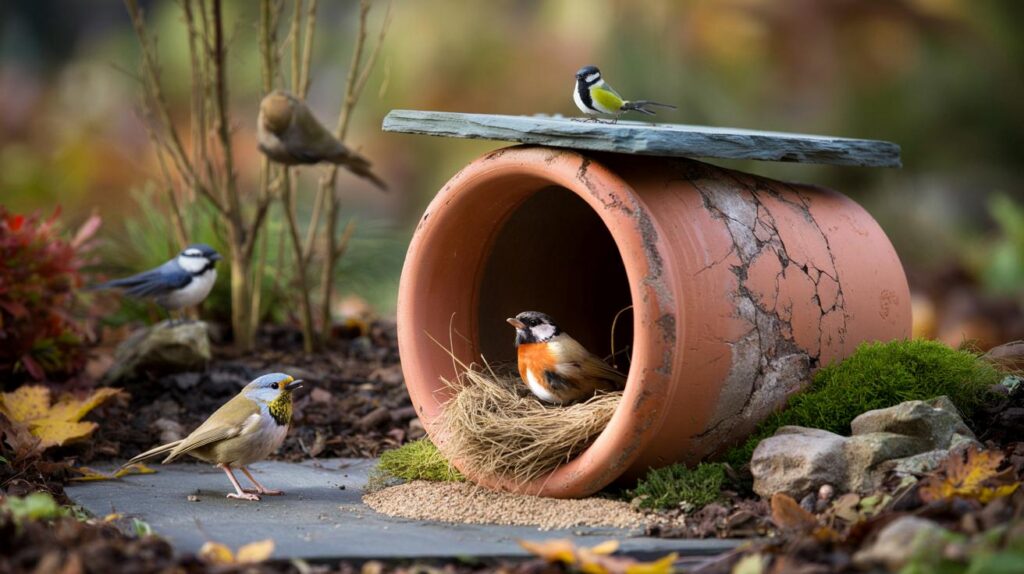
Autumn bites, budgets tighten, and gardens quieten. Across Britain, small, clever tweaks are quietly changing how people care for wildlife.
As colder nights roll in, householders from Leeds to Lewes are rethinking what goes in the bin. A quirk of garden craft is spreading fast: converting chipped or split plant pots into snug, ground-level roosts that give small birds a fighting chance through wind, rain and early frosts, with almost no spend.
Why old pots beat the bin
Terracotta holds heat, breathes, and blends into borders. Broken rims or hairline cracks work in your favour, creating crevices and shadow. Set the pot low among perennials and you’ve got shelter from gusts and cover from prowling cats, while keeping a natural look.
One broken pot, fifteen minutes, zero pounds: that’s a warm, dry roost for wrens, robins and blue tits when it matters most.
There’s a second win. Garden structure improves as you add low shapes and texture around the base of grasses and late asters. Shelter for wildlife can also tidy a border and cut waste in one move.
How the £0 terracotta shelter works
What you need
- Cracked terracotta pots (12–25 cm diameter), or tough plastic if that’s all you have
- Fine gravel or sharp sand for stability and drainage
- Dry straw, dried moss or wood shavings (untreated) for lining
- Hand saw, tile file or pliers to smooth sharp edges
- Gloves and eye protection
Make it in five steps
- Invert the pot so the original drainage hole becomes a doorway.
- Widen the doorway to 30–40 mm, or cut a small side notch, then smooth edges to avoid injuries.
- Seat the pot on a fist-sized pad of gravel so water drains away and the pot can’t wobble.
- Add a loose handful of dry lining, no more than 2 cm deep, so birds can tuck in without trapping moisture.
- Camouflage with leaf litter, twigs and a few stones to break up the outline, while keeping the doorway clear.
Face the doorway south-east or east for morning warmth and afternoon shade. Keep it out of prevailing wind.
Terracotta is ideal because it moderates temperature and discourages condensation. Where pots are thin or badly chipped, nestle a flat stone or slate on top to stop rain ingress while preserving airflow at ground level.
Placement that birds trust
Placement decides whether birds use it. Aim for dappled cover, not open lawn. Give a clear flight line in and out, and avoid tight corners where cats can lurk. In small gardens, one shelter per 5–8 square metres works well; larger plots suit clusters of three at different heights within the planting.
| Entrance size | Likely visitors | Height from ground |
|---|---|---|
| 30–32 mm | Blue tits, coal tits | 0–50 cm, under foliage |
| 35–40 mm | Great tits, house sparrows | 0–80 cm, sheltered edge |
| Slot 40 × 20 mm | Wrens, robins | Ground-hugging, dense cover |
Design that blends with borders
Use autumn performers to hide the pots without blocking access. Think sedum heads, airy miscanthus, rudbeckia seed domes and the fine tufts of Stipa tenuissima. Salvias carry late colour and nectar, drawing insects that, in turn, feed the birds.
- Pair pots with low grasses to break wind at bird height.
- Let seedheads stand: goldfinches raid them, and they frame the shelters.
- Mix pot sizes to create a micro-landscape that looks intentional.
Three to five small shelters, spread along a border, create micro-habitats that hold warmth and reduce draughts at ground level.
Colour does not matter to birds, but to your eye it might. Leave terracotta bare to weather to soft green, or dab on clay-based paints in muted tones. Avoid varnish and solvents; they trap moisture and add odours that deter wildlife.
Who might move in
Robins and wrens love nooks at ankle height. Tits drop in at dusk for group roosting on frosty nights. Dunnocks skulk under shrub lines and may use side-notched pots as quick bolt-holes. In coastal towns, a black redstart might pass through, while finches linger nearby to pick over seedheads.
Activity often spikes after dusk as small birds seek calm, dry roosts; look for tiny tracks in the dew at the pot’s mouth.
Safety, hygiene and the law
Keep entrances facing away from feeders to cut disease risk. Place shelters 5–10 metres from feeding stations and clean spillages that could attract rats. If cats visit, add thorny prunings or a low mesh arc behind the pot so predators cannot sit tight on the approach.
- Refresh lining material monthly in winter; use boiling water to rinse the pot if fouling builds up.
- Avoid chemicals and strong disinfectants inside roost spaces.
- Do not disturb active nests; the Wildlife and Countryside Act protects nesting birds across the UK.
These pots are winter roosts and day refuges, not formal nest boxes, but the same care applies in spring. If birds start nesting nearby, leave everything as-is until fledging is complete.
Costs, time and measured gains
Budget-wise, this is about as lean as it gets. Old pots cost nothing, and most people have gravel or sand to spare. A small bale of straw is under £4 and serves dozens of shelters. Each unit takes 10–15 minutes from first cut to final placement.
Community bird groups report fuller garden logbooks when winter cover increases. Anecdotal counts suggest more frequent sightings of wrens and robins within a fortnight of adding ground-level refuges, especially during cold snaps and heavy rain. The shelters don’t replace nest boxes or hedges; they complement both.
Common mistakes to avoid
- Sharp edges left at the entrance: smooth until your fingertip runs cleanly across.
- Perfectly upright placement: tip the pot 5–10 degrees so water runs off.
- Open, exposed lawn sites: tuck into planting, not in the middle of turf.
- Thick bedding: too much lining traps damp; keep it sparse.
If you want to go further
Combine pot shelters with a simple “dead hedge” of twiggy prunings as a windbreak. Add a shallow, frost-proof water dish with pebbles for footing. Swap one pot for a log pile to support insects; more insects mean richer winter foraging for tits and robins.
For small balconies, one cut-down plastic pot lined with coir and shielded behind winter pansies can serve as a mini-refuge. In large gardens, trial placements: set three clusters in different beds for two weeks each, then keep the sites that show the most tracks, droppings or dusk activity. That small experiment tells you where your garden holds heat, blocks wind and offers the calm birds choose.



Briliant idea—finally a reuse that actually helps wildlife. I tried one last winter and wrens moved in within a week. The 5–10° tilt tip is gold. Thanks for the detailed entrance sizes!
£0 if you already own gravel, sand, straw, tools and goggles… feels a bit like “free like a free puppy.” Still, I’ll give it a go; cracked pots beat the bin, and my neigbours won’t mind the look.