
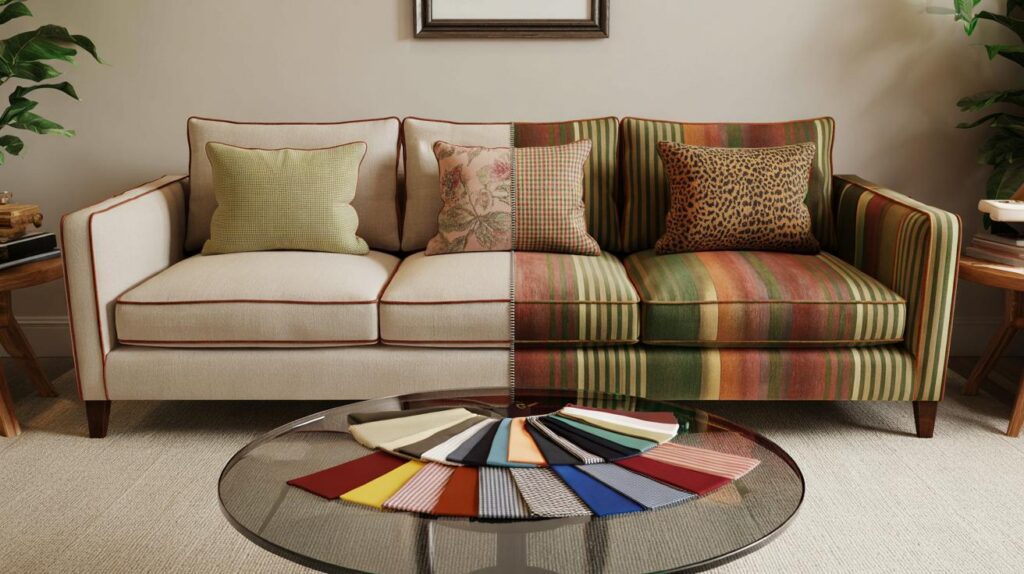
After years of safe choices, living rooms edge toward a bold rethink as prints, texture and nostalgia quietly gather pace.
The new season points to a decisive shift in seating. Plain sofas step back. Pattern takes the lead with stripes, checks and florals borrowed from the 1970s and 1980s. Designers tap into maximalist warmth and cottage charm. Homeowners want personality without chaos. Retailers respond with bolder fabrics, smarter stain protection and modular options.
What changes in 2026
Neutral seating still sells, but it no longer sets the tone. Pattern now carries the room. The look nods to retro optimism, yet feels grounded and practical. Families ask for durable textiles. Renters ask for covers that zip off. Both groups want a living room that feels lived in, not staged.
Plain beige stops being the default in 2026. Stripes, checks, gingham, florals and even animal motifs return to the sofa, and they stay.
Retail buyers report higher demand for printed upholstery. Social feeds amplify the shift, as patterned armchairs and ottomans cascade into full-size sofas. The logic is simple. Pattern hides marks better than block colour. It adds energy without repainting a wall. It gives a faded room a point of view.
From retro to now
Two movements push this revival. Maximalism rewards personality and layered detail. Cottagecore brings comfort and nostalgia. Both live happily on a sofa. The 70s love of cord, velvet and low-slung silhouettes reappears. So does the 80s taste for contrast and graphic rhythm. Designers fuse those references with lighter frames and calmer palettes.
Expect slimmer arms, rounded cushions and playful piping. Expect botanical prints on classic two-seaters. Expect striped velvet on modern sectionals. The forms stay simple so the fabric can speak.
Five patterns leading the charge
- Stripes with discipline: vertical or rugby-wide lines sharpen a room and elongate compact spaces.
- Checks and gingham: small-scale grids feel homely and pair well with oak, rattan and wool throws.
- Florals and botanicals: soft repeats warm cool, modern shells and balance concrete floors.
- Animal hints: a restrained leopard or zebra on cushions turns a plain sofa into a statement.
- Tartan and tweed: autumnal tones add depth and work with leather, brass and smoked glass.
How to use pattern without overwhelm
Start with scale. Go large on the sofa, smaller on cushions. Or invert it if your rug is plain. Keep three colours in play across the room. Repeat each tone at least twice for coherence. Use one geometry and one organic motif to avoid visual noise.
Pick one hero pattern for the sofa. Echo its colours in two quieter places: a lampshade and a throw, or a rug border and a vase.
Match lines to lines. Pair pinstripes with slim shelving and linear lighting. Match curves to curves. Pair cabbage roses with round coffee tables and drum lamps. If your living room lacks light, pick a light ground fabric with mid-tone pattern. If you have a wall of windows, a darker ground anchors glare.
A quick pairing guide
| Pattern scale | Room size | Best pairings | Watch-outs |
|---|---|---|---|
| Large stripes | Small to medium | Plain rug, slim legs, one accent colour | Too many verticals near tall bookcases |
| Small gingham | Any | Natural timber, linen curtains, matte paint | Busy with patterned wallpaper of similar scale |
| Mid florals | Medium to large | Round tables, soft lamps, solid rug | Competing with bold art of equal size |
| Tartan/tweed | Medium | Leather chair, brass hardware, wool blanket | Heavy alongside dark walls and floors |
Care, performance and the boring bits that save money
Printed upholstery earns its keep. Patterns disguise crumbs and scuffs. Families gain breathing room between deep cleans. Look for removable covers if you have pets or young children. Check for machine-washable labels and hidden zips. Choose tight weaves for claw resistance and lint control.
Performance matters. Ask for the Martindale rub count. Aim for 30,000+ for busy homes. Seek stain-guarded fabrics that repel spills without a shiny film. Test with water in store if possible. Check lightfastness if your sofa sits in sun. Rotating cushions spreads wear and keeps prints aligned.
Budgets and smart buys in 2026
You have options at most price points. Add a patterned slipcover from around £199 to refresh a solid sofa. Reupholster a quality frame from about £600–£1,200, depending on fabric and detail. New mid-range patterned two-seaters often sit between £599 and £1,299. Vintage frames cost less, but allow for webbing and foam upgrades.
Spend where touch and wear happen. Pay for durable seat fabric. Save on the back if it faces a wall. Select mid-scale prints for longevity. Loud, oversized motifs date faster. Classic stripes and garden prints age well and mix easily when you redecorate.
Safety, rules and vintage checks
In the UK, upholstered furniture should meet the Furniture and Furnishings (Fire) Safety Regulations 1988. Ask for compliance labels on new sofas. For vintage, use a reputable upholsterer who can add compliant interliners and foams. Keep candles and heaters well away from fringes and loose throws.
Measure doors and stairs before you pay. Patterns add complexity to returns if a sofa will not fit. Confirm lead times on custom fabrics, which can run eight to twelve weeks. Order a spare metre of fabric for future repairs.
Renters and small-space strategies
Landlords may resist bold sofas. Work around it. Add patterned slipcovers and tie-ons that you can remove in minutes. Use a printed loveseat instead of a full sofa. Combine with a plain storage ottoman to calm the look. Patterned armchairs deliver the same energy with less risk.
Mirrors help patterned rooms breathe. Neutral curtains steady a loud print. A single-colour rug grounds the scheme. Keep coffee tables light and open if your sofa fabric is dense.
Seven looks you can build this weekend
- Navy ticking stripes + oak side table + cream wool rug.
- Olive gingham + rattan lamp + terracotta vase.
- Rose botanical + round marble table + brass floor lamp.
- Caramel cord + tartan cushions + dark green throw.
- Charcoal herringbone + linen curtains + birch shelves.
- Leopard accent cushion + camel sofa + smoked glass side table.
- Multi-colour awning stripe + white walls + jute rug.
Try-before-you-commit tricks
Tape fabric swatches across the back cushion and seat. Live with them for a week. Check them at breakfast and at night. Take a phone photo in black-and-white to test contrast. If the shapes still read well without colour, the pattern will not turn muddy.
Print an A4 sheet with your chosen motif scaled to cushion size. Blue-tack it to your sofa and step back three metres. If your eye rests easily, the scale is right. If it flickers, go simpler or larger.
What this means for the high street
Retailers prepare wider fabric menus and faster cover swaps. Expect modular sofas with clip-on arms and loose, patterned skins. Expect more rental-friendly options with reversible cushions. Expect a lively mix of stock and made-to-order to keep waste down and choice up.
Extra context for savvy buyers
Two concepts shape success with pattern. First, the 60–30–10 balance. Let one neutral hold 60% of the room, your sofa pattern take 30%, and a sharp accent bring the final 10%. Second, repetition. Echo a sofa colour in two smaller items to lock the scheme. These guides reduce impulse regret and protect resale value.
There are trade-offs. Pattern can feel busy near gallery walls. Tone the art down or leave one wall clear. Bold motifs may date with fast-moving micro-trends. Hedge your bet with a classic pattern on the largest surface and save novelty for cushions you can change for £30–£50 each.



Love this. Pattern as the hero makes sense: it hides marks, adds energy, and you can echo colors elsewhere. I’m stealing the 60-30-10 rule and the tip to match curves to curves. Also, thank you for the Martindale reminder: 30,000+ for busy homes is the kind of boring detail I always forget. Now debating striped velvet vs botanicals for a medium room with oak and linen.