
The clocks tumble back, temperatures dip, and a stubborn chill lingers in corridors while bills rise faster than expected.
Across the country, people nudge the thermostat up and still feel a nip near the entrance. The hidden reason sits right in front of you: the front door often bleeds warmth through tiny gaps you barely notice. Tackle that leak and the hallway warms, the boiler rests, and the meter slows.
Why your hallway feels cold even when the boiler is on
Doors sit on the building’s pressure boundary. Wind pushes cold air at the threshold while warm air tries to escape higher up. Even a well-fitted door can leak along the bottom edge, at the latch side, around the frame, the letterbox or the keyhole. Once air moves, heat follows. That is why cranking the heating rarely fixes a draughty entrance.
The numbers sting. Over a heating season, air leakage at the door can account for up to 20% of heat losses in a typical home. On gusty nights the effect spikes, leaving rooms slow to heat and quick to cool. People pay for heat that slips outdoors in minutes.
Up to 20% of seasonal heat loss can slip past a poorly sealed front door, especially during windy evenings.
Clues stack up fast:
- Cold ankles or a chill pooling on the floor by the threshold.
- A faint rustle or whistle when the wind picks up.
- Light seeping under the door at night or dust lines along the sill.
- Faded mats or leaves blown into the hallway after blustery weather.
The £10 fixes many people skip
Fit a draught excluder at the threshold
A door brush or drop-down seal blocks the gap along the floor. Measure, cut, screw to the inside face, and test with a strip of paper. The brush should kiss the floor, not scrape. Most households gain 1–2°C in the hallway and fewer boiler cycles within days.
Spend under £25 and recoup the cost within weeks as the boiler runs less and rooms stabilise faster.
Hang a thermal curtain behind the door
A dense, floor-length curtain traps a cushion of still air. Fit a rail that covers the frame edges and keep the fabric to the floor for best results. Choose a lined or interlined option and pull it across at dusk. Renters can use a tension pole to avoid drilling. Expect a warmer entrance, less noise and fewer draughts with every cold snap.
Renew the seals and fine‑tune the latch
Perished or flattened seals leak. Peel away the old strip, clean the frame, and apply new EPDM or silicone weatherstripping around the head and sides. Aim for a firm, even contact when the door shuts. If the latch is loose, adjust the striker plate or hinges so the door compresses the seal all around. Add a letterbox brush, a cowl outside, and a keyhole cover to tame two notorious leak points.
Run the five‑minute leak test
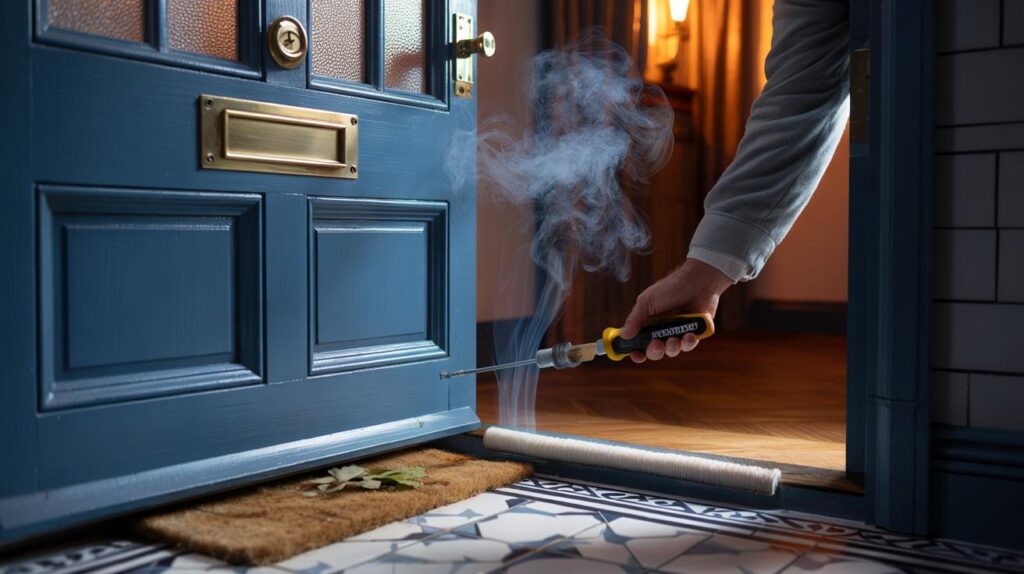
On a windy day, hold the back of your hand around the frame and threshold; you will feel cold spots where air sneaks in. A lit incense stick works too—watch the smoke bend towards gaps. Slip a sheet of paper in the latch side and close the door. If it pulls out easily, you need tighter adjustment or new seals.
What could it cost you this winter
Here is a quick way to judge the stakes. Gas unit rates currently hover around 7p per kWh. If door leaks account for about 20% of space-heating energy, the pounds add up quickly.
| Home type | Heating use (kWh/yr) | Door-related loss (20%) | Cost at £0.07/kWh |
|---|---|---|---|
| Flat | 4,000 | 800 kWh | £56 |
| Terraced | 6,000 | 1,200 kWh | £84 |
| Semi‑detached | 8,000 | 1,600 kWh | £112 |
| Detached | 10,000 | 2,000 kWh | £140 |
A £10–£25 outlay on a brush seal and fresh weatherstripping can defend tens of pounds of heat every winter.
Maintenance habits that keep heat in
- Vacuum the threshold weekly so grit does not hold the door open.
- Retighten hinge and handle screws each season to maintain compression on the seals.
- Wipe and revive rubber seals with a dab of silicone spray to stop cracking.
- Close the thermal curtain at dusk and during windy spells, even if the heating is off.
- Check the letterbox flap sits flat; replace warped units before storms roll in.
Common mistakes that waste warmth
Leaving a gap for “ventilation” at the bottom
A 5 mm strip under a door leaks like a pipe. Use a purpose-made trickle vent elsewhere and seal the threshold properly. Fresh air still enters through controlled vents without dragging heat out of the hall.
Sticking foam where a brush or drop seal is needed
Self-adhesive foam helps on the frame sides, not across the floor. At the threshold, use a brush or an automatic drop seal that lowers as the door shuts and lifts when you open it.
Ignoring the frame, not just the leaf
Cracked mastic between the frame and the wall can channel air behind the architrave. Rake out loose sealant and apply a new bead to stop hidden leaks.
Renters: quick wins that will not upset your landlord
Choose stick‑on weatherstripping, a weighted draught “sausage”, a tension‑rod curtain and a clip‑on letterbox brush. All remove cleanly at the end of the tenancy. Keep the packaging and take these items with you when you move.
Balance warmth with safety and fresh air
Seal the door, but do not block required ventilation. Keep trickle vents open and do not obstruct air feeds for boilers or heaters. Manage moisture to prevent mould by aiming for 40–60% relative humidity. Short, sharp window airing after showers helps, as does a small dehumidifier in damp weather.
Thinking bigger: when an upgrade pays back
If the door is warped, rotten or badly fitted, replacement might save more than patches. Look for a low U‑value insulated unit with a solid threshold, multi‑point locking and factory‑fitted compression seals. Expect a tighter close and quieter hallway. Factor in a professional survey if the frame is out of square or the sub‑sill has sunk.
Try this tonight: a simple action plan
- Do the hand test and note every cold spot around the door.
- Fit a brush seal at the bottom and new EPDM strips around the sides.
- Close a thermal curtain at dusk and during windy spells.
- Recheck with incense; adjust the latch until the paper test grips firmly.
Five minutes of checks and a £15 kit often deliver the first warmer morning you have felt all season.
If your entrance faces prevailing winds, add a small canopy to deflect rain and gusts away from the door. Where space allows, a glazed internal porch creates an airlock that slashes infiltration. Pair the door fixes with smarter heating schedules and you can shave another few percent from consumption without touching comfort.
Want a quick estimate for your home? Multiply your annual heating use by 0.2, then by your energy unit price. That figure is the ballpark at stake. Halving that loss through seals, a threshold brush and a thermal curtain is realistic in most homes. Keep receipts for materials, note the date of installation, and track meter readings over four weeks to see the improvement in black and white.



Brilliant roundup—just fitted a drop-down seal and the hallway is defnitely less nippy. Cheers for the reminder about adjusting the latch too.
Is there a source for the ‘up to 20%’ figure? Curious whether that assumes an older timber door, certain wind speeds, or airtightness levels (ACH). Trying to separate headline stat from typical homes—any soure?