
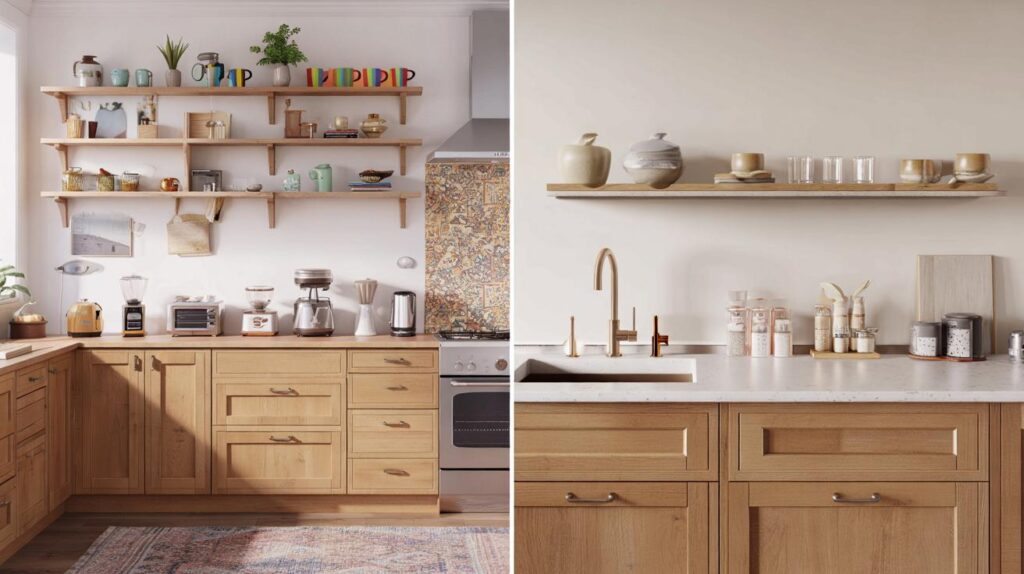
Cold nights, hearty stews and friends at the table: your kitchen frames the season more than any other room.
As new ranges hit shops and feeds fill with glossy makeovers, designers warn that one misstep keeps dating British kitchens. The fix feels smaller than a renovation and cheaper than a trend haul. It also lasts longer. Here is what pros suggest you do this week to keep that space calm, useful and enduring.
Why timeless beats trendy in a hard-working kitchen
A kitchen works for breakfasts in February, late suppers in June and family Sundays in November. A timeless scheme keeps pace without screaming for attention. It softens harsh light in summer and lifts dull days in winter. It also saves you from repainting after a short-lived fad fades.
The speed trap of short-lived trends
Trends turn fast. Last year’s zesty green or statement handles can feel tired by spring. Maximalist wallpaper in a small space fights with pans, jars and appliances. Strong colour everywhere raises the visual temperature and makes meal prep more stressful. People crave a room that settles the eye, especially when daylight shrinks.
What a calm palette does for daily life
Neutral tones, honest materials and simple lines create a base that accepts change. Beige, warm white and mid-tone wood sit happily with autumn branches and December fir. Add colour with fruit in a bowl, a linen runner or seasonal ceramics. You refresh the mood without redoing the room. That approach also reduces waste and long-term spend.
The number one style killer in kitchens right now is visual clutter. Calm rooms age well; busy rooms age fast.
The mistake experts avoid
Designers agree: over-decorating undermines everything. A shelf filled to the edge, ten plant pots, novelty jars, six different metals and rainbow mugs pull your eye in every direction. You lose order and warmth. You add dust and work.
How clutter creeps in
- Open shelves packed with mismatched mugs, bottles and props
- Too many small appliances left out “for convenience”
- Three wood tones, two stones and four metals in one view
- Patterned splashback, patterned blind and patterned rug together
- Novelty handles or rails that fight with the cabinet lines
A quick method to restore harmony
Edit, group and align. Clear half your open storage. Keep only items you use weekly and that match the palette. Box the rest. Pick one hero metal for taps and handles, then one supporting finish for lighting. Limit yourself to three main colours plus one accent. Hide spare appliances. Decant dry goods into clear or ceramic containers that fit the shelf depth. Use a “one in, one out” rule for accessories.
Fewer objects, better objects: that single shift makes a kitchen look newer without buying a new one.
Materials that age well
Warm timber and worked stone give depth without noise. They anchor a scheme and handle fashion’s swings.
Why mid-tone oak wins in real homes
Mid-tone oak balances warmth and light. Very pale veneers can feel flat and show stains. Very dark timber can swallow light on short days. Oak with a visible grain brings texture and a human touch. Handle-less or discreetly handled doors tighten the look. The space reads as calm and intentional. You can dress it up or down each season.
Pairing with white or black stone
Stone worktops stand up to heat, spills and heavy use. White lifts small rooms and bounces light; black grounds open-plan spaces and hides light wear. The contrast with oak gives a subtle, graphic line that never shouts.
| Material | Look | Care | Typical cost (per m²) |
|---|---|---|---|
| Quartz | Consistent white or deep black; modern | Wipe with pH-neutral cleaner; low upkeep | £180–£320 |
| Granite | Natural movement; subtle sparkle | Seal yearly; avoid harsh acids | £160–£300 |
| Marble | Classic veining; elegant | Seal often; patina forms with use | £220–£400 |
Care that keeps the look fresh
Wash oak fronts with a damp cloth and mild soap. Feed oiled finishes twice a year with linseed or a specialist product. Use chopping boards to prevent dents. Clean stone daily with a soft cloth and neutral cleaner. Reseal natural stone on schedule. Mop spills quickly, especially wine, citrus and coffee. Fit extractor fans and run them long enough to reduce grease on open shelves.
What to buy now without dating your space
Autumn and winter collections bring tempting objects. You can shop them without falling into the churn. Choose texture over statement colours and function over novelty. Capsule lines from high-street retailers in 2025 lean into raw ceramics, ribbed glass and linen blends. These sit quietly with oak and stone and still add seasonal interest.
- Heavy linen tea towels in caramel or moss, £12–£18 each
- Neutral jute runner for the prep zone, £35–£55
- Unglazed ceramic vase for branches, £25–£45
- Solid wood chopping board that doubles as a platter, £29–£59
- Dimmable warm-white bulbs for pendants, £8–£15
Spend on touchpoints you feel every day, save on flash buys you forget by spring.
A seasonal checklist that keeps style on track
Fifteen-minute reset
- Clear worktops except kettle, coffee kit and one fruit bowl
- Remove three decor items you do not use weekly
- Group wood with wood, metal with metal; avoid a scatter of finishes
- Rotate one soft element: runner, towel set or seat pad
Storage moves that free the eye
Fit one deep drawer for pans and one for dry goods. Add a slim pull-out for oils near the hob. Use lidded bins for packets that usually sit out. Raise wall shelves by 5–10 cm to open the sightline. Place hooks inside doors for mitts and small tools. These shifts cut visual noise by half and quicken clean-up after meals.
Money, time and risk: what the numbers say
Households spend £50–£120 a season on small trend-led accessories. Over five years, that reaches £1,000–£2,400 with little lasting impact. Editing clutter costs nothing and changes the room instantly. A mid-tone oak door upgrade plus a stone worktop runs from £2,500–£5,000 in a typical galley. That outlay spreads over a decade and lifts daily use, resale appeal and energy for cooking at home.
Open shelving looks charming in photos but gathers grease and dust near hobs. Limit it to one run, away from steam. Reserve it for durable items—stoneware, glass and books with wipeable covers. Closed storage reduces cleaning hours and protects food quality. Add soft-close hardware to cut noise and chips on fronts.
Think of your kitchen like a capsule wardrobe. Keep the base tight and durable. Change accents with the season. If you feel tempted by a bold paint or a new handle trend, test it on one stool or a tray first. Take a photo in morning light and evening light. If the image dates the space by year, skip it. Your future self will thank you.



So what exactly is the £59 mistake—buying novelty accessories every season? Feels a bit clickbaity if the fix is just “declutter.” Can you be clearer about the number in the title?
Loved the “fewer objects, better objects” mantra. I cleared two shelves and my kitchen instantly felt calmer. Any rental-friendly tips for hiding appliances without adding cabints?