
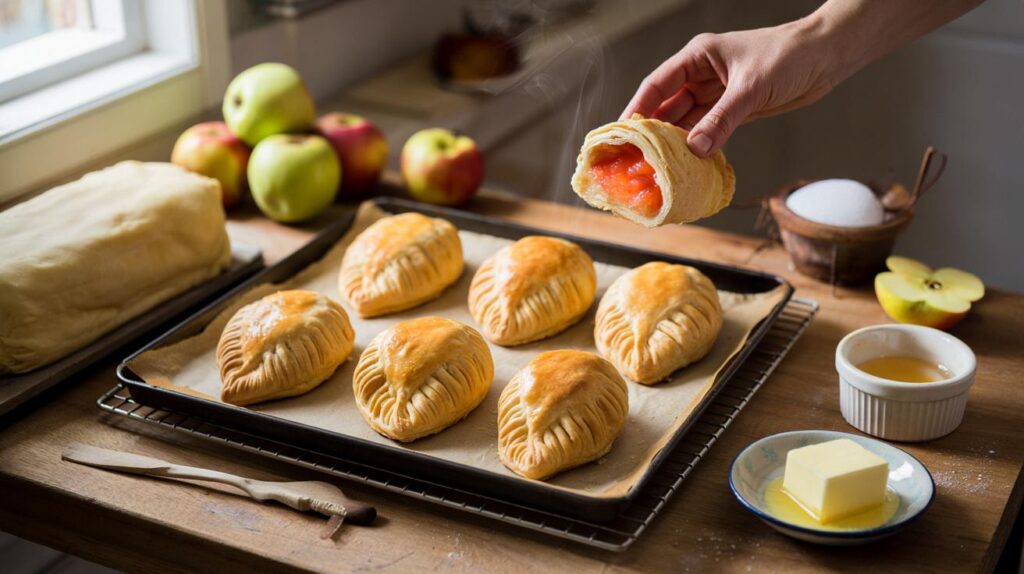
Cold days push ovens back to work as kitchens chase warmth, scent, and small comforts with butter, fruit, and steam.
Across the country, families reach for apples and puff pastry while prices nudge decisions at the till. Bakeries tempt with lacquered crescents. Home cooks weigh cost, time and that first snap of flaky layers over a steamy, vanilla-soft centre.
What’s behind the apple turnover surge
Autumn puts apples in prime condition, and shoppers pivot to warm bakes. Retail watchers say social chatter around apple turnovers has climbed week by week since the first cold snap. Many readers blame bakery counter prices for the shift to home batches. Others want control over ingredients, and a richer apple flavour than factory fillings deliver.
Bakers agree on one thing. Puff pastry needs cold handling. Apples need patient heat. Steam must do the lift. The rest comes down to timing, temperature and a short list of ingredients you can source on any high street.
200°c fan, 20–25 minutes, door shut: the trio that gives height, gloss and clean layers.
The smart shopper’s breakdown
You can turn out six generous pastries without premium spend. Here is a realistic basket based on October prices.
- All-butter puff pastry, 500 g: £2.20 (two small rolls or one large block)
- Apples, 5 tart-firm (Bramley, Cox or Braeburn), about 700 g: £0.90
- Caster or light brown sugar, 40 g: £0.05
- Vanilla (1 pod or 1 tsp extract): £0.25
- Unsalted butter, 20 g: £0.15
- 1 egg yolk and 1 tbsp milk for glaze: £0.23
- Half a lemon for juice: £0.12
Estimated total: £3.90 for 6. That’s around 65p per turnover, versus £2.50–£3.00 each at many high-street counters. Even after energy, the homemade route keeps most wallets calmer.
Your savings add up fast. Bake 12 at home this month and you can keep roughly £18 in your pocket.
Step-by-step: pastry that shatters, filling that melts
Make a slow vanilla apple compote
Peel and core five apples. Cut thick wedges so they hold shape. Toss with lemon juice to protect the colour. Warm 20 g butter in a wide pan over low heat. Stir in the apples, 40 g sugar and vanilla. Cook gently for 20–25 minutes until most liquid has evaporated. Stir occasionally. Aim for a thick, spoonable compote with a few soft chunks for texture. Cool completely before filling.
Cut, fill and crimp like a pro
Lightly flour the bench. Roll chilled puff pastry to 3 mm. Cut six circles, 12–14 cm wide. Place a heaped tablespoon of cold compote in the centre of each. Leave a 1–1.5 cm border. Dab the rim with water. Fold to make a half-moon. Press the edge firmly, then crimp with a fork for a tight seal. Transfer to a lined tray.
Glaze, score and chill for lift
Beat one egg yolk with a tablespoon of milk. Brush thinly over the pastry. Use a small knife to score curved lines on top without cutting through. Chill the tray for 15 minutes. This rest keeps the butter cold and the layers defined in the oven.
Chill shaped pastries for 15 minutes. Cold dough lifts higher and flakes cleaner.
Baking times, tools and energy
Preheat a fan oven to 200°c. Slide in the tray on the middle shelf. Bake 20–25 minutes until the tops bronze and edges look lacquered. Leave the door closed. Open early and you release steam that drives the rise.
Different appliances can trim minutes and pennies. Here’s a practical guide.
| Appliance | Temperature | Time | Approx. energy cost |
|---|---|---|---|
| Fan oven | 200°c | 20–25 min | ~25p per batch (0.8 kWh @ £0.30/kWh) |
| Conventional oven | 210°c | 22–28 min | ~28p per batch |
| Air fryer (spacious basket) | 180°c | 16–20 min | ~14p per batch |
Rotate the tray once if your oven has hot spots. Transfer pastries to a rack within five minutes to avoid soggy bottoms.
Serving, storing and safe reheating
Dress them up without drowning the crunch
Serve warm with a soft billow of lightly whipped cream. A small scoop of vanilla ice cream melts into the creases. A thin drizzle of salted caramel or a glossy dark chocolate sauce matches the apples’ acidity and the butter’s richness.
Keep the texture, avoid the rubber
Eat the same day for best flake. Store leftovers in a lidded container at room temperature for 24 hours, or chill for up to 3 days. To revive, heat at 170°c for 6–8 minutes. Skip the microwave. It softens layers and dulls the crust.
Variations worth your weekend
Cinnamon, almond and a pear twist
Stir ½ tsp ground cinnamon into the compote for warmth. Fold in diced pear for fragrance. Add small shards of marzipan for richness, or scatter flaked almonds over the glaze before baking for a nutty crunch.
Caramel notes without a sticky mess
For a toffee vibe, cook the apples until the sugars start to caramelise at the edges. Or brush hot pastries with a thin layer of warmed apricot jam for extra shine and a bakery-window look.
Free-from swaps that still flake
Many supermarket puff pastries use plant fats and are dairy-free; check the label. For a vegan glaze, whisk oat milk with a tiny pinch of icing sugar. For gluten-free diets, use a specialist puff and handle it cold and gently. Expect a little less loft but solid results.
Which apples work best in Britain
- Bramley: high acidity, cooks down fast, gives a plush compote. Add an extra tablespoon of sugar if you prefer sweeter.
- Cox: aromatic and balanced, holds small pieces after a slow cook.
- Braeburn: firm and juicy, keeps bite and resists collapse.
- Egremont russet: nutty, low juice, great texture for defined chunks.
Mix two varieties for complexity. Balance sweet and tart so the filling tastes lively, not flat.
Nutrition, allergens and batch planning
Per turnover (home size), expect roughly 290–330 kcal, 16–20 g fat, 14–18 g sugars, and 3–4 g fibre. Allergens include gluten (wheat) and egg in the glaze. Dairy appears in butter if using all-butter pastry. Nuts feature if you add almonds or marzipan.
Want a head start for a busy weekend? Assemble, glaze and score, then freeze raw on a tray. Once solid, bag them for up to 2 months. Bake from frozen at 190°c for 28–32 minutes, no thawing, and glaze again lightly halfway if needed for extra shine.
Freeze unbaked, bake from frozen. Lower temp, longer time, same snap and steam.
Troubleshooting and safety checks
- Leaking filling: cool compote fully and leave a clean border before sealing. Press the fork right along the edge.
- Flat pastries: pastry warmed up. Chill shaped pieces for 15 minutes and keep the oven properly preheated.
- Pale tops: add 2–3 more minutes, or switch to top heat for the final minute for colour.
- Sticky bases: use a hot tray or a perforated one for airflow, and move baked pastries to a rack promptly.
- Burn risk: steam escapes when you break a hot turnover. Let them stand 10 minutes before serving to protect mouths and hands.
Why this method works
Puff pastry lifts because water in the butter and dough turns to steam and separates layers. Cold fat delays melting. A hot oven traps steam inside long enough to build height. Thick compote prevents boil-over. Scoring guides expansion and spreads glaze evenly for that bakery sheen.
If you want to go deeper next time, try a side-by-side test. Bake three on a chilled tray and three on a room-temperature tray. Note lift, colour and flake. You will see the cold-tray batch win on every measure. Small controls make home baking feel precise, and your results more consistent week after week.



Just tried the 200°C fan/door-shut trio and wow, the lift is real! Chilling the tray for 15 mins made such a diff—definately the flakiest layers I’ve had at home. My compote was a tad loose though; maybe I rushed the simmer. Next time I’ll cook it down longer. Thanks for the clear steps and the air fryer tip too 🙂