
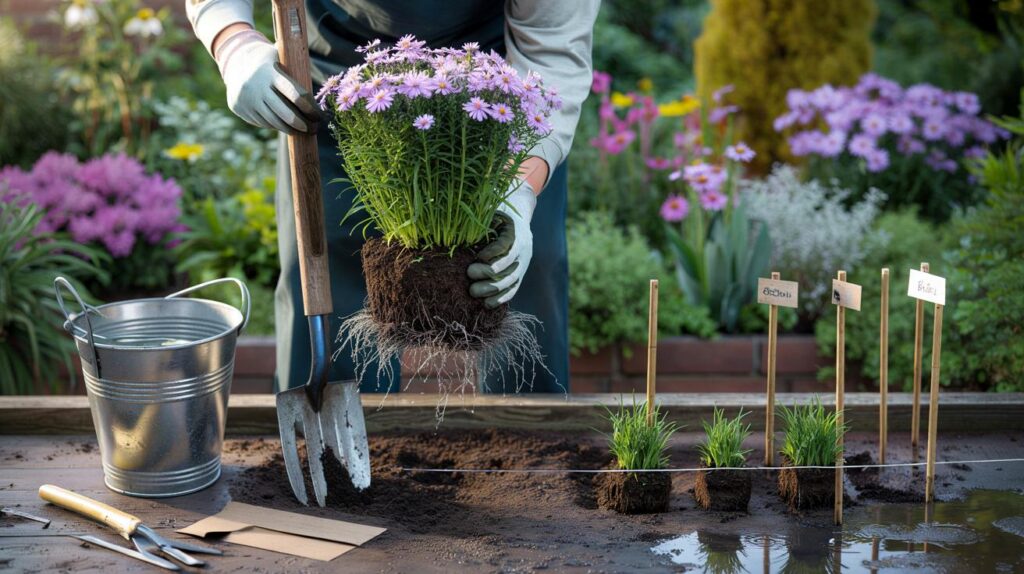
Rain taps the patio. Soil holds summer’s memory. A quiet window opens, and gardeners who act now bank next spring’s colour.
While borders fade, roots still race. Late October brings mild ground, gentle light and regular moisture. That mix gives divided clumps a calm landing and a strong launch when March returns.
Why autumn supercharges your perennials
Warm soil, cool air, quick roots
By late October, the topsoil stays warm, yet the air cools enough to reduce transpiration. Divisions settle without heat stress. Moist nights keep the root zone consistently damp. Plants direct energy below ground, knitting new roots before winter locks in.
Late October offers a rare duo: warm soil for fast rooting and steady moisture for low-stress establishment.
Spring divisions fight dry spells and early heat. Autumn divisions face fewer shocks, so they root faster and flower with real intent next season.
Small budget, wide impact
Dividing home-grown clumps costs nothing. Each new plant already matches your soil and microclimate. The parent clump also benefits. Splitting removes tired centres, opens space and triggers fresher growth. Your border gains rhythm and balance without a garden-centre receipt.
This choice trims plastic pots, cuts lorry miles and supports local insects with extra nectar sites. More plants, less waste, healthier beds.
Spot the clumps ready to split
Five signals to act
- A thinning centre or a doughnut-shaped clump with bare ground in the middle.
- Fewer blooms than last year on an otherwise established plant.
- Spindly stems that flop or struggle.
- Obvious crowding as neighbours compete for light and space.
- Plants in place for 2–3 years that now look coarse or overgrown.
Act before a thug takes over the whole bed. Timely intervention keeps clumps young and the planting scheme readable.
Reliable candidates
- Asters for late-season colour and pollinator traffic.
- Hostas for bold leaves in shade and container displays.
- Phlox and echinacea for strong summer blocks.
- Mints for scent, tea and bees—keep in check with division.
- Campanulas for edging and soft, bell-shaped flowers.
- Digitalis (often short-lived) from offsets and self-sown rosettes.
How to divide well: from spade to fresh clumps
Tools and timing
- Fourche-bêche or garden fork to lift cleanly with minimal root damage.
- Sharp knife or sturdy spade to split the crown.
- Secateurs to remove weak or diseased growth.
- Bucket of water and a long drink for every replanted division.
- Labels and pencil to mark positions before foliage collapses.
Pick a still, overcast afternoon. Shade roots as you work. Keep divisions moist from lift to replanting.
Step-by-step that saves time and plants
- Slide the fork all round the clump. Lever it up in one piece.
- Shake or tease off soil so you can read the crown and the natural seams.
- Split into 2–6 parts, depending on size. Trim away woody, hollow or mushy sections.
- Snip back lank stems to reduce water loss. Keep several healthy shoots on each piece.
- Soak divisions for 10 minutes. Replant immediately at the same depth.
Each new piece needs living roots and active buds. No roots and no buds equals no plant.
Backfill with soil mixed with well-rotted compost. Firm gently so roots meet soil, not air. Water until the ground settles and glistens.
Aftercare that locks in success
Water, mulch, watch
Give 2–3 litres per plant at planting, then top up as needed. Lay a 3–5 cm organic mulch to hold moisture and buffer early frosts. Skip strong fertiliser now; tender roots dislike salts. Compost adds structure with fewer shocks.
For the next 15 days, keep the root zone evenly moist. Little and regular beats heavy and rare.
Where to place each division
Light and spacing shape longevity. Match plant to spot, and use clear gaps so clumps expand without warfare.
| Plant | Light | Spacing | Notes |
|---|---|---|---|
| Hosta | Partial shade | 35–45 cm | Slug patrol helps fresh leaves. |
| Aster (novi-belgii) | Full sun | 40–50 cm | Good airflow reduces mildew. |
| Phlox paniculata | Sun to light shade | 40 cm | Moist, fertile soil suits it. |
| Echinacea | Full sun | 35–40 cm | Free-draining soil prevents winter rot. |
| Mint (in pots) | Sun to partial shade | 30 cm | Sink pots to curb runners. |
| Campanula | Sun to partial shade | 30–35 cm | Edge paths for soft spill. |
Spread spare plants into gaps, refresh tired corners or pot them up. A few swaps with neighbours broaden the palette and tighten community ties.
Results you can bank—and the pitfalls to dodge
Gains this season and next
The parent crown regains vigour. New clumps bulk up fast and carry more flowers, often in their first full season. Pollinators get extra nectar stations. Beds look layered rather than lumpy. The household budget benefits as square metres fill out for free.
Regular division also tidies disease pressure. Fresh roots energise the soil food web. You renew favourite cultivars in-house rather than hunting for replacements.
Mistakes that cost plants
- Waiting until deep November or after a hard frost. Cold, wet soil slows recovery.
- Working in waterlogged clay. Roots suffocate and rot.
- Planting too deep. Crowns need light and air at the surface.
- Pouring on strong fertiliser. Young roots scorch.
- Forgetting labels. Spring weeds hide new shoots.
- Creating tiny scraps with no roots. Keep divisions substantial.
Extra tactics for confident success
Plan, test, and keep a record
Sketch each bed before you lift a spade. Mark where divisions will land, using 30–40 cm as a default gap. Trial two division sizes of the same plant in different spots. Compare growth next June, then repeat the size that performed best.
Pot up spare splits in 2–3 litre containers with peat-free compost. Heel pots into a sheltered corner, water when dry, and plant them out in early spring for a second wave of colour.
Think biodiversity and resilience
Stagger flowering times when you replant. Pair early echinacea with late asters to feed bees from June to October. Mix leaf shapes and heights so wind passes through rather than toppling stems. Add a thin grit layer around crowns on heavy soils to shed winter wet.
One calm afternoon, three basic tools and a clear plan can turn one clump into three thriving plants.
If you time it for late October’s soft conditions, roots anchor fast, plants ride out winter, and borders greet spring thicker, brighter and better aligned with the space you have.



Brilliant reminder, I just split phlox and asters this afternoon — warm soil + cool air is real. The 21‑minute, 3‑tool approach stopped me overthinking. Watered 2–3L each and mulched ~4 cm; fingers crossed for spring colour. Thanks for the spacing table; 40 cm for phlox makes sense and keeps mildew down. Cheers! 😊