
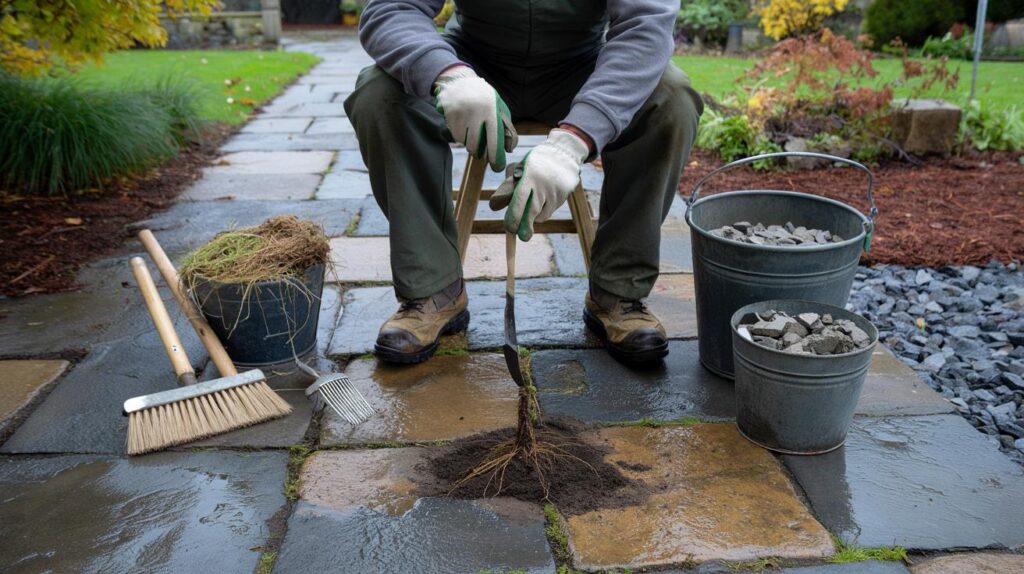
A cooler sun, softer soil and a simple shift in routine are changing the way people keep paths tidy this autumn.
Across the country, householders are quietly swapping strain and sprays for small, smart moves timed to the weather. The result is cleaner paths, fewer weeds and less pressure on joints, achieved with a routine most people can fit into busy weeks.
A seasonal shift that spares your back
Late October brings shorter days, damp mornings and soil that still gives. Those conditions work in your favour if you lean into them. The ground loosens after rain, roots slide free with a gentle twist and small, regular sessions replace punishing weekend marathons.
Short, post-rain sessions of 10–15 minutes, two or three times a week, beat one exhausting blitz.
That cadence changes the job from drudgery to maintenance. It also reduces the risk of slips, strains and the temptation to reach for harsh chemicals at the first sign of moss.
Manual weeding, minus the aches
Position, pace and simple tools
Most pain comes from posture, not the plants. Work close to the ground with a straight back, rest one knee on a pad, and alternate hands to spread the load. A low stool keeps hips open and reduces pressure on the spine. Set a timer, stop when it rings, and switch task.
Tools do the quiet work. A narrow-blade weeding knife glides between pavers to prise out rosettes and taproots. A hand fork loosens compacted gravel. A stiff brush lifts moss before it mats. After rain, even old roots yield with far less leverage.
Choose your moment: damp soil releases roots; dry soil snaps them, guaranteeing a comeback.
Target the right spots
Focus where weeds get a foothold: joints between slabs, the sunny edge that warms first, and shaded sections where moss holds moisture. Clearing those choke points slows the seed bank across the whole path.
Mulch that does the heavy lifting
A simple barrier with numbers that matter
Once the surface is clear, a mulch layer does the day-to-day defence. It blocks light, buffers temperature swings and keeps raindrops from battering seeds into gaps. Aim for 4–5 cm. Thin scatterings look neat for a week, then fail.
Choose by location. Organic mulches such as pin bark, chipped hardwood or dry lawn clippings suit borders that fringe a path. Mineral mulches such as 10–20 mm gravel, slate chippings or scoria suit walking surfaces and resist displacement underfoot.
A 4–5 cm mulch layer denies light to new seedlings and keeps paths stable through winter wet.
How to place it fast
Rake the surface, lift debris and aerate compacted patches with a fork. Tip small piles, then level with a brush. Keep mulch 2–3 cm back from door thresholds and drain covers. On a ten‑metre run, the job often takes under half an hour with two buckets and a broom.
Dry stone paths that drain and deter
Why water flow matters more than force
Where puddles linger, weeds thrive. A dry stone build—stones laid without mortar over a firm granular bed—lets water pass down, not across, starving annuals of a foothold. The gaps are narrow by design, generous to rain, stingy to seedlings.
Lay a sub-base of compacted gravel 5–7 cm deep. Bed surface stones so they sit proud but level, with joints no wider than a finger. Leave pockets only where you want controlled green—low sedums, for instance—rather than rogue dandelions.
Local stone blends in and keeps transport mileage down: gritstone in the north, Cornish slate in the south-west, granite where it’s plentiful. The look is natural, and the maintenance minimal: brush, don’t blast.
What to do this week
- Pick a damp morning or the day after rain for your first 15‑minute sweep.
- Work the joints first with a narrow knife; lift taproots clean in one pull.
- Brush off moss and silt; they lock in moisture and feed germination.
- Lay 4–5 cm of suitable mulch where you’ve cleared recurring growth.
- Mark any puddling sections for a dry stone refresh when time allows.
Costs, time and handy kit
| Method | Upfront cost | Time for 10 m | Back strain risk | Weed return window |
|---|---|---|---|---|
| Manual weeding after rain | £0–£15 (knife/pad) | 15–25 minutes | Low with kneeling pad | 2–6 weeks, depending on seeds |
| Mulch layer (4–5 cm) | £20–£40 per 10 m | 20–30 minutes | Low | 3–6 months with top-ups |
| Dry stone refresh | £40–£90 per 10 m | 60–120 minutes | Low if paced | Year‑round, spot brushing only |
Health and safety you can live with
Keep movements compact. Pull towards the body, not across it. Break tasks into sprints. Swap hands often. Wear gloves with grip on wet stone and shoes with a steady tread. Avoid working on algae-slick slabs; a quick scrub with a stiff brush reduces slip risk dramatically.
If you rely on weed burners, use them only on dry, still days and well away from timber edging or dry mulch. Check local guidance on herbicide use; many councils are reviewing roadside spraying, and private use near drains can carry penalties. For most homes, heat and elbow grease are safer than liquids.
Small design tweaks that cut future work
Starve the weeds, feed the eye
Narrow gaps mean fewer seeds lodging. Where joints are wide, backfill with kiln-dried sand on slabs or fine gravel on paths and brush it down well. Redirect roof run-off into a water butt rather than letting downpipes flood a single path edge. Shade bare gravel with low, spreading groundcovers where people don’t step; fewer bright, bare patches mean fewer germination hotspots.
Consider edging. A low, 50–70 mm stone lip stops gravel wandering into lawn, which reduces mower throw and cuts the number of stray seedlings. Where drive meets garden, a change of texture—say, slate to gravel—signals a boundary and slows soil creep.
Why this matters now
People are weighing costs and health with new care. A £25 tool kit and 30 minutes a week compares well with bottles that promise the earth but leave residues and recurring expense. With wetter winters becoming more common, drainage-first thinking is paying off for households who want tidy, safe access without recurring chemical cycles.
Drain well, work short, mulch once: three moves that turn hard graft into light maintenance.
Extra help for different setups
For block paving, a jointing brush with a V-shaped head reaches deeper than a flat broom. For gravel paths, a spring-tine rake lifts silt without hauling the base. If mobility is limited, telescopic weeding knives let you work from standing height; match blade width to your joint width for clean pulls.
Planning a new path? Run a quick simulation on paper: estimate rainfall where you live, sketch high and low points, and choose a sub-base that moves water away from the surface. A gentle 1:60 fall (about 1.7 cm per metre) carries water off without feeling sloped underfoot. That one calculation often prevents both puddles and perennial moss blooms.



Tried this after the rain this morning: 12 minutes with a weeding knife, then a quick brush, and my slab joints came up clean. No sprays, no back twinges—kneeling pad + timer was clutch. Honestly, this beats my old Sunday blitz by miles 🙂
Is 15 minutes realistic for 10m if the joints are packed with silt and moss? I feel like roots snap no matter what I do—post‑rain or not. Any tips for when the soil is damp but the air is cold and everything feels greasy underfoot?