
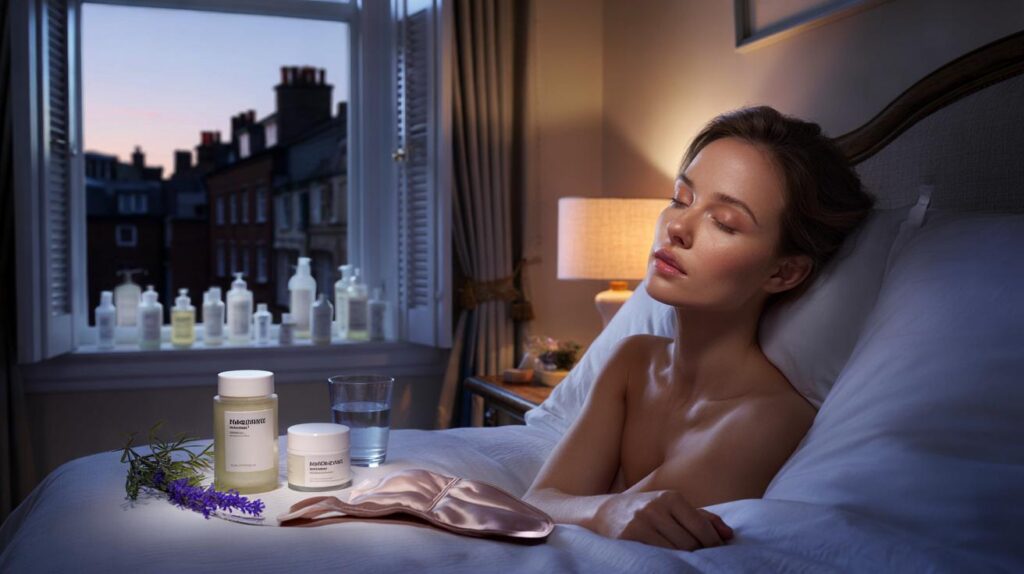
As evenings draw in, a quiet shift spreads through bathrooms nationwide, swapping overflowing shelves for one modest, nightly ritual.
The cold months tend to trigger a buying spree, yet more people now take a radical turn. Instead of stacking serums, they prioritise sleep. The move sounds almost too simple. But early adopters say their faces tell the story by morning.
The trend: from 12-step routines to a single nightly habit
Across the UK, a growing number of people are binning complex skincare cycles and betting on rest. They cut back on active-heavy layers, ease off frequent peels, and bank seven to eight hours under the duvet. The promise is modest: less irritation, fewer flare-ups, more consistent glow. The result feels attainable because the skin stops firefighting and starts repairing.
Cluttered regimes often spark a backlash. Autumn winds meet retinoids, strong acids, and fragranced creams. Redness rises. Skin barrier proteins falter. When you remove the excess and add sleep, you reduce friction at the surface and stress in the system.
One habit, every night, zero spend: consistent sleep calms inflammation, restores barrier function, and revives morning brightness.
Why layering often backfires in colder months
Heavy formulas can trap heat and clog pores when central heating dries the air. Multiple actives compete, which raises the risk of stinging and flushes. Skin then swings between greasy and parched. A stripped-back approach limits cross-reactions and gives the epidermis room to regulate oil and water balance.
What actually happens to skin while you sleep
Night-time drops in cortisol lift the pressure on skin cells. Blood flow increases to the face during deep sleep, bringing nutrients that fuel renewal. Collagen production peaks, micro-tears from daily pollution get patched up, and the skin’s barrier resets its ceramide balance. You wake less puffy and more even-toned when this clock runs on time.
Small UK surveys suggest 93% of people notice clearer tone and softer texture after a full, uninterrupted night.
The cellular timetable between 22:00 and 02:00
- 22:00–23:00: melatonin rises, signalling skin to switch from defence to repair.
- 23:00–00:30: microcirculation improves, aiding nutrient delivery and waste removal.
- 00:30–02:00: fibroblasts ramp up collagen synthesis; barrier lipids replenish.
- 02:00–04:00: swelling reduces as lymphatic flow clears fluid from the face.
A practical bedtime plan that costs £0
People report better results when they treat sleep like a regime, not an afterthought. The routine below fits on a post-it and takes less time than scrolling.
Five common evening saboteurs to drop
- Late caffeine or strong tea after 3pm; switch to chamomile or peppermint.
- Heavy dinners past 20:00; pick lighter plates to keep digestion quiet.
- Screens in bed; put phones away by 22:30 to cut blue-light delays.
- Stuffy bedrooms; a five-minute window-open habit cools the room and the face.
- Worry spirals; two minutes of jotting tomorrow’s tasks empties the head.
Add simple comforts. A lukewarm cleanse, a basic moisturiser, and clean pillowcases twice a week. Try five slow breaths while massaging temples and jaw. A drop of lavender on a tissue near the pillow nudges the body towards rest.
Set an alarm to start winding down, not just to wake up. Protect the first hour of sleep like you protect your most expensive cream.
Micro-naps: the quiet mid-day boost
Not everyone hits eight hours. Short naps help. Ten to twenty minutes at lunch can ease stress hormones and flatten the late-afternoon slump. Keep it brief to avoid grogginess. A chair works better than a bed for a quick reset. Dim the light, set a timer, and cover your eyes. Skin benefits indirectly because calm bodies inflame less.
Does one habit beat a shelf of products?
People don’t need to choose forever. You can keep a favourite serum and still put sleep first. The shift lies in hierarchy: recovery before actives. The table below shows what many users report after two weeks of testing both approaches.
| Approach | Time per week | Typical monthly spend | Reported skin effects | Stress level |
|---|---|---|---|---|
| 12-step, daily layering | 280–350 minutes | £80–£200 | Glow on good days; frequent irritation in cold, dry air | High (rigid routine, product FOMO) |
| Sleep-first, 2–3 products | 140–180 minutes | £20–£60 | More even tone; calmer cheeks; fewer breakouts | Low (simple steps, predictable results) |
A seven-day skin timeline you can test
Day 1: Prioritise a 22:30 lights-out and stash your phone in another room. Drink water early in the evening, then ease off.
Day 3: Puffiness fades on waking. Blotchy patches cool. Makeup sits more smoothly because you avoid hidden dryness.
Day 7: Fine dehydration lines soften. Cheeks hold colour. The T-zone produces less midday shine because the barrier behaves.
Blue light, heat, and the bedtime glow window
Phones and tablets push back melatonin and compress deep sleep. If you need to read, reach for paper or a basic e-reader without harsh light. Keep the bedroom around 18°C. Warm rooms fragment sleep and increase overnight water loss from the skin. A cooler space locks in moisture without extra product.
When to keep products—and when to pause them
If you use retinoids, apply a pea-sized layer after a plain moisturiser and skip it on nights with poor sleep. Harsh acids can wait until weekends. Fragile or reactive skin benefits from a fortnight’s break from strong actives. Keep sunscreen every morning all year. Hydration starts with water, salt balance, and sleep; creams then seal the gains.
Helpful add-ons that amplify the habit
- Breathwork: try four inhales through the nose, six exhales through the mouth, for three minutes.
- Face massage: 60 seconds of upward strokes with clean hands reduces jaw tension and eases frown lines.
- Light snacks: a small yoghurt or a banana at 21:30 can stabilise blood sugar and prevent 3am wake-ups.
What this means for your wallet and your week
Sleep-first beauty saves time and money. You trim steps, buy fewer products, and sidestep impulse launches. You also gain steady mornings: no last-minute firefighting over surprise redness or flaking. If travel or night shifts disrupt rest, double down on naps and gentle barriers—think fragrance-free moisturiser and a humidifier by the bed.
Curious about your baseline? Track bedtime, wake time, and phone-off time for seven days. Note morning skin in three words only—tone, texture, puffiness. Adjust one variable at a time. This mini-experiment shows whether seven consistent hours beat an extra active. For most readers, they do, and the mirror prints the verdict by Friday.



Swapped my 8-step routine for sleep-first this week; redness calmed and makeup sat better by day 3, exactly like you describe. Defintely keeping retinoid to weekends. The phone-in-another-room trick was the hardest part, but wow—puffiness down, skin feels less angry.