
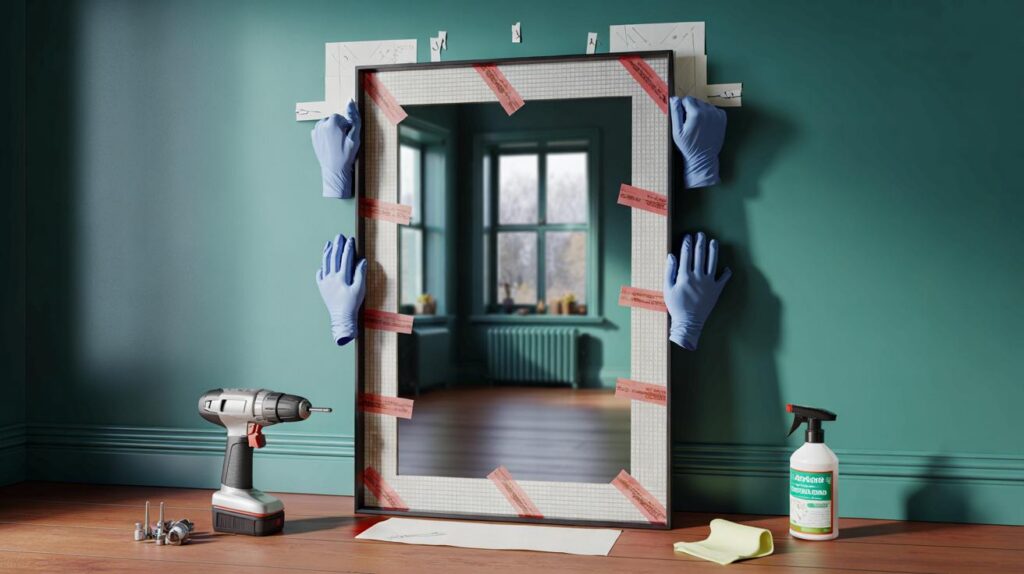
Hairs rise as households face cracked plaster, hidden pipes and rental clauses; a quieter, cleaner fix is reshaping weekend DIY.
Across the UK this autumn, renters and owners are quietly swapping plugs and rawlplugs for high-bond adhesive strips to mount heavy mirrors. Retail buyers report double‑digit growth in no‑drill kits, while insurers and safety testers urge clear limits, careful prep, and patient installation. Here is what’s changed, what actually works, and how to keep that glass secure when the heating clicks on and condensation creeps back.
What’s driving the no-drill mirror boom
Three forces meet in the hallway. First, mixed wall types: plasterboard next to brick, skim coats over crumbly block, and mystery voids behind old lath. Second, tenancy terms that penalise holes and filler touch‑ups. Third, better tapes: acrylic‑foam formulations now deliver strong shear hold on painted walls, tiles, timber, glass and metal when the surface is properly prepared. That mix turns a dreaded drill job into a quiet, dust‑free half hour.
Silence, speed and reversibility tempt households, but the win depends on clean, dry, stable walls and honest weight maths.
How the high-bond tapes actually hold weight
Modern double‑sided acrylic‑foam tapes don’t grip like blu‑tack. They wet the surface at a microscopic level, spreading load across a larger area. Success hinges on shear strength, not peel. That means you want broad, continuous strips across the back of the mirror frame, pressed hard so the adhesive flows. Temperature and time matter too: most tapes gain a large share of their strength after several hours and settle fully within a day.
Numbers that matter
- Weight rating: look for clear per‑strip or per‑metre figures; add a safety factor of x2 for peace of mind.
- Width: 20–25 mm tape resists shear far better than narrow rolls; wider spreads the load.
- Pressure: 30–60 seconds of firm, even pressure per strip helps the adhesive wet out.
- Dwell time: avoid hanging coats or leaning for 12–24 hours so the bond develops.
| Mirror weight | Minimum total tape length | Tape width | Wait time before full load |
|---|---|---|---|
| 3–4 kg | 60–80 cm | 20–25 mm | 12 hours |
| 5–7 kg | 1.0–1.4 m | 20–25 mm | 18 hours |
| 8–10 kg | 1.6–2.2 m | 25 mm | 24 hours |
Clean, fully dry wall + wide, high‑bond tape + distributed strips + patient cure time = a hold that rides out winter.
Step-by-step method you can repeat
Map the spot before you touch any tape. Hold the mirror where you want it and pencil a light, level line. Check for switches and sockets; avoid areas with likely services. Work on a padded surface and wear gloves.
- Prep the wall: dust with a dry microfibre cloth. Degrease using isopropyl alcohol or methylated spirit on a clean lint‑free cloth. Let the wall air dry until it feels cool but not damp.
- Prep the mirror back: wipe the frame or backing plate the same way. Paint flakes, paper labels and silicone residues weaken bonds; remove them.
- Cut strips: plan a perimeter of tape near the edges, plus a cross or ladder pattern through the centre. Avoid gaps larger than a hand’s width.
- Apply tape to the mirror: press each strip along its full length. Keep edges straight. Do not overlap strips.
- Dry fit: hover the mirror near your level line to check reach and height. Mark two tiny alignment ticks on the wall with pencil.
- Commit to the bond: peel liners, align to your ticks, and place the top edge first. Once it touches, lower the rest into contact.
- Press for strength: use both hands to apply firm pressure across every taped zone for at least 30 seconds per point. Work top to bottom, side to side.
- Hands off: support nothing on the mirror for the stated dwell time. Keep the room at normal living temperature.
Risks, limits and places to avoid
Some walls fight you. Fresh paint less than seven days old can off‑gas and soften the bond. Cold, humid bathrooms create condensate that creeps between paint and adhesive. Poorly keyed paint can shear from the plaster before the tape lets go.
- Avoid friable or chalky surfaces, flaking paint and loose skim.
- Skip rough masonry or heavy texture unless you add a smooth backing board.
- In poorly ventilated bathrooms, choose mechanical fixings or mirror‑safe adhesive applied to a sealed board.
- Never exceed the manufacturer rating; aim for a 2:1 safety margin on total tape capacity.
If you would wince at the thought of it falling, add more tape, reduce weight, or choose a different fixing method.
Maintenance and long-term checks
Set a reminder on your phone: a 60‑second inspection every two or three months beats sweeping glass at midnight. Look for creeping gaps along edges, a slight tilt, or a dull creak when you press near corners. If anything shifts, support the mirror, ease it off with a slow, even peel parallel to the wall, and refresh the system with new strips on a re‑cleaned surface.
Telltales of failure
- Fine dust line or hairline crack in the paint just outside the mirror edge.
- A corner that no longer sits flush when pressed.
- Condensation streaks tracking down from the mirror after showers.
Seasonal tweaks in damp homes
Autumn brings colder walls and warmer rooms. That gradient encourages moisture at the paint layer. Run an extractor or open a trickle vent for a few minutes daily, and keep furniture from blocking air flow near the mirror. A small dehumidifier in a windowless corridor stabilises conditions and protects the bond.
Extra angles: renters’ rights, removals and safety maths
Letting agreements usually welcome reversible fixes. Adhesive systems remove most cleanly with a slow, steady pull parallel to the wall; soften stubborn bonds with gentle heat from a hairdryer, then roll off residue with a thumb. Patch test the paint behind a postcard‑sized strip in an unseen spot first.
Run a quick load calculation before you buy. Example: your 8 kg mirror needs tape capacity of at least 16 kg with a 2:1 margin. If the chosen tape claims 3 kg per 20 cm strip in shear on painted plasterboard, you need around 1.1 metres of total tape. Round up to 1.6 metres for a calmer night, and lay it as perimeter plus cross braces.
Think about companions on the wall. Hooks, frames and shelves nearby transfer knocks. Leave two finger‑widths of clearance. Keep balls and swinging bags out of the hallway zone. If kids or pets charge along that corridor, step up the margin again or move the mirror higher.
If your home sits in an older block with lime plaster and patchy paint, a hybrid route works well: fix a thin plywood plate to studs with two discreet screws hidden under the mirror footprint, paint the plate to match the wall, then use adhesive tape between the plate and mirror. You get the reversibility at the visible surface with the reassurance of a mechanical core.
One final tip for brighter rooms: mirrors magnify daylight, but only when they face it. Before you commit, prop the mirror on a chair for a day and watch the light path. A smart position reduces the urge to move it later and avoids repeat bonding cycles.



Finally someone explains shear vs peel properly! The per‑strip maths + 2:1 safety margin is gold. I hung a 6 kg mirror with acrylic‑foam last winter—IPA prep was non‑negotiable and the dwell time mattered. Bookmaked.