
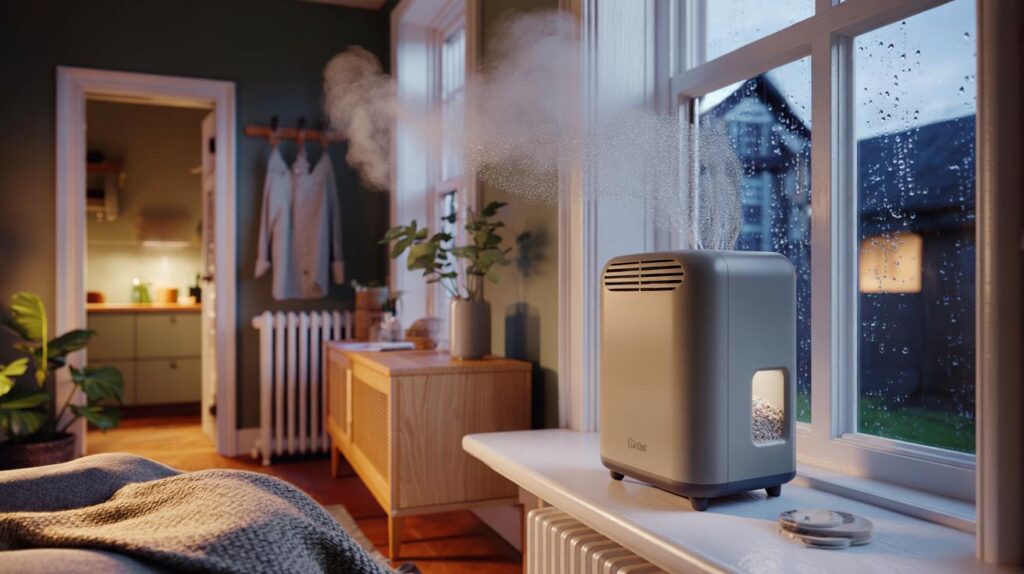
As nights cool and windows stay shut, homes face stale odours and fogged panes, prompting a quieter kind of fix.
A £22.39 moisture absorber from Lakeland is quietly trending as households try to head off condensation without a humming compressor. It looks like a decor piece, uses swap-out crystals, and promises calm, fume-free, plug-free relief from damp.
Why a £22.39 moisture absorber is trending
Condensation is back on Britain’s windows. Clothes dry on radiators. Shower steam lingers. The result is clammy rooms and the telltale whiff of damp. This autumn, Lakeland’s Absodry Moisture Absorber — now listed at £22.39, previously £27.99 — is catching attention because it tackles those daily annoyances with none of the noise or bulk of a typical dehumidifier.
It sits in the open like a tidy ornament. It doesn’t need power. It sips moisture through crystals rather than blasting air through a compressor. For renters, light sleepers and home workers, that combination matters.
Headline specs at a glance: 600g desiccant crystals, claimed coverage up to 50m³, refill life up to three months, three-year guarantee.
What the gadget actually does
Inside the casing sits a 600g pack of hygroscopic crystals, the same principle used in wardrobe sachets and caravan moisture catchers. These crystals pull water vapour from the air and channel the liquid into a reservoir beneath. You don’t hear it work. You simply watch the tank slowly fill while odours ease and glass clears faster.
A window-style indicator shows when to empty the reservoir. When the crystals expire, you replace them with a refill pack. Lakeland offers several colours — grey, green, pink and blue — so it can live on a shelf or side table without screaming “appliance”.
Where it fits best
- Bedrooms and home offices where silence matters
- Hallways and utility rooms with coats and laundry
- Conservatories and cellars prone to clammy air
- Rental flats where drilling for extraction isn’t an option
- Wardrobes and cupboards that trap smells and moisture
The numbers that make it appealing
Coverage is quoted at up to 50m³ — roughly a 20m² room with a 2.5m ceiling. That suits many British bedrooms and smaller lounges. Refill life stretches up to three months, though the true figure depends on how you live: lots of indoor drying, cooking and showering will shorten it. A discreet reservoir indicator takes out the guesswork and helps avoid spills.
If your home sits between 40% and 60% relative humidity, you’re in the comfort zone. Below 40% feels dry. Above 60% invites condensation and musty smells.
Design that dodges the “ugly gadget” problem
Most moisture absorbers look like buckets, so they get hidden. This one aims to be seen. Rounded edges. Neutral finishes. It blends with Scandi-style furniture, which means it can live where it works best: in the open air of the room, not behind a sofa. And because it’s silent, it won’t intrude on a TV night or a Teams call.
How it compares to plug-in dehumidifiers
| Feature | Moisture absorber (desiccant crystals) | Electric dehumidifier (compressor/desiccant) |
|---|---|---|
| Noise | Silent | Audible fan/compressor |
| Running cost | No electricity | Uses electricity while running |
| Speed | Gradual moisture reduction | Faster moisture removal |
| Capacity | Low to moderate | Moderate to high |
| Best use | Small to medium rooms, odours, background damp | Very damp rooms, drying laundry quickly |
| Maintenance | Swap crystals, empty tank | Empty tank, clean filters |
| Typical size | Compact, shelf-friendly | Larger footprint |
Real-world gains you can expect
You should notice fewer fogged windows after showers and a quicker return to clear glass. Clothes dried indoors smell fresher when airborne moisture doesn’t linger. Rooms feel less clammy at night. Walls with cold corners collect fewer beads of water. These are small wins that stack up, especially in older houses and flats with limited extraction.
Place it where the air moves: near a doorway, on a hallway table or by the window that mists first. Don’t tuck it behind curtains.
Practical tips to boost performance
Simple changes that amplify the effect
- Crack a window for 10 minutes after showers and cooking to dump steam.
- Use pan lids and extractor hoods whenever you boil or fry.
- Dry laundry in one room with the door shut, then air that room briefly.
- Keep furniture a few centimetres off external walls to allow airflow.
- Check trickle vents are open; they help without big draughts.
What buyers will want to know
Refills are designed to last up to three months and are easy to replace. The unit has a visible reservoir and an indicator, so you can empty it before it sloshes. A three-year guarantee signals confidence in the casing and function. Colour options help it blend into adult spaces and children’s rooms without looking utilitarian.
It won’t cure structural leaks or rising damp. Think of it as a daily moisture manager, not a fix for water ingress.
Caveats and care
Desiccant crystals attract water by design, so treat the collected liquid as salty and corrosive. Empty into a sink, not onto soil or metal trays. Keep the unit away from curious pets and small children, and wipe any spills immediately. Position it on a stable, level surface so the reservoir remains upright as it fills.
Why many households are choosing passive first
Electric dehumidifiers still make sense when you’re drying heavy loads indoors or fighting persistent damp in large spaces. But passive units like this one handle day-to-day moisture with zero running noise and no plug. For a lot of homes, that means you can leave it working all the time. In smaller rooms, or as a first step before splashing out on a big unit, it’s a logical move.
Extra context for the colder months
A cheap digital hygrometer can change how you run your home. Place one where condensation strikes and note the readings each morning. If you consistently sit above 60% relative humidity, add a second absorber or commit to a short daily airing routine. When humidity stays high even with changes, consider an electric dehumidifier for laundry days and the coldest snaps.
If you spot mould, remove it with appropriate cleaning products and address its cause. Check for trickle vents, blocked air bricks and leaky seals. Use bathroom and kitchen extraction at every opportunity. A moisture absorber helps keep the background in check, but ventilation and source control keep it there.



That 50m3 claim—are we talking a sealed, cosy bedroom or a draughty Victorian box room? How fast do the crystels actually pull moisture after a shower, and what do the refils cost over winter? £22.39 sounds fair for the unit, but if refills only last a month in real life it adds up. Anyone tracked humidity with a hygrometer before/after?