
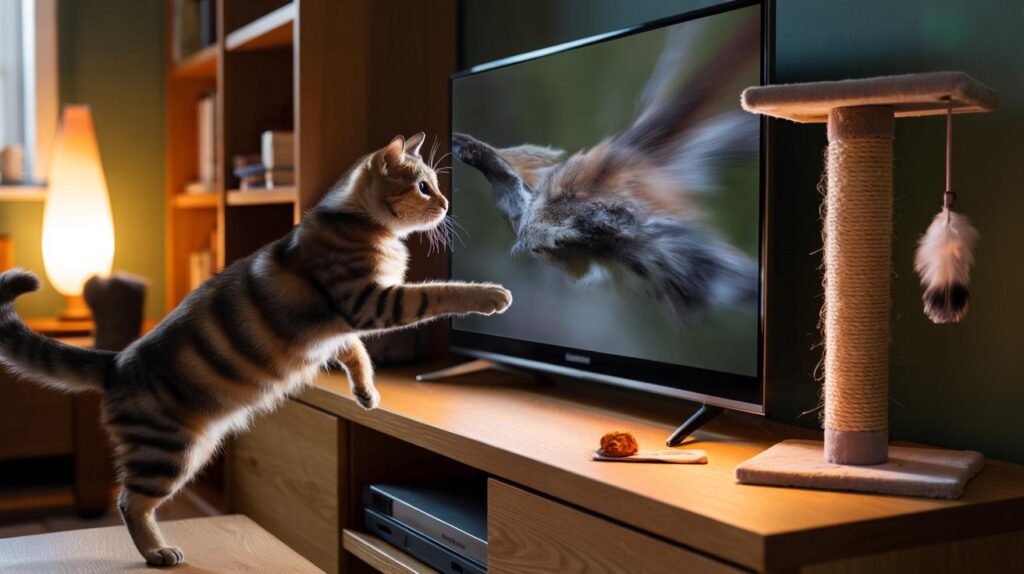
Across Britain, a quiet living-room drama plays out as cats meet fast-moving pixels and owners count the costs. The tension feels oddly familiar.
Longer nights, bingeable series and brighter screens have turned many lounges into mini cinemas. For countless households, that cosy scene now includes a whiskered spectator who pounces at birds, paws at footballs and scales the cabinet like a climber on granite.
Why cats target the telly
Movement, flicker and unpredictable sounds trigger a cat’s hunting brain. A swooping bird, a rolling ball or a beep is enough to spark a lunge, even when the “prey” lives behind glass. The reward loop is strong: chase, swipe, repeat. Screens give that loop endless chances.
Autumn amplifies the effect. You stay in more, the TV runs longer, and your cat seeks stimulation. Some cats also jump in to win attention, claim space or interrupt a routine that no longer includes them. In their mind, the TV unit just colonised a prime bit of their territory.
Movement, flicker and beeps flip a cat’s hunting switch. Reduce the triggers, and the chaos slows.
Fast fixes you can start tonight
Redirect the claws, not the cat
Place a sturdy scratch post or pad right beside the screen, not across the room. Load it with catnip or a dangling toy, and make it the easiest, most satisfying target within paw range. Stability matters: wobbly posts push cats back to the TV stand.
Make the jump less rewarding
Use a strip of double-sided tape along the front edge of the TV unit. Most cats dislike the tacky feel and step back. Add a non-slip mat under the TV to stop wobble. Keep the cabinet surface busy with solid décor or books so there’s no clear run-up. If you can, wall-mount the screen and leave a gap that paws cannot bridge.
Spend 10 minutes on play before pressing play
Short, structured play drains hunting energy. Go in a sequence: chase, catch, eat, sleep. That pattern mimics a natural cycle and calms the brain.
- Three minutes with a feather wand, moving low and away like prey.
- One minute of “catch” with a soft toy they can bite and bunny-kick.
- A small food puzzle or lick mat placed far from the TV unit.
A tired hunter rarely hunts your screen.
Protect the kit without punishing the cat
Cover the screen when you leave the room. A simple dust cover or light throw reduces the lure. Add soft edging or corner protectors to temper sharp impacts. Keep cables hidden in a channel so a tug does not topple the set.
Think in layers: environmental tweaks plus training beats barriers alone. Avoid sprays or sudden noises near electronics. Harsh deterrents raise stress and can fuel more attention-seeking behaviour.
| Fix | Time | Cost | Impact |
|---|---|---|---|
| Scratch post by the TV | 5 minutes | £15–£40 | High if stable and scented |
| Double-sided tape strip | 2 minutes | £5 | Immediate deterrent for most cats |
| Wall mount + cable tidy | 45–90 minutes | £30–£120 | Strong protection, safer setup |
| Pre-show play routine | 10 minutes | £0–£10 | Reduces pounces through the evening |
| Screen cover when unattended | 10 seconds | £0–£15 | Cuts casual swipes and nose smears |
Training that sticks
Reinforce the behaviour you want. Mark and reward calm moments on a mat or bed placed several steps from the TV. Toss a small treat to the mat every time your cat chooses it while the screen is on. Layer in a cue like “settle” once they start offering the behaviour.
Teach an “off” cue using a low coffee table during the day. Lure the cat onto the table, then lure them off and pay on the floor. Repeat until a gentle hand signal moves them off reliably. Transfer the cue to the TV unit and reward the moment paws leave the surface.
Skip shouting and water sprays. They create a louder story than the programme you’re trying to watch, and they can erode trust. Calm responses and clear options win over time.
Settings and sensory tweaks
Cats see motion differently. Some notice backlight flicker or high-contrast effects more than we do. Try a few changes: lower overall brightness, reduce vivid mode, and soften motion settings. Use night or speech mode on the soundbar to tame sharp beeps and whistles that spark attention.
When pausing, switch to a muted screensaver rather than leaving a frozen high-contrast image. Fast, flashing animations near menu edges can entice a swipe. Slow and steady imagery provokes fewer jumps.
Small setting tweaks can shave down the number of pounces you see each hour.
When to seek extra help
If TV targeting sits alongside restlessness, over-grooming or accidents, book a vet check to rule out pain or stress. A qualified behaviourist can then design a plan tailored to your home layout, your cat’s age and energy, and any multi-cat politics at play.
The autumn setup that keeps peace
Build a simple zone map. Near the TV: scratcher and a parked toy. Mid-room: a resting spot with a view, like a low perch. Far from the TV: food puzzles and a water station. Rotate two or three toys daily so novelty keeps paying out. If your cat adores wildlife clips, stream those on a tablet placed on the floor a few metres away, not on the big screen.
Cost check: why small buys beat big repairs
A replacement screen can swallow £300–£1,200. A wall bracket, a £20 scratcher and a £5 roll of tape come in under £100 and last seasons. If those cut even a single high-impact pounce that risks a tip-over, the maths lands in your favour.
Multi-cat realities
In shared homes, TV tussles can double as resource disputes. Offer one scratch surface per cat plus one extra. Create two play stations so bolder cats do not gatekeep the action. Reward each cat where they feel safe, not shoulder-to-shoulder on the rug.
Think of TV time as a mini routine: brief hunt, simple snack, comfy settle, steady sound. With a few props and a touch of timing, you protect the kit, soothe the hunter and get your sofa back. Your cat still gets a show—just not starring your fragile screen.



My cat thinks the telly is a via ferrata. The double‑sided tape just became a fur-and-dust magnet—alternaive suggestion that doesn’t make the cabinet look sticky and sad?
Brilliant tips—pre-show play + a scratcher right by the TV actually worked for us tonight 🙂 Cheers for the vet-backed breakdown!