
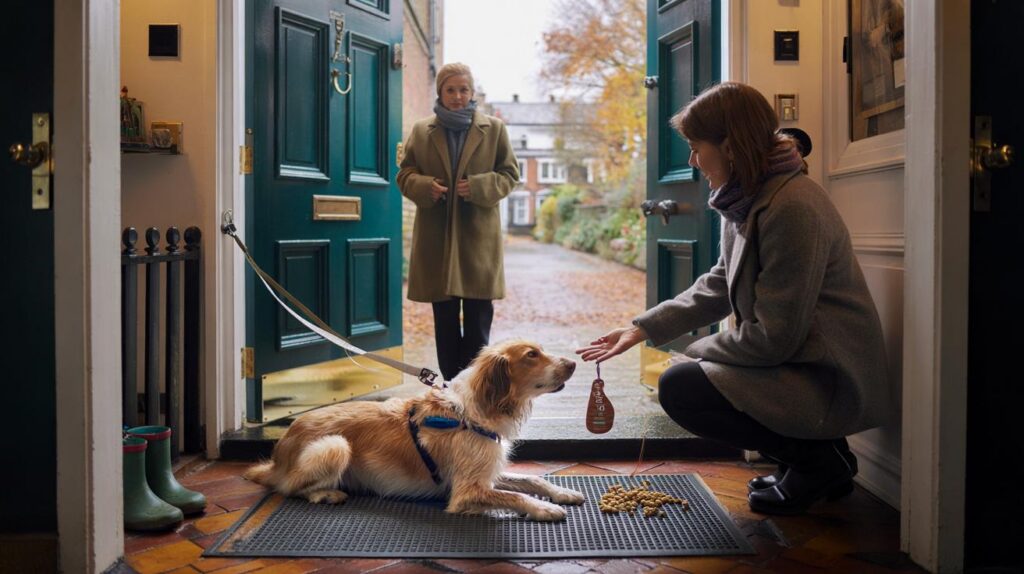
Doorbells ring, coats rustle, snacks smell irresistible. Households brace for guests while pets mirror the rising festive energy nationwide now.
Across the country, owners report noisy greetings, leaping paws and frantic circling at the threshold. Trainers point to simple routines, short drills and steady practice that change the mood fast. A two-week plan, modest kit and clear rules give dogs a calmer script when people arrive.
Why the door sends your dog into overdrive
Your dog hears the bell before you do. The stakes feel high. Strangers approach food, space and family. Arousal rises in seconds. Barking, spinning and door-dashing bring relief or attention. That payoff keeps the pattern alive. You need to rewrite the script, step by step, with rewards for quiet choices.
- Common triggers: the bell, footfall on the step, keys, coats, voices and rattling bags.
- Common payoffs: contact, eye contact, excited voices, or access to the hallway.
- Common mistakes: shouting, inconsistent rules, and greeting the dog while it bounces.
Swap chaos for pay: calm behaviour earns access, greetings and better rewards than barking ever did.
The 14-day plan for calmer hellos
Days 1–4: fake visits with tiny stakes
Play a doorbell sound at low volume while your dog chews a stuffed toy. Feed calm with scattered treats on the floor. Pause, then repeat. Knock lightly once, then drop a treat on a bed or mat. Touch the handle, then reward still paws. Keep sessions to three minutes. Finish on success.
Log arousal. Count barks. Time how long your dog settles. Numbers show change. Aim for fewer than three barks and a 30‑second settle by day four.
Days 5–9: build a ‘go to mat’ routine
Lay a non-slip mat two to three metres from the door. Lure your dog onto it, then feed three small treats on the mat. Add a cue such as “on your mat”. Release after five seconds of calm. Repeat six times. Add the handle touch. Cue the mat. Feed calm breathing and stillness.
Next, open the door a crack. Cue the mat. Reward quiet. Close the door again. Three repetitions, then a break. Keep your dog on a light line if door-dashing started in the past.
Mat = money. Make the landing zone pay better than the threshold.
Days 10–14: add real people and clear rules
Invite one calm friend first. Brief them before they arrive. They walk in quietly. They ignore the dog. You cue the mat. You feed on the mat. After your dog settles for 60 seconds, release for a sniff. If jumping starts, the guest turns away and freezes. You reset to the mat. Try again.
Repeat with one new guest each day. Vary coats, hats and bags. Keep greetings short. Add a baby gate if the hallway feels tight. Leash to a two‑metre line for safety if needed.
Triggers, meaning and fixes at a glance
| Trigger | What your dog reads | Quick fix | Habit to build |
|---|---|---|---|
| Doorbell | People appear now | Bell at low volume + treat scatter | Bell → mat cue → paid calm → controlled hello |
| Handle turn | Door opens, chance to bolt | Handle touch → food on mat | Handle turns only when paws stay planted |
| Excited voices | Party time | Guest silence and soft eye averted | Guests greet only after 60 seconds calm |
Make arrivals predictable for everyone
Set one script for the whole home. The dog goes to the mat on cue. The door opens only while paws stay down. Guests greet on your signal. No one calls the dog off the mat early. Mark the plan on the fridge to keep the team aligned.
One rule, one cue, one reward pattern. Consistency beats intensity every time.
- Assign roles: one person cues the mat, one handles the door, one briefs the guest.
- Park the lead and treats by the door in a small caddy for fast access.
- Use a code word that means “ignore the dog” for guests who forget.
Socialisation that smooths future visits
Vary the people. Invite a quiet neighbour for tea. Book a short, calm drop‑in from a family with teens. Schedule a brief hallway chat with a delivery driver on a day off. Keep sessions short and paid. Your dog learns that people come and go while calm earns access to the room.
Puppies learn fast during sensitive periods. Adults learn too, with more repetitions. Seniors need softer floors and more time. Adjust pace to the dog in front of you.
When anxiety, not excitement, drives the chaos
Watch the whole picture. A tucked tail, lip licking, wide eyes or pacing can signal fear, not party mood. Increase distance from the door. Add a covered crate in a back room. Run a snuffle mat task while guests shed coats. Teach a basket muzzle with cheese if your dog guards space. Ask your vet about pain if touch triggers a snap.
Safety first: gates, leads and distance keep learning possible and people safe.
Quick kit under £60 that changes the game
- Grippy door mat or bath mat for the ‘place’: £15–£20.
- Two‑metre house line with clip: £10–£12.
- Baby gate for the hallway: £25–£35.
- Treat pouch and pea‑sized soft food: £5–£8.
Keep rewards small. Use part of the daily ration to avoid weight gain. Scatter on the floor to lower jumping.
How to measure progress like a pro
- Latency to settle: time from bell to four paws down on the mat.
- Bark count per arrival: aim to halve this by day seven.
- Jump attempts per greeting: track to zero over two weeks.
- Calm duration: build to two minutes before release to say hello.
Use your phone timer. Note one number per session. Numbers guide your next step and keep motivation high.
Guest coaching that actually helps
Send a one-line brief before they visit: “Please ignore the dog until I say hello.” Hand them three treats. Ask them to drop the treats on the floor only when the dog keeps four paws down. Offer a seat before greeting. People sit, dogs settle faster.
Extra ideas for busy households
Try the 3‑2‑1 doorbell game. Ring the bell. Count three. Cue the mat. Count two. Feed one treat per second for stillness. Release. Repeat twice a day for a week. Add a real knock on day five.
Prime the dog before guests arrive. Ten minutes of sniffing games drains fizz. A short chew lowers heart rate. A quick loo break prevents pacing. Remove tug toys if those spark arousal near the door.
Risks and gains you should weigh
Harsh corrections can suppress barking yet raise stress. Stress leaks elsewhere as chewing or pacing. Reward what you want instead. A plan brings safety, cleaner greetings and happier guests. Your dog gains a workable job at the threshold. You gain a calmer home.



Tried the 3‑2‑1 doorbell game tonight and my spaniel actually settled on the mat within 40 seconds. Numbers FTW! The two‑metre line + baby gate combo felt safe, too. I’ll stick with the 14‑day plan and track bark count. Thanks for the clear, doable steps 🙂
“Data‑backed” sounds great, but could you link the actual studies or datasets? Halving barks by day seven feels a bit arbitrary without a citaiton. Also, how was arrousal measured—owner logs only, or any wearable data?