
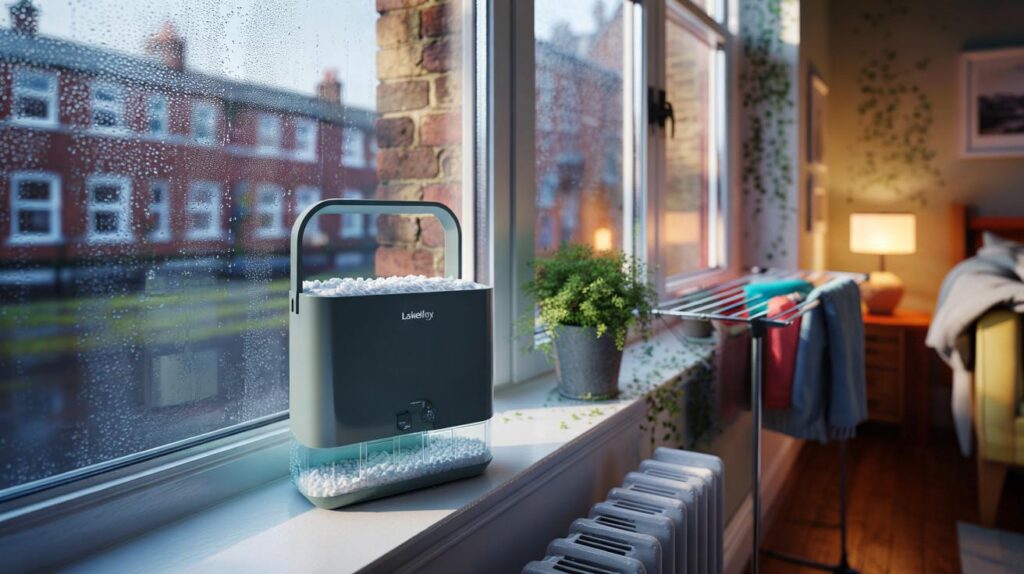
Rain creeps back, windows close, and stale air lingers. Across Britain, damp patches quietly grow where warm breath meets cold walls.
As households brace for steamed-up panes and the whiff of must, a compact, non-electric option from Lakeland has slipped into the conversation: a sleek moisture absorber that uses crystals rather than a plug. It aims to cut humidity, protect paintwork, and keep rooms feeling drier—without droning fans or bulky plastic boxes.
Autumn brings moisture trouble
When temperatures drop, indoor air cools overnight and water condenses on the nearest cold surface—window glass, exterior walls, north-facing corners, and behind wardrobes. Laundry dries slowly. Bathrooms fog. Kitchens trap steam. Left unchecked, that moisture invites mould spores, peels wallpaper, and triggers coughs or wheezing for sensitive people.
Many households now look for low-effort fixes that curb humidity without adding to energy bills. That’s where Lakeland’s Absodry Moisture Absorber, currently priced at £22.39, enters the room.
Key figures: 600 g of moisture-absorbing crystals, room coverage up to 50 m³, refills lasting up to three months, and a three-year guarantee.
What the Lakeland unit actually is
The Absodry Moisture Absorber is a compact container that holds 600 g of absorbent crystals. These attract airborne water vapour and drip collected moisture into a reservoir beneath. There’s no motor, no cable, and no hum—just a quiet chemical process ticking along in the background.
It comes in a muted grey finish, with additional colour options such as green, pink and blue to blend into living spaces rather than stand out like an appliance. A small indicator helps you see when the reservoir needs emptying, and refills slot in without fuss. Lakeland says the refill lifespan can reach three months, though high-humidity rooms will get through them faster.
Where it fits best
Coverage of up to 50 m³ suits bedrooms, living rooms, home offices and hallways. It can also help in conservatories, loft rooms and cellars where damp often gathers. One device per room is a practical rule for typical UK homes; larger, more open-plan spaces benefit from two units placed far apart.
Target indoor humidity: 40–60%. If you are regularly over 65%, expect condensation on cold mornings and mould risk in stagnant corners.
How the crystals work
Moisture-absorbing salts draw vapour from the air and turn it to liquid. Air passes around the granules, humidity drops, and the reservoir slowly fills. Because this is passive, it’s silent and uses no electricity, yet reduction is steady rather than rapid.
Compared with an electric dehumidifier, a crystal-based absorber is best viewed as a background control: it trims moisture peaks and prevents that damp blanket feeling, especially in smaller rooms with minor condensation issues.
Savings and trade-offs
Energy bills make powered dehumidifiers a tougher sell for light condensation. Passive units avoid running costs, but you pay for refills instead and you won’t dry a soaked room in an hour. The choice hinges on how damp your home gets, and how quickly you need results.
| Metric | Lakeland Absodry (passive) | Typical 12-litre electric unit |
|---|---|---|
| Power use | 0 W | 150–250 W while running |
| Noise | Silent | Audible fan/compressor hum |
| Speed of moisture removal | Gradual | Fast, adjustable |
| Best for | Light condensation, small rooms, always-on background use | Heavy damp, drying laundry, rapid control after showers or cooking |
| Consumables | Crystal refills (up to three months each) | None (aside from electricity) |
Real-world placement tips
Placement matters. Give the unit clear airflow and keep it off the floor, where it can be colder and less effective. Avoid tucking it behind thick curtains or furniture, as air won’t circulate. In bedrooms, place near windows that bead with moisture overnight. In bathrooms without extractors, set one on a shelf away from direct splashes.
- Keep doors ajar between rooms to spread drier air.
- Crack a window for ten minutes after cooking or showering.
- Dry laundry in a single room and contain steam; the absorber can help with residual moisture.
- Wipe window sills each morning to remove collected droplets and discourage mould.
- Use a basic hygrometer to check if you stay within 40–60% RH.
Why it’s drawing attention now
With energy costs still under scrutiny and cooler months ahead, interest in non-powered moisture control rises. The Absodry’s neutral design makes it acceptable in living spaces that reject utilitarian kit. The claimed three-year guarantee will reassure those wary of flimsy plastic tubs. And the price point—£22.39 at the time of writing—sits within reach for households weighing up modest upgrades for winter comfort.
Silent, plug-free, and tidy: a set-and-forget way to clip humidity peaks without adding to your energy bill.
Who benefits most
Renters who can’t install vents, households in modern airtight flats, and families wanting overnight bedroom comfort often see quick wins. Owners of older properties with cold external walls also report fewer morning puddles on sills. If you tackle laundry indoors, the absorber helps stabilise humidity after you open a window and let the initial steam out.
For heavy damp, visible mould blooms, or rooms that smell wet all day, an electric dehumidifier or improved ventilation will work faster. Think of the Lakeland device as a calm baseline—one that reduces everyday moisture, and pairs well with short bursts of window opening or extractor use.
Care, refills and lifespan
Check the indicator each week and empty the reservoir before it nears full. Refill intervals vary with season and room: a steamy bathroom might burn through crystals faster than a spare room. Secure the unit on a flat, stable surface away from children and pets. When disposing of collected liquid, follow the product’s guidance and rinse the reservoir as directed.
Practical numbers for households
Two-bed flat with condensation on bedroom windows: place one unit in each bedroom and one in the living area. Expect to replace refills more often during December–February. Detached homes with cool hallways or porches may want one near the front door, where chilled air meets warmth and leaves damp streaks on paint.
Choose one device per room prone to condensation; add a second in large open-plan areas for balanced coverage.
Extra context for healthier air
Humidity below 35% can dry skin and warp timber; above 65% encourages dust mites and mould. Aim for the middle band. A low-cost hygrometer gives you live feedback, so you can see whether a short window crack or a warm-up period after dawn restores balance. If black mould appears, scrub with an appropriate cleaner and address the cause: poor airflow, cold surfaces, or persistent steam.
If you mix solutions, the benefits stack. A passive absorber running all day can trim background moisture, then an extractor fan or brief window opening clears spikes after showers and cooking. For laundry days, the absorber smooths the last 10–20% of damp that lingers after ventilation. Together, those steps protect plaster, sealant and soft furnishings and make rooms feel fresher without constant noise.



Anyone tried this in a 1-bed flat ~40–45m³ living room? Does one unit actually stop morning condensation on sash windows or do I need two? Also, how often are you emptying the reservoir in winter?