
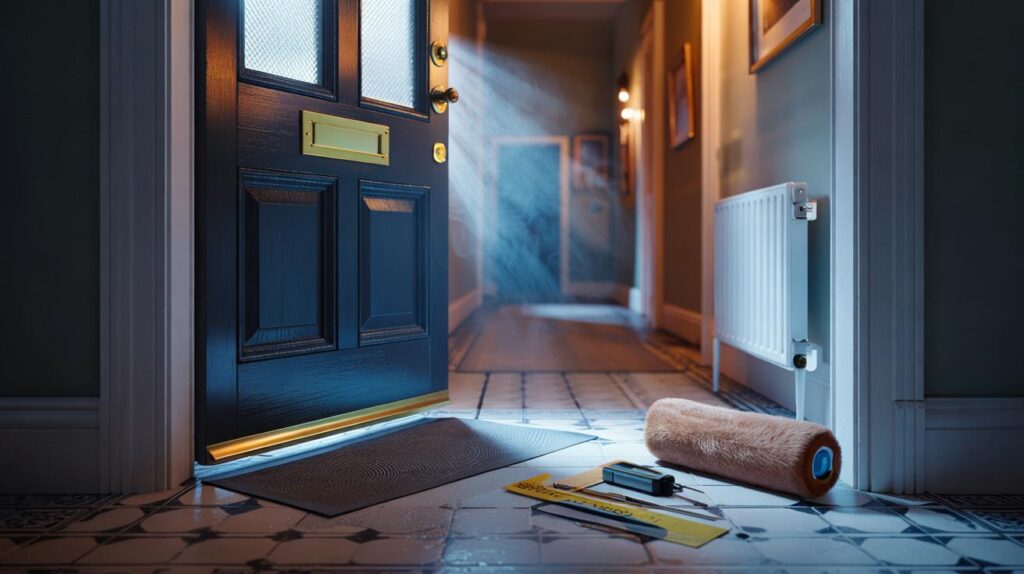
Cold entrances, rattling letter flaps, and stubborn draughts are back as temperatures dip and households eye rising winter bills again.
Across the country, people are turning up the radiators and wondering why the chill lingers by the front door. Energy advisers point to a simple, often overlooked culprit: tiny gaps around entrance doors that let warm air escape and cold air rush in. The fix costs less than a weekly shop, yet the impact stretches from October to March, when every lost degree shows up on your bill.
The tiny gap that drains warmth faster than you think
Even a modern, well-fitted door can leak heat at the threshold, the sides, the frame head, the letterbox and the keyhole. Wind pressure outside and the stack effect inside the home pull air through any crack you leave unsealed. On gusty nights, those currents spike, and your boiler or heat pump works harder to hold the set temperature.
Hidden air leaks at the front door can account for up to 20% of seasonal heat loss in a typical home.
Tell‑tale signs rarely lie. You feel a nip around your ankles; you hear wind hiss; you smell the street in your hallway; you see daylight at the edges. Push the thermostat higher and the draught still wins because the pathway for cold air remains open. Block the pathway, and you need less heat to stay comfortable.
How to tell if your door leaks heat
- Run the back of your hand around the frame on a blustery day; moving air feels cool on skin.
- Hold a lit incense stick or a strip of tissue near the edges; watch for smoke or paper deflecting.
- Look for daylight at the threshold and around the letterbox at dusk.
- Listen for rattling at the letterbox flap or keyhole during wind gusts.
- Check for flattened, cracked or missing rubber seals; they no longer compress properly.
If the hallway sits 2–4°C colder than the rest of the house, the door almost certainly leaks.
Cheap fixes you can fit in under an hour
You do not need a carpenter to stop most door leaks. A handful of simple products, fitted carefully, will seal the gaps and raise hallway temperatures within minutes.
| Solution | Typical cost | Time to fit | Likely annual saving |
|---|---|---|---|
| Brush or rubber door sweep (bottom) | £8–£15 | 10–20 min | £20–£60 |
| Self‑adhesive compression seals (sides/top) | £5–£12 | 20–40 min | £15–£50 |
| Letterbox cowl and internal brush | £10–£20 | 15–25 min | £10–£30 |
| Keyhole cover (escutcheon) | £3–£6 | 5 min | £5–£10 |
| Thermal curtain on a rail behind the door | £25–£60 | 20–30 min | £25–£70 |
Pick the right sizes, measure twice, and clean surfaces before sticking seals. A snug brush strip closes the threshold without scraping the floor. Compression seals need even contact: shut the door on a strip of paper; if it slides out easily, add or replace the seal.
Ten minutes with a brush strip can repay itself in the first cold snap.
Renters: fixes that won’t risk your deposit
- Use self‑adhesive foam or rubber seals that peel off cleanly.
- Fit a draft excluder “sausage” at the foot of the door; no screws needed.
- Hang a thermal curtain on a tension rod behind the door.
- Choose a magnetic or stick‑on letterbox brush rather than drilled cowls.
Why the bill rises when the door leaks
Heating systems respond to heat loss, not the weather forecast. If cold air slips in at the entrance, room sensors detect the drop and call for more heat. Gas‑heated homes typically pay in the region of single‑digit pence per kWh, yet those pennies stack up when the boiler runs longer all evening. For a household spending £700–£1,200 on space heating between October and March, a leaky door can waste enough energy to add £60–£180 to the bill. Seal the gaps, and the thermostat stops yo‑yoing.
Some families report a 2–3°C rise in hallway temperature after fitting a sweep and seals. That warmth spreads to nearby rooms, so radiators cycle less. In electrically heated flats, the benefit is even more visible because each redundant kilowatt‑hour costs more than gas.
Maintenance that keeps savings rolling
Seals flatter over time. Make a quick check part of your monthly routine: vacuum dust from the frame, clean the threshold, tighten hinge screws, and lubricate latches so the door closes square to the seal. Replace any strip that no longer springs back. After heavy rain or a heatwave, look for warping; a slightly twisted door leaves an uneven gap.
- Test contact: trap a strip of paper at several points; it should resist a gentle pull.
- Re‑seat the strike plate if the latch has dropped; a 1–2 mm adjustment can restore pressure on seals.
- Brush hairs bent flat? Trim and replace; they should just skim the floor or threshold plate.
When a new door makes sense
If the door is rotten, badly warped or glass‑heavy with no thermal break, upgrades can pay. Look for insulated cores, decent multi‑point locking and low U‑values (around 1.0–1.8 W/m²K for doors with glazing). Weather bars and drop‑down automatic seals at the bottom give a tight close without dragging. Ask for documentation that shows performance, and check the fit: a good door solves nothing if gaps remain.
Practical checks you can run this week
- Pick a windy evening and map leaks with an incense stick; sketch the hotspots and measure the gaps.
- Start with the biggest gap you can see; the threshold usually brings the fastest comfort lift.
- Combine measures: a brush strip plus a thermal curtain blocks wind pressure and radiant chill together.
- Mind safe ventilation: never block trickle vents or flues; rooms with gas appliances still need supply air.
What the numbers look like in real homes
Take a semi‑detached house with a £1,000 heating spend from October to March. If the front door area causes 10–15% of the home’s draught‑related loss, cutting that leak by two‑thirds with a sweep, seals and a letterbox brush could trim £65–£100 over the season. Parts cost £20–£45 and an hour’s work. In a draughtier Victorian terrace, adding a thermal curtain may lift savings towards £120–£150, especially on exposed streets where wind drives infiltration.
Seal it once, feel it every day: warmer feet, quieter halls, and fewer hours of boiler run‑time.
Extra ways to stretch the gains
Pair door sealing with other small wins near the entrance. Insulate the loft hatch if it sits above the hallway. Fit rubber grommets where cables pass through walls. Cover unused keyholes and fit a brush on cat flaps. Move a thermostat away from the door zone if draughts trigger early heating. In rooms by the entrance, thermostatic radiator valves can tame overheating after you improve sealing, preventing wasted heat once the hallway warms up.
If you like numbers, run a simple experiment. Log hallway and living‑room temperatures for a week, then fit a brush strip and seals and log again. A 2–3°C rise at the entrance often appears within 24 hours. Combine that with a one‑degree lower set‑point across the home in the evening, and you bank extra savings without sacrificing comfort.



20% heat loss through the door seems high—what study backs that? Was it blower‑door tested, and does it exclude transmission losses through the slab and glazing? Genuinely curious; feels like infiltration gets over-attributed sometimes. Any links or methodology notes would help those of us who like numbers.
My letterbox used to whistle like a kettle on stormy nights; now it’s silent after a £12 brush and a sweep. Hallway went from 14°C to 17°C last Jan, and the boiler stopped yo‑yoing. Didn’t expect that from such a dinky fix 🙂