
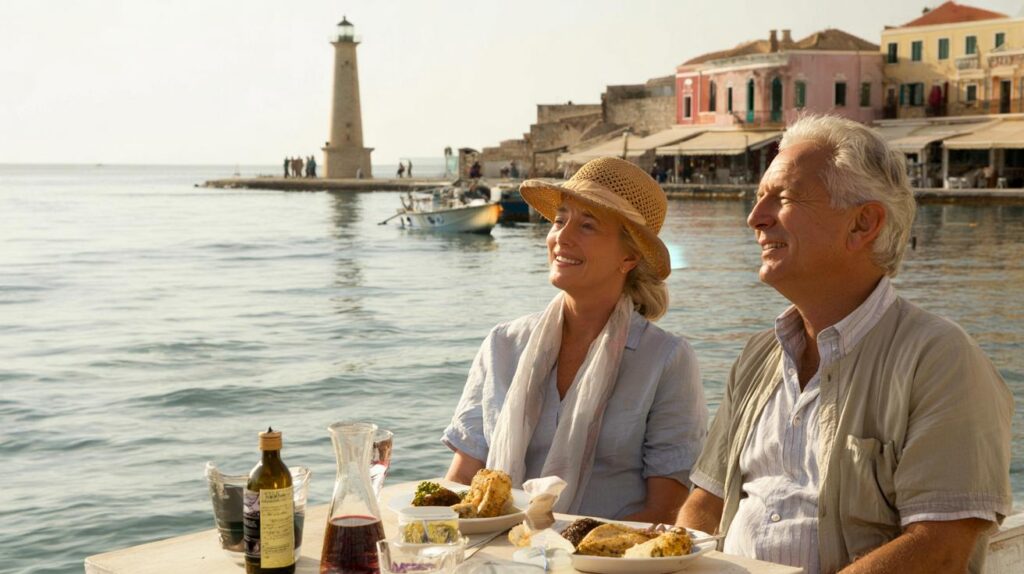
As the nights draw in, thousands of older Brits eye a late‑sun bolt‑hole with gentle pace and friendly prices abroad.
One Mediterranean island sits within a four-hour hop, serves warm seas and easy-going towns, and keeps coach tours to a murmur. In October, daytime readings hover around 26c, shade is plentiful, and pavements are far less crowded than midsummer. For pensioners chasing comfort without chaos, Crete is quietly stealing the shoulder-season spotlight.
Where the mercury holds at 26c in October
Crete, Greece’s largest island, runs on long summers, mild autumns, and a slow rhythm that suits unhurried days. October usually brings warm afternoons, a soft breeze, and sea temperatures around the low 20s. That means swims remain pleasant, while evenings call for a light cardigan rather than a heavy coat.
The shift after peak season feels immediate. Queues shrink at headline sights. Tavernas have time to chat. Hotel rates dip as package numbers thin. Locals return to their favourite beaches. Buses are less packed. Drivers breathe easier on coastal roads.
Average October highs around 26c, sea near 23c, fewer queues, and calmer roads create a rare sweet spot for older travellers.
Why pensioners are choosing Crete
Smooth travel from the UK
Direct flights to Heraklion or Chania run from several British airports in autumn, with journey times close to four hours. Off-peak schedules often leave mid-morning, which suits those who avoid late-night arrivals. Airports are compact, taxi ranks sit outside, and bus transfers into town are straightforward.
Healthcare that reassures
Major hospitals operate in Heraklion and Chania, backed by a network of clinics in resort towns. Pharmacies are plentiful and knowledgeable. A GHIC card can help with state-provided, medically necessary care, but travel insurance remains wise for private treatment and repatriation. Keep prescriptions in original packaging and carry a printed list of medications.
Costs that stretch a fixed income
Crete’s daily spend can undercut popular Spanish and Italian hotspots outside summer. Self-catering apartments keep meals flexible. Generous taverna plates make two courses unnecessary. Local buses cover long distances at modest prices, though many couples still hire a small car for wider choice.
| Typical autumn costs (guide) | Price |
|---|---|
| Return flight UK–Heraklion/Chania (hand baggage, off-peak) | £80–£160 |
| One-bedroom apartment, per night | £35–£70 |
| Taverna main course | £8–£14 |
| Glass of house wine | £2–£3 |
| Cappuccino | £2.50–£3 |
| Local bus ticket (intercity) | £1.20–£2.50 |
| Economy car hire, per day | £22–£35 |
Many visitors report a workable daily budget near £65 each, with room to spare when self-catering or sharing plates.
What to do when the sun is kinder
Ancient sites without the crush
The Palace of Knossos near Heraklion anchors the island’s Minoan story, with fresco fragments and storied halls. Arrive early for cooler air and easy access. Pair it with the archaeological museum in town, where treasures sit in climate-controlled calm. Venetian-era lanes in Rethymno and Chania add layers of Ottoman and Greek heritage, with level promenades that suit steady walkers.
Gentle days by the water
Crete’s beaches keep their colour well into autumn. Elafonissi blushes pink at the shoreline. Balos glitters like a lagoon. Vai stands tall with palms. October nudges wind down and sunburn risk lower, yet shade and water still matter at midday. Deckchairs stay available. Cafés run shorter hours, so check closing times locally.
Light adventure at your own pace
Samaria Gorge ranks as an iconic walk, yet its full route demands stamina and good knees. Shorter ravines, such as Imbros or Agia Irini, deliver grand scenery over friendlier distances. Coaches and boats coordinate in season, and October services usually continue, though timetables thin late in the month. Sturdy footwear helps on loose stones. A folding pole aids balance on descents.
With softer heat and longer shadows, autumn turns landmark walks, village strolls, and seafront ambles into unhurried pleasure.
A simple 7‑day warm break plan
- Day 1: Land in Chania. Settle into the old town. Early evening harbour walk and seafood mezze.
- Day 2: Morning bus to Rethymno. Visit the fortress and seafront. Return for a quiet dinner near the lighthouse.
- Day 3: Drive or take a tour to Elafonissi. Wade the lagoon. Back via a village taverna for lamb and greens.
- Day 4: Transfer to Heraklion. Afternoon coffee by the marina. Early night.
- Day 5: Knossos at opening time. Archaeological museum after lunch. Sample bougatsa on a shaded square.
- Day 6: Boat ride to Spinalonga from Elounda. Late swim at Plaka. Sunset in Agios Nikolaos.
- Day 7: Leisurely breakfast. Pick up olive oil from a co‑op. Airport transfer without rush.
Need-to-know for autumn stays
- Weather: Expect warm afternoons and cooler nights. Pack a light jacket and a sunhat.
- Mobility: Many lanes are cobbled. Choose low-rise hotels or apartments with lifts when booking.
- Transport: The KTEL bus network links major towns reliably. Drivers accept contactless on many routes.
- Driving: Country roads can be narrow with sudden bends. Allow extra time and avoid after-dark mountain crossings.
- Money: Cards are widely accepted. Keep small notes for village cafés and buses.
- Health: Carry GHIC and insurance documents. Keep a day’s medication in your hand luggage.
- Safety: Pavements may be uneven. Closed shoes with grip reduce trips on polished stone.
- Language: A few Greek words win smiles. English is broadly understood in hotels and restaurants.
Stretching the stay without stress
Post-Brexit rules allow most UK passport holders up to 90 days in the Schengen Area within any rolling 180-day window. That suits a long autumn escape spanning several weeks. Keep entry stamps clear, check passport validity, and store travel and medical paperwork together for easy presentation.
Accommodation owners welcome longer bookings after summer. Weekly rates often drop compared with nightly tariffs. Ask about winterisation, as many homes switch to lighter bedding and may charge extra for heating by late October. A unit with good sun and minimal steps can make daily life easier.
Food, pace and small pleasures
Menus lean on tomatoes, courgettes, olive oil, herbs, and grilled meats. Dakos brings barley rusk, chopped tomato, and soft cheese. Fresh fish appears daily near ports. Portions run generous, so sharing a starter often suffices. Lunchtimes drift late. Locals favour convivial, unhurried meals that suit a gentler timetable.
Village squares refill once the sun eases. Backgammon boards appear. October festivals still pop up in some towns. Music carries softly across harbours. Many visitors report that this is when the island shows its most genuine face.
The bottom line for older travellers
Crete in October combines warmth at around 26c, seasoned hospitality, and money that goes further than in peak months. Direct flights keep access simple. Healthcare capacity reassures. Culture sits close to the pavement. Beaches remain inviting, while crowds ebb away. For pensioners weighing value against comfort, it adds up to a timely, sunlit decision.



Is £65 per day realistic once you factor in car hire and museum tickets? Also, is 26c perhpas more like ‘feels 30’ in the sun?
Booked two weeks in Chania after reading this—mid-morning flights and cardigan evenings sound perfect 🙂 Any tips for quieter beaches near October half term?