
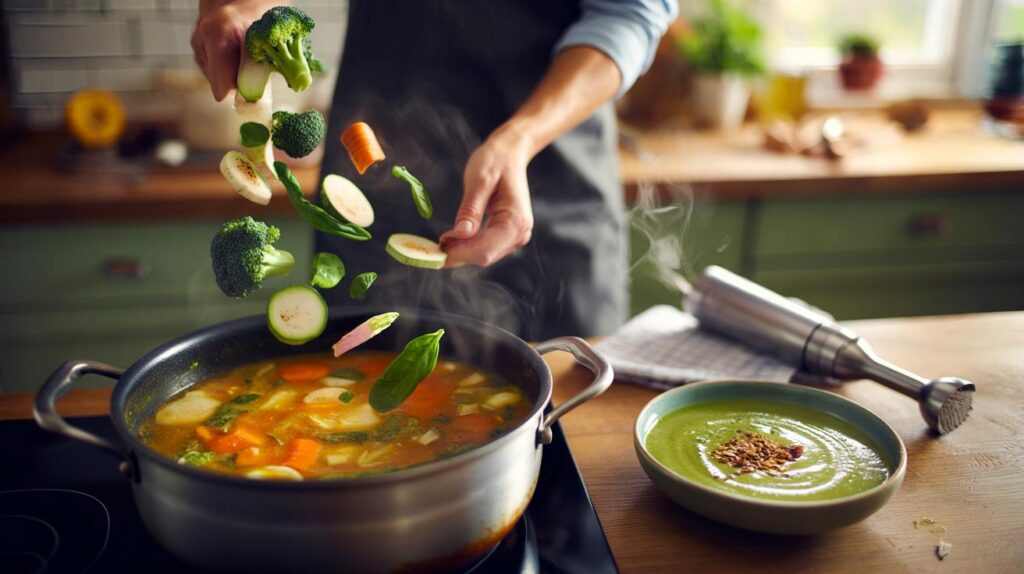
Cold nights draw in, pans bubble again, and a tiny switch in timing is turning midweek bowls into talking points.
Across home kitchens, a simple change is challenging the old “boil everything, then blitz” routine. The shift is small. The impact on flavour, colour and nutrition feels big. Cooks say they’ll never go back.
The old soup habit under the spotlight
Many of us learned one way to make soup. Chop everything. Cover with water. Boil until soft. Blend until smooth. It works. It fills plates. It uses up tired veg. It also flattens taste and dulls colour. Long boiling leaches brightness from greens. Carrots lose their snap of sweetness. Aromatics blur into the background.
What long boiling does to flavour and nutrition
Heat changes vegetables fast. Water-soluble vitamins handle short heat better than long heat. Prolonged simmering in a large pot dilutes character. You end up with a serviceable bowl, not a vivid one. The difference shows in the spoon and in the body. A bowl can be hot and filling yet feel oddly thin in taste. That gap is where timing matters.
Most of the gain comes from one move: keep back part of the veg, add it late, then blend immediately.
The last-minute veg method, explained
The technique is simple. Build a flavourful base. Add sturdier veg first. Hold back the rest until the final minutes. Blend while those late additions stay just tender. The switch keeps natural colour and aroma. It preserves more of what you paid for in the produce aisle.
Three steps you can do after work
- Start a base: soften onion, garlic and a pinch of salt in a little oil. Add stock or water. Simmer with carrots, potatoes or squash until tender.
- Time the finish: with about 8–10 minutes left, add half of your prepared veg. Think courgette, leek, broccoli florets, spinach or peas. You want them just past crisp.
- Blend straight away: take the pan off the heat. Add herbs or a splash of milk or olive oil. Blitz until silky. Taste and season.
Add late, blend early. That pairing keeps colour vivid, texture light and aromas fresh.
Why timing changes the bowl
Late-added veg carry brighter pigments to the blender. Chlorophyll holds its green. Orange squash stays luminous. The mixer traps steam and volatile aromas before they drift away. You get a soup that smells of itself. The spoonful feels lighter because you have not battered the structure for half an hour. Children notice. So do tired, midweek palates.
How the two methods compare
| Aspect | Boil-everything routine | Last-minute veg method |
|---|---|---|
| Colour | Duller greens, muted oranges | Brighter, more natural hues |
| Texture | Heavier, sometimes gluey | Lighter, velvety, lively on the tongue |
| Aroma | Soft, less defined | Clean, distinct vegetable notes |
| Time on hob | Longer simmer | Shorter, with a 8–10 minute finish |
| Estimated cost per bowl | about £1.50–£2 | about £1.50–£2 |
What cooks are reporting at home
Kitchen diaries and supper tables tell a clear story. People who try the method often keep it. They report bowls that look better and get eaten faster. Leftovers shrink. A small change in the clock unlocks more pleasure from the same bag of veg.
Families see brighter bowls and fewer leftovers
Parents say greens go down easier when they look alive. A green broccoli and pea blend, finished at the end, tastes fresh and sweet. A pumpkin soup with late courgette carries an orange glow and a hint of garden. The blender smooths the last-minute veg and makes the bowl gentle for young mouths.
Seasonal swaps that work
- Autumn: finish pumpkin or squash bases with kale, spinach or peas in the last 5 minutes.
- Winter: build with leek and potato, then add shredded cabbage at the end for colour and bite.
- Spring: simmer new potatoes and carrots, finish with watercress or wild garlic before blending.
- Summer: keep it light with courgette and basil added late to a tomato base.
Nutrition gains without fuss
You paid for vitamins, minerals and fibre. Heat and water chip away at some of them. Shortening the second half of cooking keeps more of the good stuff in the bowl. You also need less salt when flavour stays intact. Herbs and a squeeze of lemon at the end lift taste further without extra sodium.
Shorten the simmer, sharpen the flavour. Let herbs, acidity and gentle heat do more of the work.
Make it work in your kitchen
Tools, safety and budget tips
- Use a hand blender for fewer dishes. Blend off the heat to avoid splashes.
- Cut veg evenly. Small, neat pieces cook predictably, so timing stays on your side.
- Keep stock light. A clean base lets late veg shine. Water with a bay leaf works well.
- Save energy: once the base is tender, turn off the hob and use residual heat for the late veg.
- Watch the salt. Add most of it at the end, after blending, when flavour is clear.
Real-world timings and tweaks
Fast finishers that suit the 10-minute window
- Leafy greens: spinach, chard, kale (3–5 minutes).
- Soft veg: courgette, broccoli florets, peas (5–8 minutes).
- Herbs: parsley, basil, dill (stir in off the heat, then blend).
Add tougher veg earlier. Carrot, potato, celeriac and squash need the full simmer. Keep a handful back only if very thinly sliced.
Beyond the basic bowl
Protein, fibre and garnish options
Add a tin of cannellini beans before blending for creaminess and protein. Swirl in natural yoghurt or oat cream for body. A spoon of tahini brings depth. Scatter toasted seeds for crunch. Wholegrain bread on the side rounds it out. You can keep each serving under £2 with supermarket basics and seasonal produce.
Batch, freeze and reheat safely
Cool soup quickly in shallow containers. Freeze portions for busy nights. Reheat gently to a simmer, not a boil, to keep texture smooth. Add a handful of fresh greens or herbs as you rewarm to revive colour and aroma.
What to watch for
Common pitfalls and how to avoid them
- Overfilling the blender makes splashes. Work in batches and vent steam.
- Adding dairy too early can split it. Blend first, then stir dairy through.
- Using too much water mutes taste. Start with less, top up as needed.
- Skipping seasoning at the end leaves the bowl flat. Taste, then adjust with salt, pepper and lemon.
Why this small change sticks
The method rewards attention without asking for more work. You keep routine. You change the last 10 minutes. You get a soup that looks vivid, tastes clear and packs more of what you wanted from vegetables. It suits busy schedules, tight budgets and hungry tables. Try it once with broccoli and peas, or with leek and spinach. The first spoon usually convinces.
Hold back a portion of veg, add it in the final minutes, then blend while it’s still bright. That’s the whole trick.



Tried this tonight with broccoli and peas—colour actually stayed bright! Under £2 as promised. Cheers.
Does the 8–10 minute finish still work if I’m using frozen spinach or peas straight from the freezer, or should I thaw first to avoid watery soup?