
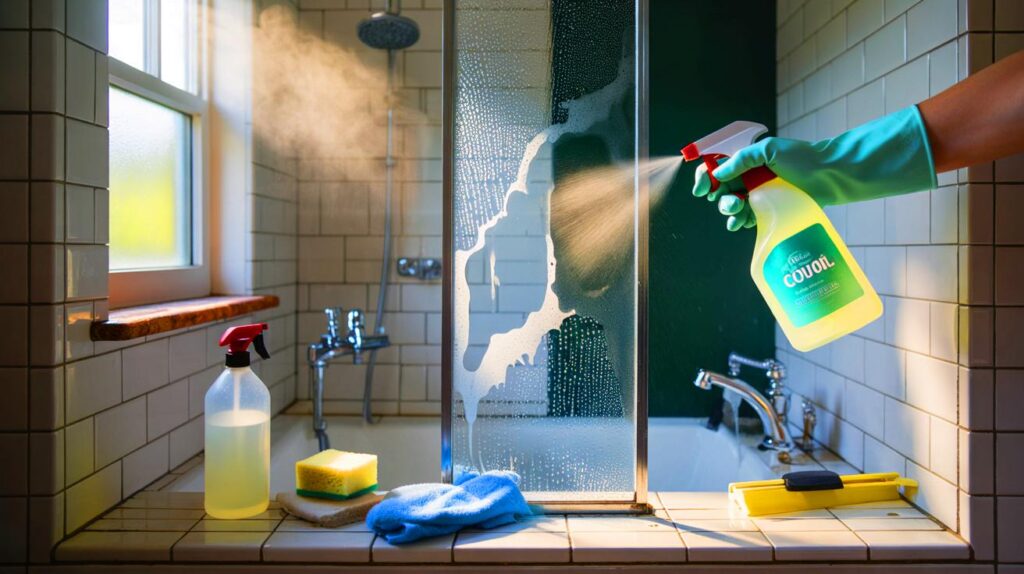
Bathroom glass loses its sparkle fast. Soap scum clings on, hard water dries white, and scrubbing seems to do very little.
Across the country, people are reaching for pricier sprays and tougher pads with mixed results. A Spanish chemical engineer has set out a simple two-step method that leans on basic chemistry and common cupboard items.
Why your shower glass looks cloudy
Two different grime families are at work on shower doors. First, there’s inorganic limescale from evaporated hard water, mainly calcium and magnesium salts that crust on to the glass. Then there’s organic build-up: a sticky blend of soap residues, shampoo polymers and skin oils that forms a greasy film. One needs acid. The other needs a grease-cutter.
| Residue type | What it is | What breaks it down |
|---|---|---|
| Inorganic limescale | Calcium and magnesium carbonates bonded to the surface | Mild acids such as white vinegar or dissolved citric acid |
| Organic film | Soap scum (stearates), skin oils, conditioner residues | Surfactants from washing-up liquid that cut through grease |
Target both enemies in sequence: degrease first so the acid can reach the scale, then dissolve the mineral crust.
The two-step fix you can try today
Step 1: cut the grease with washing-up liquid
Greasy residues block acids from touching limescale. Start by stripping that film. Heat helps because it softens waxy deposits and improves the action of surfactants.
- Mix 500 ml hot water with 1 teaspoon of washing-up liquid in a spray bottle.
- Spray generously over the glass, especially where the film looks rainbow-like or dull.
- Work it with a non-scratch sponge using small circular motions. Give edges and lower panels extra attention.
- Let it dwell for two to three minutes to allow micelles to lift the oils.
- Rinse lightly to remove loosened grime. You don’t need a full rinse yet.
500 ml hot water + 1 tsp washing-up liquid. Heat boosts surfactants so they break up oily residues faster.
Step 2: dissolve limescale with a mild acid
Once the grease barrier has gone, move on to the mineral crust. Mild household acids dissolve carbonates without harsh fumes or special gear.
- Fill a clean sprayer with white vinegar. For faster action on very hard water, warm it slightly or use a 5–8% citric acid solution.
- Spray evenly from top to bottom so it runs over previous streaks.
- Spread with a clean sponge and allow a few minutes to react. You may hear a gentle fizz as carbonates break down.
- Rinse well with warm water, then dry immediately with a soft microfibre cloth to prevent new spots.
Use white vinegar (around 5% acetic acid) or citric acid. Dry straight away with microfibre to block fresh spotting.
Finish: dry to beat water spots
Glass looks new when you take water away before it dries. A 30-second squeegee followed by a quick microfibre buff after each shower keeps deposits from returning.
Does it actually save you time and money?
Washing-up liquid costs pennies per teaspoon. Vinegar is one of the cheapest acids you can buy. A single clean typically uses around 5 ml of detergent and 50–100 ml of vinegar, bringing the cost well under the price of a branded bathroom spray. The method also reduces time spent scrubbing because you let chemistry do the heavy lifting. Many households can claw back close to an hour each week by switching from hard scouring to this two-stage routine.
What the chemistry says
Surfactants in washing-up liquid have two ends: a water-loving head and an oil-loving tail. When you spread the solution on the glass, the tails slide into the greasy layer and the heads stay in the water. They form tiny bubbles called micelles that lift oils off the surface so a rinse can take them away. Warmer water lowers viscosity and helps those micelles move and penetrate.
Limescale responds differently. Calcium and magnesium carbonates don’t dissolve in water, but they react with weak acids. Acetic or citric acid donates protons that convert carbonates into soluble salts and carbon dioxide. That reaction frees the scale from the surface without abrasion.
Common pitfalls that keep glass looking dirty
- Starting with acid on a greasy surface. The acid can’t reach the scale through the oil film.
- Using cold detergent solution. Warm water improves degreasing.
- Skipping the dry step. Drips leave minerals behind as they evaporate.
- Leaving deposits to harden for weeks. Multiple layers become harder to shift each time.
Etched glass is not dirt. It’s micro-damage to the surface that cleaning won’t reverse.
When the marks won’t budge
If glass sits dirty for months, chemistry takes a turn. Layers of deposits can trap moisture and create micro-acidic pockets that slowly attack silica in the glass itself. That etching looks like pale, permanent spotting. At that stage, only polishing with ultra-fine abrasives such as cerium oxide can reduce the marks, and that job calls for specialist gear and a careful hand.
Safety and surface warnings
- Never mix vinegar with bleach or products containing sodium hypochlorite. Dangerous gases can form.
- Avoid acids on natural stone tiles or grout that contains marble chips. Patch test away from sight.
- Use gloves if you have sensitive skin. Ventilate the bathroom during cleaning.
Hard water hotspots and what to do
Large parts of England, especially the South East and East Anglia, have hard water. More minerals mean faster limescale. If you live in a hard water area, shorten the cleaning cycle. A daily squeegee and a twice-weekly quick vinegar pass can keep glass clear without weekend marathons. Consider a showerhead with built‑in filters or a whole‑home softener if scale forms within hours.
Extra ideas to keep the shine longer
Hydrophobic glass treatments reduce wetting, so water beads off and takes fewer minerals with it. Some showers arrive with a factory coating; you can also apply a DIY repellency product. Reapply as directed, and clean gently so you don’t strip the layer too quickly. A dedicated microfibre for glass helps, as it won’t carry conditioner residue from hair washing onto the door.
Want to test the method without committing? Try a side‑by‑side patch. Treat one half with the two‑step approach and leave the other as usual. Check clarity, feel for drag under your fingers, and note how long the clean look lasts. This small experiment shows whether your local water and routine respond better to vinegar or citric acid, and how hot your degreasing mix needs to be for best results.



62 minutes? I spend longer arguing with the squeegee.
Quick question: if I warm the vinegar, does it degrade the seals or siliocne around the door over time? And what about natural stone thresholds—should I tape them off first? I’d love a rough contact time (mins) before rinsing to avoid etching or cloudy spots.