
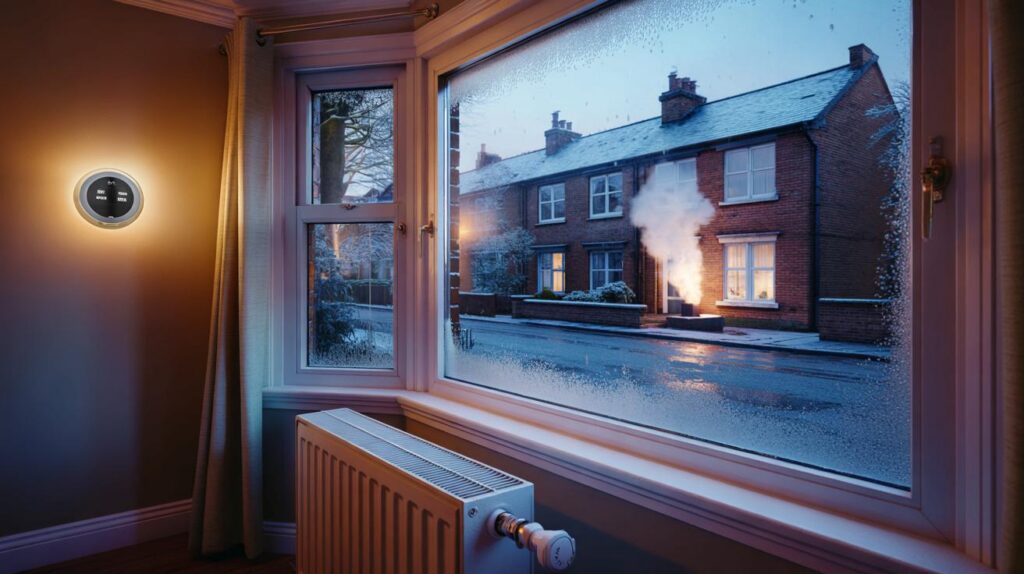
Bills are rising, days are shorter and homes feel colder. One small daily habit could be quietly sabotaging your savings.
Across the UK, families rush out for work or school and twist the heating dial without a second thought. The physics of buildings and the numbers on your bill tell a different story, especially once the mercury dips and damp creeps in.
Why switching off feels smart
Turning radiators off looks logical when no one is home. No people means no need for warmth, so the boiler rests and you save money. That is the instinct. Many households act on it to show restraint and cut their carbon impact. The aim is fair. The outcome often misses the mark.
When you kill the heat, the air cools fast and the fabric cools slowly. Walls, floors and furniture soak up the cold and store it. In leaky or older homes, that drop happens quickly on a wet autumn day. Later, you walk back in, feel the chill and ask the system to sprint. That sprint guzzles energy.
Cold fabric steals heat on your return. Your system works harder and longer to recharge the house, not just the air.
The hidden cost of reheat: why a setback beats a shutdown
Heating systems run most efficiently when they maintain a steady target. Large swings force a reheat cycle that raises demand. Gas boilers ramp up, electric heaters surge, and heat pumps lose efficiency when pushed to chase big gaps. That sudden push costs more than keeping a low, stable baseline.
Real homes vary, but field tests and building physics show a consistent pattern. A small setback during the day beats a full shutdown over the same period. The house retains some warmth. The reheat later is gentle, not frantic. You cut peaks, reduce short-cycling, and avoid condensation forming on cold surfaces.
Drop the thermostat by 3–4°C when you leave. Aim for roughly 16°C in living areas and 14°C in bedrooms during absence.
Lower humidity risk matters too. Cold, unheated rooms can hit the dew point. That invites condensation on windows and external walls. Repeated wetting encourages mould and damages paint and plaster. The repair bill wipes out any tiny fuel saving you hoped to bank.
| Scenario | Thermostat during absence | Typical energy for 8 hours | Comfort on return | Risks |
|---|---|---|---|---|
| Full shutdown | Off | Low at first, high reheat spike later (often 10–20% extra overall) | Slow to warm, uneven heat, cold surfaces | Condensation, mould, boiler short-cycling, higher peak tariff exposure |
| Setback | −3 to −4°C | Steady, lower total use across the day | Faster recovery, stable warmth | Minimal if rooms stay above 14–16°C |
| Programmable preheat | Setback plus timed boost | Optimised, avoids peaks | Warm on arrival | Needs accurate scheduling |
What to set: room-by-room targets
- Living areas when home: 18–19°C for most households, 20–21°C for babies or elderly people.
- Living areas when away: 15–16°C for up to 9 hours.
- Bedrooms: 16–18°C at night, 14–16°C when unoccupied.
- Hallways and landings: 15–17°C to help the whole home balance.
- Bathrooms: 20–21°C during use, 16–17°C otherwise.
Rule of thumb: dropping the setpoint by 1°C can trim heating use by roughly 6–7% across a season.
Setback made simple by system type
Gas boiler with radiators
Use the room thermostat to set a daytime setback and an evening comfort target. Keep thermostatic radiator valves open in the reference room where the main thermostat sits. Bleed radiators once the heating season starts to restore full heat output. Book the annual boiler service for safety and efficiency.
Heat pump homes
Heat pumps work best with low, steady flow temperatures and gentle changes. Avoid deep overnight drops. Use a narrow setback, often 1–2°C. Let weather compensation do the heavy lifting. Keep emitters clear so airflow or water flow is not blocked. A big on/off routine slashes efficiency.
All‑electric flats
Panel heaters and storage heaters punish big reheats. With panel heaters, use timers and a 3–4°C setback during the day. With storage heaters, charge them on the off‑peak window and use boost sparingly. Draught‑proof well to reduce losses from single‑glazed windows.
Small home tweaks that pay back quickly
- Close curtains and blinds at dusk, open them when the sun hits the glass.
- Keep radiators clear of sofas and long curtains. Leave 20–30 cm of space for circulation.
- Aerate for 5–10 minutes with windows wide, then close. Short, sharp ventilation protects air quality without chilling the fabric.
- Fit brush or rubber draught strips to doors. Seal gaps around letterboxes and floorboards.
- Check pressure on sealed systems and top up to the marked range. Low pressure reduces performance.
Do the maths: a quick home calculation
Take a typical semi‑detached home needing around 8 kWh of heat to recover from a full shutdown on a cold evening. A steady setback might cut that recovery to 4–5 kWh while keeping background warmth through the day. On gas at roughly 7p per kWh, that difference can add 21–28p per day in reheat costs. On direct electric at about 25p per kWh, it can add £1.00–£1.25 per day.
Stretch that over 120 colder days. You could see £25–£35 extra on gas, or £120–£150 on electric, just from the reheat penalty. That sits on top of the comfort hit and moisture risks from letting rooms go cold.
When you should switch off completely
If you leave for more than 48 hours and the forecast is mild, you can set a deeper setback. Do not drop below 12–14°C in winter. That protects against damp, frozen pipes and boiler frost cycles. For long trips in freezing weather, use holiday mode if your thermostat offers it. Many boilers and heat pumps include frost protection that needs a minimum setpoint to work.
Exceptionally efficient homes with very high insulation and airtightness behave differently. They lose heat slowly and can tolerate a wider setback. Even then, a timed preheat before you return keeps the system smooth and the air dry.
Make your controls do the work
Programmable thermostats, smart TRVs and occupancy sensors remove guesswork. Set weekday schedules with a daytime setback and an evening comfort period. Activate geofencing if available so the system preheats when your phone nears home. Use weather compensation on boilers and heat pumps to match output to outdoor conditions and avoid overshoot.
Extra context for renters and flat‑dwellers
In flats with communal heating, ask the operator for published heat‑on times and target temperatures. Use room‑level TRVs to create your own setback while keeping the communal loop stable. For rented homes, low‑cost draught proofing and thermal curtains offer quick wins without altering the fabric. Keep notes of any persistent damp or mould and report it early, as cold shutdowns can aggravate the issue.
A safer path through cold snaps
Cold spells need consistency. Keep a low baseline, ventilate briefly each day and watch humidity. A cheap hygrometer helps you keep relative humidity near 40–60%. If numbers stay high, dry laundry in a single, ventilated room or run a small dehumidifier on a timer. Warm, dry air feels more comfortable, so you can keep setpoints lower without feeling chilly.



The claim that a full shutdown often uses 10–20% more overall—do you have field data or a study link? How did you control for house age, airtightness, insulation level, and occupancy patterns? I’m not convinced the physics beats simple U‑value heat‑loss math unless the reheat window is very short. Also, the 18% headline figure—sample size and winter temps? Please share methodolgy; otherwise this advice could backfire in newer, low‑leak homes.