
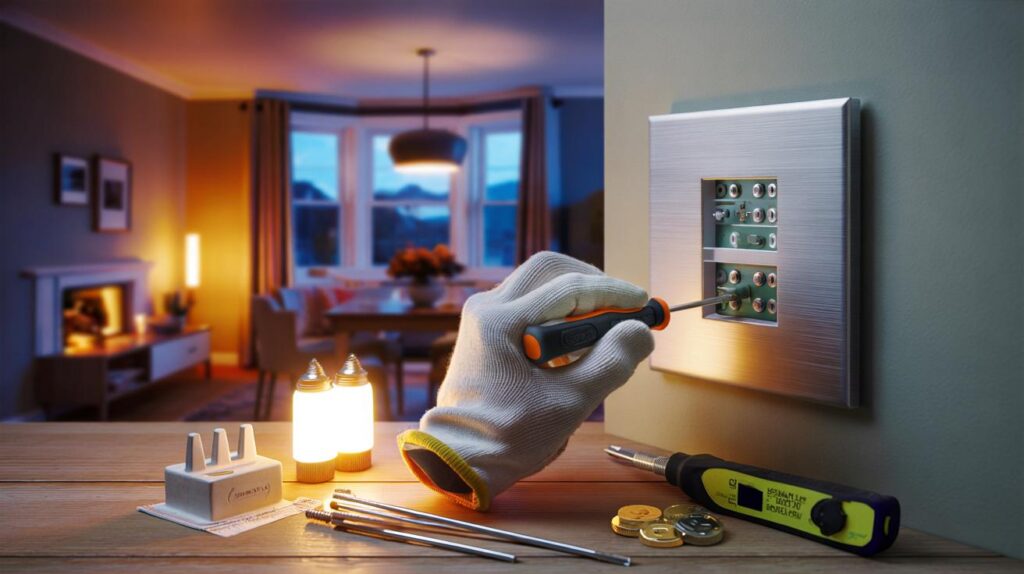
Shorter days are back, and homes across the country are chasing warmer light without wrecking evenings or budgets this autumn.
A simple swap—trading a tired double switch for a modern dimmer—now sits on many to-do lists. Retailers report brisk sales of two-gang dimmers, and energy-conscious households want mood on demand. Here’s how the shift is unfolding, what to buy, and how to avoid the classic wiring traps that spark frustration.
Why households are making the switch now
Colder nights push people indoors, and harsh lighting shows every flaw. A dimmer softens edges, cuts glare, and lets a room shift from task to calm in seconds. It also trims consumption with compatible bulbs. For LEDs, trailing-edge dimmers can reduce power draw when you lower brightness, though savings vary by lamp and driver.
Real homes report 12–28% less lighting energy when dimming by around a third with quality LED gear.
There’s a money angle too. Entry-level two-gang dimmers start near £20, while smart versions hover around £45–£60. That puts mood lighting within reach of renters and owners alike.
What you need before you touch a wire
Tools and small parts
- Flat-blade and cross-head screwdrivers
- Voltage tester or multimeter rated for mains
- Insulated pliers and electrical tape
- Marker for labelling conductors
- 25–35 mm deep back box (check depth behind the plate)
Pick the right dimmer and bulbs
Match the dimmer to the load. LEDs call for a trailing-edge unit marked “LED” and “dimmable”. Halogen thrives on leading-edge, though many modern dimmers auto-sense. Two separate lights? Choose a two-gang dimmer or a dual-channel smart dimmer so you keep independent control.
| Dimmer type | Best with | Typical load range | Approx price | Good for |
|---|---|---|---|---|
| Leading-edge | Halogen, some incandescent | 60–400 W | £12–£20 | Legacy lamps, simple installs |
| Trailing-edge (LED) | Dimmable LEDs | 5–150 W (check min load) | £18–£35 | Quiet LED dimming, less flicker |
| Smart dimmer | Dimmable LEDs or mixed | 5–200 W (model specific) | £30–£60 | Schedules, scenes, app control |
Match a trailing-edge dimmer with dimmable LEDs to silence buzz and stop shimmer at low levels.
Safety first, then style
Switch off power at the consumer unit and lock it out if others are home. Test for dead at the switch with a proper tester. Many UK switch drops don’t carry a neutral; most standard dimmers do not need one. Some smart dimmers do, so check your wiring plan.
Cut the power at the consumer unit and verify dead before touching any conductor, every single time.
Seven-step guide to replace a double switch
This applies to a two-gang switch where each gang controls a separate light. If you have two-way or intermediate switching, pick a dimmer compatible with that configuration.
Common snags and fast fixes
- Flicker at low brightness: the load may be below the dimmer’s minimum. Add a compatible LED load corrector or swap to lamps with higher minimum current.
- Buzzing: switch to a trailing-edge dimmer or better quality LED lamps.
- One lamp stays faintly lit when “off”: some drivers leak current. Choose a dimmer with a bypass module or add a neutral-requiring smart dimmer if your circuit has neutral.
- Plate runs warm: mild warmth is normal. If it’s hot, reduce load or split the circuits.
- No neutral at the switch: avoid smart models that need neutral, or reroute with professional help.
Make atmosphere without losing practicality
Low, warm light relaxes a living room and encourages longer reading sessions. Brighter scenes suit prep work in a kitchen. Set the baseline where you spend most time, then nudge up or down as needed. Pair warm-white lamps (2700–3000K) with dimmers for a cosy effect. Keep cooler lamps for tasks and home offices.
Two-gang plates shine in open-plan spaces: one circuit can wash walls, the other can spotlight the table. A gentle 30% level for walls plus 70% over the table balances comfort with clarity.
Costs, savings and payback
A mid-range two-gang LED dimmer plus four dimmable LED bulbs can land around £65–£90. If you dim lights most evenings, trimming 15–25% from lighting energy is realistic with compatible equipment. That pays back in a season for heavy-use rooms, and you gain better comfort from day one.
£35 buys a capable LED dimmer; pair it with quality lamps and you’ve upgraded comfort for years.
Where a professional still helps
Staircase or hallway circuits using two-way and intermediate switching need matched dimmer/switch sets. Metal faceplates require proper earthing. In England and Wales, domestic work must meet Part P. A qualified electrician can test insulation resistance, verify earth continuity, and issue a minor works certificate.
Smart extras that add value
Smart dimmers bring timers, sunrise fades and remote scenes—all handy when you travel. Voice control helps accessibility. Some models store a minimum level to avoid the flicker zone on sensitive LEDs. Others let you cap maximum output, which extends lamp life in warm rooms.
Helpful add-ons and planning tips
- Check back box depth early. Many dimmers need 35 mm to breathe and to tuck conductors neatly.
- Standardise lamps in the same circuit. Mixed brands often dim unevenly.
- If you must keep a non-dimmable fitting, put it on a separate gang or leave it on a regular switch.
- Keep a label inside the plate noting dimmer model and load. Future you will thank you.
What the next upgrade could look like
Once one room works, corridors and bedrooms come into focus. A low-level night scene saves stubbed toes and keeps circadian rhythms calmer than a full blast. For kitchens, a scene that shifts from 80% while cooking to 40% during dessert makes the space social again.
If you plan a whole-home renovation, sketch zones and switch locations now. Group fittings by mood and function, not just by proximity. That way, every press—or tap—delivers the light you actually want, at a cost that makes sense through the winter ahead.



Just swapped a crusty 2-gang for a trailing-edge LED dimmer using your 7-step rundown—no buzz, no shimmer, and the living room finally feels cosy 🙂 The tip about photographing wiring + adding a link wire between commons was gold. Cost me ~£38 for the plate and I kept my existing 2700K lamps. Early days, but the smart meter shows a small dip when dimming to ~60%. Nice one!