
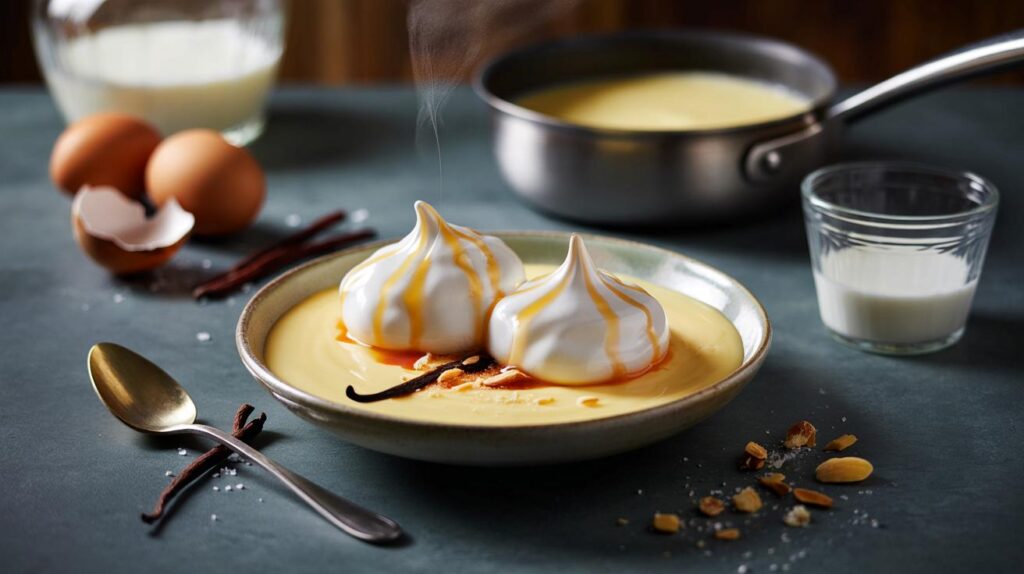
Cold nights call for warm spoons and soft textures. A nostalgic spoonful can still surprise your budget and your mates.
Kitchen confidence grows when a classic proves quick, cheap, and soothing. This week’s quiet comeback story sits in a bowl and floats on custard. It needs no oven, barely any kit, and rewards you in minutes with airy whites and warm vanilla.
What you need
- 3 large eggs, at room temperature
- 500 ml whole milk
- 70 g caster sugar, divided
- 1 vanilla pod or 1 teaspoon vanilla extract
- Pinch of fine salt
- 1 tablespoon ready-made caramel or a quick pan caramel (optional)
6 ingredients, 12 minutes, about £0.35 per person with extract (£0.60 with a real pod). No oven required.
Why floating island is back on weeknights
Rising prices push many households towards simple home desserts. This one uses eggs, milk, and sugar you likely own. It works after work because the hob does the heavy lifting, and the timings stay short. Children call the meringues “clouds”, adults chase the warm custard. The texture soothes, and the method teaches useful skills you can carry into other recipes.
| Metric | Value |
|---|---|
| Hands-on time | 12 minutes |
| Yield | 4 portions |
| Estimated energy used | ~0.20 kWh on an electric hob |
| Estimated energy cost | ~£0.06 (rate dependent) |
The 12-minute method
Whip the whites
Separate the eggs. Keep the yolks for the custard. Put the whites and a pinch of salt in a clean bowl. Whisk until soft peaks form. Rain in 30 g of the sugar while whisking. Stop at stiff, glossy peaks that hold their shape. Room-temperature whites whip faster and hold more air.
Poach the clouds
Bring a wide pan of water to a gentle simmer. Do not boil, or the bubbles will tear the foam. Use two spoons to form quenelles of the meringue. Lay them on the water. Poach for 45 to 60 seconds, then turn and poach the other side for the same time. Lift to a tray lined with kitchen paper. The set should feel bouncy, not dry.
Stir the custard
Warm the milk in a saucepan with the split vanilla pod. If using extract, add it at the end. In a bowl, whisk the yolks with the remaining sugar until paler. Stream in some hot milk while whisking. Return the mixture to the pan. Stir over a low heat with a spatula, sweeping the corners of the pan. Stop when the custard coats the back of the spoon and leaves a clear line when you draw a finger through it.
Aim for 82–84°C for a custard that nappes without scrambling. Strain through a fine sieve for extra silkiness.
Plate and finish
Ladle warm custard into shallow bowls. Nestle two meringue clouds on top. Drizzle caramel if you like gentle bitterness. For crunch, add toasted flaked almonds or crushed praline. A pinch of flaky salt or cocoa lifts the flavour without more sugar.
Texture cues you can trust
- Whites: shiny, firm peaks that bend slightly at the tip.
- Poaching: tiny ripples on the surface, not rolling boil.
- Custard: the spatula test leaves a clean track that holds for two seconds.
- Serving: warm custard meets room‑temp meringue for best contrast.
Variations that work
Swap milk for a 50:50 mix of whole milk and single cream for a richer bowl. Infuse the milk with orange zest, star anise, or a coffee bean for subtle twists. Replace caramel with a quick sauce: melt 20 g dark chocolate into a spoon of hot custard and whisk smooth. For a nutty finish, scatter hazelnuts or pistachios toasted in a dry pan for two minutes.
Cost, swaps, and what to buy
Vanilla pods taste beautiful but raise the price. A teaspoon of a good extract delivers fragrant results at a fraction of the cost. Caster sugar keeps the meringue fine and crisp on the surface; granulated sugar works in a pinch but takes longer to dissolve. If you only have semi‑skimmed milk, add a teaspoon of butter to the finished custard for a rounder mouthfeel.
Safety, storage, and make‑ahead
Use clean bowls and fresh eggs. Vulnerable diners can opt for pasteurised egg whites. Keep custard below a simmer to avoid curdling. Chill leftover custard quickly and keep it in the fridge for up to 48 hours. Press baking paper directly onto the surface to prevent a skin. Poached meringues hold for four hours in the fridge under clingfilm. Do not freeze custard, as it can split after thawing.
Make the custard the day before, poach the whites in the afternoon, assemble at the table in one minute.
How this stacks up against a shop pud
Chilled supermarket custards often include thickeners for stability on the shelf. A pan custard relies on eggs alone and tastes cleaner. A single‑serve premium pot runs between £1.20 and £2.00. Four bowls from your hob land under £2 in total when you use extract. You control the sugar and the salt. You also skip plastic pots.
Nutrition notes and lighter tweaks
A typical serving sits around 250–300 kcal, depending on toppings. Most energy comes from sugar and milk. You can reduce added sugar to 55 g without losing balance, then lean on vanilla and a pinch of salt for perceived sweetness. For dairy‑free guests, use oat drink and thicken the custard gently with ½ teaspoon cornflour; cook it just to the nappé stage to avoid a starchy note.
Troubleshooting quick wins
- Scrambled custard: take it off the heat, whisk briskly, then sieve. It often smooths out.
- Weeping meringue: dissolve the sugar fully as you whisk, and keep the poaching gentle.
- Flat whites: clean the bowl with lemon juice to remove grease, then start again.
- Thin custard: return to low heat and stir for 30 seconds more; heat, not boiling, builds body.
Extra value: skills you build today
The nappe test helps with carbonara, pastry cream, and anglaise‑based ice cream. Poaching foam teaches control of heat and patience. Holding a steady hand with caramel sharpens timing. These small moves raise many desserts, not just this one.
A simple plan you can repeat
Set a timer for three beats: four minutes to whisk, two minutes to poach, six minutes to stir. Keep a sieve by the hob. Warm bowls in hot water if the kitchen feels cold. Put the spoons in the bowls before serving. You plate faster, and the clouds stay lofty.



12 minutes? Prove it.