
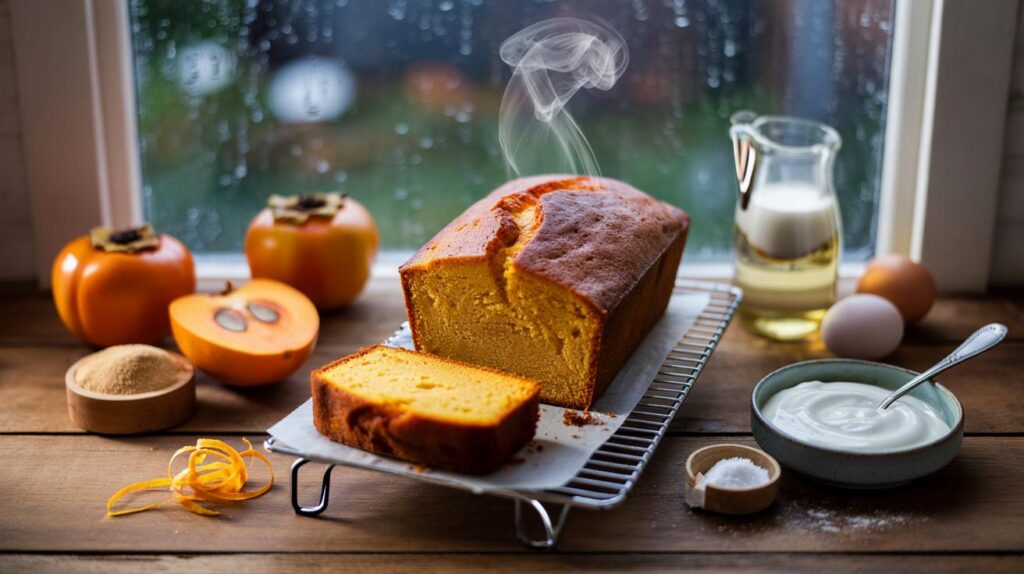
Rain taps the panes and the oven hums. Across Britain, kitchens reach for something soft, amber and quietly reassuring.
That mood has found a match in a simple autumn bake: a persimmon cake with a tender crumb and a mellow, honeyed finish. As greengrocers stack bright orange fruit and supermarkets discount ripe stock, home bakers are turning a seasonal glut into an inexpensive tray of comfort. The method is gentle, the results generous, and the timing suits a chilly weekday evening.
Why persimmon cake is having a moment
Persimmons arrive just as thermostats dip and budgets tighten. The fruit brings body, moisture and natural sweetness, reducing the need for butter-heavy mixes. You use ripe fruit that might look too soft for slicing, so less ends up wasted. The colour cheers the table, and the perfume feels like a warm scarf in pudding form.
There is also a practical nudge. In October and November, shoppers report two-for-£1 offers and clearance crates of soft fruit. Add pantry basics and you have a batter in minutes. Many readers say the cake offers the feel of a pudding with the ease of a loaf.
Two ripe persimmons, seven store-cupboard staples and 35 minutes at 170°C (fan): that’s the low-stress route to an autumn bake.
What you need
- 2 large ripe persimmons, peeled (about 350 g flesh)
- 100 g golden caster sugar or light soft brown sugar
- 2 medium eggs
- 90 g plain flour
- 40 g neutral oil (rapeseed or sunflower)
- 11 g baking powder
- Pinch of fine salt
- 1 tsp vanilla extract, optional
Step by step: from fruit to velvet crumb
Make a silken persimmon purée
Pick fruit that yields to the touch and smells fragrant. Peel, then spoon the pulp into a bowl and blitz until smooth. For astringent varieties (often Hachiya), wait until jelly-soft. For non-astringent types (commonly Fuyu), you can purée when soft but sliceable. Soft flesh delivers a moist crumb and a rounded flavour.
Got fruit that refuses to ripen? Tuck it in a paper bag with a banana for a day. Still not ready? Freeze overnight, thaw, then purée; the texture turns silkier and the sharpness eases.
Whisk a light batter
Beat the eggs with the sugar until pale and slightly thick. Pour in the purée and oil, then whisk to combine. Sift in the flour, baking powder and salt. Fold just until the flour vanishes. Add vanilla if you like. Keep the mix airy; overmixing toughens the crumb.
Bake, rest and slice cleanly
Line a 20 cm tin or loaf pan. Scrape in the batter and smooth the top. Bake at 170°C (fan) for 30–35 minutes. The surface should look lightly bronzed and spring back to a gentle press.
The skewer test matters: aim for damp crumbs, not wet batter. Cool in the tin for 15 minutes before lifting out.
Ways to tailor the crumb
Small tweaks steer the cake towards your table and your cupboard. Add crunch, perfume or extra fruit, but keep ratios steady so the centre bakes through.
- Scatter 40 g toasted walnuts or flaked almonds over the batter before baking for a brittle top.
- Spice with ½ tsp ground cinnamon, or grate in a whisper of nutmeg for warmth.
- Fold through 80 g diced ripe pear to echo the soft fruit notes.
- Swap 30 g of flour for ground almonds for a slightly denser, marzipan-kissed crumb.
Serving, storing and reheating
Serve warm slices with cold, thick yoghurt for contrast. A spoon of lightly sweetened whipped cream works for guests. Try a drizzle of double cream and a scrape of orange zest for brightness. Bitter marmalade on the side turns it breakfast-friendly.
Keep leftovers in an airtight tin for up to three days. The cake freezes well; wrap slices and freeze for a month. Reheat gently in a low oven or give a shy burst in the microwave to revive the softness.
Nutrition, budget and smart swaps
A 12-slice cake lands roughly around 220–260 kcal per slice, depending on additions. Persimmons bring fibre, vitamin C and manganese, with a mellow natural sweetness that lets you keep sugar in check. If you need to nudge it lighter, reduce sugar to 80 g and add a pinch more vanilla for perceived sweetness.
| Ingredient | Quantity | Estimated cost |
|---|---|---|
| Persimmons | 2 fruits (350 g flesh) | £1.80 |
| Sugar | 100 g | £0.12 |
| Eggs | 2 | £0.40 |
| Plain flour | 90 g | £0.05 |
| Oil | 40 g | £0.10 |
| Baking powder | 11 g | £0.10 |
| Vanilla (optional) | 1 tsp | £0.15 |
| Total (approx.) | £3.80 |
Need to adapt? Use spelt flour for a nutty edge, or a gluten-free plain blend plus ¼ tsp xanthan gum for structure. Choose light olive oil if that’s what you have. Brown sugar brings caramel notes; white sugar keeps the taste clean. A squeeze of lemon over the purée brightens sweet fruit.
Risks and troubleshooting
Under-ripe astringent persimmons taste harsh and dry the mouth. Let them ripen fully until jelly-soft, or freeze-thaw before use. If the centre sinks, the batter was too wet or the oven too cool; bake five minutes longer next time or add 10 g extra flour. If the crumb feels dense, lighten your folding and whip the eggs and sugar longer.
Choose fruit by feel, not look: soft and fragrant wins. A glossy skin can still hide under-ripe flesh.
A quick seasonal checklist
- Ripen persimmons near bananas to speed up softening by a day.
- Store ripe fruit in the fridge for up to three days to hold at peak.
- Warm ingredients to room temperature for better lift.
- Line tins well; the moist crumb releases cleanly on paper.
Going further with the same fruit
Turn leftovers into a trifle: cube the cake, spoon over coffee, and cap with yoghurt or custard. Stir surplus purée into porridge with a dust of cinnamon. For a quick midweek treat, scale the recipe to a half-quantity and bake in a small tin for 22–25 minutes.
If you fancy a head start, make the purée on Sunday and chill it for two days or freeze it flat in a bag for a month. That way, when the rain starts, you have autumn comfort ready to whisk together at short notice.



Made it tonight—tender crumb, honeyed finish, gone in ten. Definitley doing this again with cinnamon and a pear fold-in.