
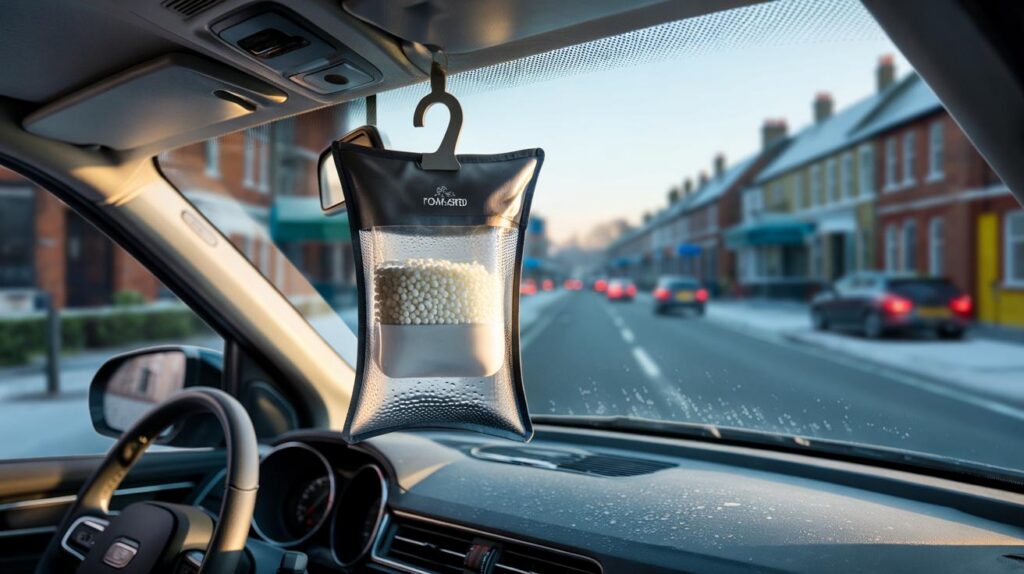
As mornings turn colder, misted windscreens steal minutes and patience. A budget fix now promises drier commutes and calmer school runs.
Drivers across the UK are turning to hanging dehumidifier bags in a bid to keep condensation at bay. The draw is simple: low price, no wiring, no faff. As temperatures drop and cabin moisture rises, a throwaway pouch might be the difference between crawling visibility and a clear start.
The £10 car hack drivers swear by
Moisture builds up inside cars when damp mats, wet coats and breathing meet cold glass. That’s why even a short, frosty night can leave a windscreen dripping. A growing number of motorists are reporting success with small, hanging dehumidifier pouches designed to absorb airborne moisture before it lands on your windows.
On major marketplaces, multi-packs are selling for less than a tenner. A six-pack has been listed at £9.98, while a three-pack sits at £6.49. The maths matters for winter budgets: that’s about £1.66 per pouch for the larger bundle. Reviews suggest people are hanging them in cars, bathrooms and wardrobes, then swapping them out when they’re spent.
Claimed lifespan: up to 60 days per pouch, depending on temperature and humidity. No plugs, no refills, no switches.
How the hanging bags work
Inside each pouch you’ll find white crystals that attract water vapour from the air and turn it into liquid. As the crystals dissolve, the bottom section fills with collected water. When the crystals have gone, you replace the pouch. It’s a “fit and forget” approach that suits drivers who just want the damp to stop.
Many new versions promise tougher material and sturdier hangers. That matters in a moving car, where sloshing can stress weak seams.
What buyers say and the numbers behind the hype
Customer ratings have climbed, with one listing scoring 4.6 out of 5 from more than 6,500 reviews. Reports commonly mention drier seats, less morning mist and a noticeable drop in musty smells. Several users say the change appears within a few days rather than instantly, which tracks with how absorbent media needs time to settle into a saturated space.
4.6/5 from 6,500+ reviews, with many drivers claiming fewer fogged windows after the first week of use.
Not every buyer is delighted. A minority warn of leaks where collected water appeared to seep back out. That’s a risk with any calcium chloride–style absorber if it’s crushed, overfilled or hung at an awkward angle. Those reports provide a useful cue on placement and protection.
The price points you can compare today
| Retailer/product | Type | Pack size | Price | Indicative cost/unit | Notes |
|---|---|---|---|---|---|
| Amazon hanging dehumidifier pouches | Disposable | 6 | £9.98 | ~£1.66 | Claimed up to 60 days, updated hanger design |
| Amazon hanging dehumidifier pouches | Disposable | 3 | £6.49 | ~£2.16 | Same format, smaller bundle |
| B&Q set of reusable car interior bags (2.1 kg total) | Reusable | Set | £9.95 | Varies | Recharge by drying the bags |
| Halfords Simply reusable car dehumidifier | Reusable | 1 | £9.99 | £9.99 | Reactivates in the microwave or on a radiator |
How to fit one in your car for best results
Placement makes the difference between “works” and “waste of money”. You want airflow around the pouch, but not so close to upholstery that a filled reservoir rubs against fabric.
- Hang from the rear coat hook, not the indicator stalk or mirror stem.
- Keep it clear of airbags and vents. Never obstruct driver view.
- Avoid touching dashboards, leather or seat fabrics. Add a plastic drip guard if needed.
- Use two pouches in larger cars or vans: one at the front, one in the boot.
- Replace when the crystals have dissolved or the lower chamber reaches the mark.
Tip: run the heater on fresh air with air-con on for the first five minutes of each journey; it dries the cabin much faster than heat alone.
Why your windscreen fogs up in the first place
Condensation forms when warm, moisture-laden cabin air meets cold glass. The vapour turns to droplets on the surface, giving you that milky smear. It’s often worse after rain-soaked days, wet dog walks, or when floor mats soak up melted frost. Short winter trips rarely dry the car fully, so the cycle repeats overnight.
Risks, leaks and what to watch for
Those white crystals are usually salts that dissolve into brine. If a bag leaks, the liquid can mark trim. Reduce the risk by hanging the pouch upright, away from sharp edges, and checking it weekly. If your car spends long periods in sub-zero temperatures, consider a reusable, fabric-based dehumidifier that traps moisture in silica instead of forming liquid brine.
Worried about spills? Place a thin plastic tray or hard-backed envelope beneath a hanging pouch to protect fabrics without blocking airflow.
When a reusable bag makes more sense
Reusable packs suit drivers who prefer a single, sturdy unit that can be recharged. You dry them on a radiator or in a microwave, then put them back to work. They cost more per item but don’t create brine. For cars with children or pets, the sealed, fabric style can feel safer and tidier.
Beyond gadgets: quick wins to kill cabin damp
Moisture control isn’t just about pouches. A few simple habits can halve the problem in days.
- Shake out rubber mats and leave them to dry indoors overnight.
- Use fresh-air intake, not recirculation, during demisting.
- Clean the inside of the glass with an alcohol-based cleaner; greasy films grab moisture.
- Check for blocked scuttle drains and door seals that let rain creep in.
- Replace a clogged cabin (pollen) filter to restore airflow.
The safety angle many forget
Driving off with a fogged windscreen can lead to a roadside penalty. Police can issue a £100 fixed fine and three points if your view is obstructed. That’s another reason small moisture fixes are getting attention: clear glass means quicker, safer departures on dark winter mornings.
What to expect on day 1, day 7 and day 30
Don’t judge the pouch after the first hour. The material needs time to settle into your car’s actual moisture level.
- Day 1: little visible change; begin using fresh air and air-con on morning starts.
- Day 7: noticeable reduction in morning mist; cabin smells less stale.
- Day 30: pouch shows liquid in the lower chamber; swap or add a second if fog returns.
Cost check: is it worth your £10?
If each disposable bag gives even a month of help, a six-pack at £9.98 can cover most of the winter for a small car. Households with two cars might combine one multi-pack with a reusable unit in the dampest vehicle. The key is to combine the bag with good airflow and dry mats; that’s where the real gains arrive.
Six bags for under a tenner and a claimed 60-day lifespan each will tempt many drivers facing four wet months ahead.
Extra context that helps you choose
Single-use pouches often pull moisture faster in the first weeks because of the chemistry involved. Reusable silica-based packs work more steadily and can be recharged many times. If you park on the street, choose a design that won’t swing against trim. If you garage the car, a smaller bag may suffice because the ambient air is less harsh.
Got a persistent damp problem? Lift the boot floor and check the spare-wheel well for water. Inspect door membranes after a speaker swap. Look for clogged sunroof drains if you have one. A dehumidifier bag handles symptoms; finding the source improves comfort and protects electrics.



60 days in a damp UK winter? Sounds optimistic. Anyone got a pouch that defintely lasted past week 4 without turning into salty slush or dripping on the mats?