
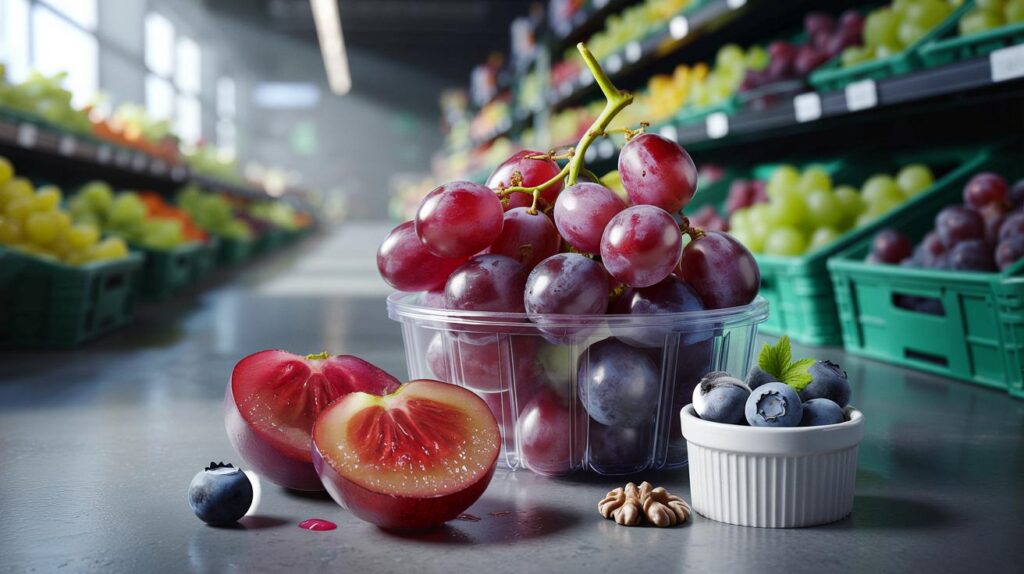
Shoppers browsing the fruit aisle this week may do a double take: a familiar cluster hides an unexpected burst of colour.
A new red‑fleshed grape has landed in major UK chains, offering a berry-like bite, eye-catching colour and a headline £3 price tag per punnet.
What are Boombites
Meet Boombites, a fruit that looks like a table grape but breaks the rules when you bite in. The skin is classic grape, yet the inside reveals a deep crimson pulp more reminiscent of cherries or dark berries. The flavour sits firmly in the grape camp, but the texture and colour deliver something different on the palate and the plate.
For launch, M&S and Ocado have exclusivity, with punnets priced at £3. The aim is simple: take the convenience and crunch of seedless grapes and add the pigment-rich traits usually associated with berries. Behind the novelty sits a longer scientific story about polyphenols, plant pigments and how they interact with the body.
£3 a punnet at M&S and Ocado, red on the inside, grape on the outside, and a nutrient profile that borrows from berries.
The science in brief
Boombites belong to a family of red‑fleshed grapes high in anthocyanins, the plant compounds that give blueberries and blackberries their deep hues. Anthocyanins sit within a wider group known as polyphenols, which researchers have associated with favourable markers of heart and metabolic health, from cholesterol profiles to vascular function and gut microbiota composition.
These grapes also carry resveratrol, another polyphenol famous from grape skins and often cited in debates around diet and cardiovascular risk. Independent testing referenced by the growers reports antioxidant levels on a par with blueberries and roughly triple the resveratrol content typically found in them. That speaks to concentration, not cure-all claims, so context matters: your overall diet and lifestyle still do the heavy lifting.
Lab analyses cited by the producers show comparable antioxidant capacity to blueberries and approximately 3x the resveratrol content.
Blood sugar: the early signals
Emerging data from food science labs in Spain suggest a notable twist: despite their natural sweetness, these red‑fleshed grape varieties may slow glucose uptake in in‑vitro models when compared with standard grapes. Scientists point to the fruit’s polyphenol–fibre matrix, which appears to influence how sugars travel across the gut wall.
For people keeping an eye on energy dips or managing carbohydrate loads, that slower transport could help flatten peaks. Real‑world responses vary, so anyone who monitors glucose should check their own readings.
Early research indicates a slower glucose uptake versus standard grapes, hinting at a gentler post‑snack rise.
How they were bred
This is not a lab‑edited novelty. Plant breeders achieved the trait through conventional crossing: thousands of combinations between small, soft, red‑fleshed wine grapes and larger, crunchy, seedless table grapes. The goal was simple but painstaking—keep the crisp bite and sweetness of modern table grapes while bringing red flesh and pigment density into the mix. Only a handful of crosses produced the colour, texture and flavour balance that scale for supermarket shelves.
Why shoppers might care
Fruit sugar puts some people off increasing their daily portions. Nutritionists have long argued that the whole‑fruit package—water, fibre, polyphenols and micronutrients—changes the way our bodies handle sugars compared with juices or sweets. Boombites feed that debate because their pigment profile is unusually high for a grape.
Large population studies consistently associate higher polyphenol intakes with better cardiovascular risk profiles. One long‑running cohort tracking older adults at raised risk found those consuming the most polyphenols had materially fewer new cases of type 2 diabetes than peers with lower intakes. These are associations rather than proofs of cause. Even so, they point shoppers towards colourful plants, diverse fibres and minimally processed choices.
How to use them
- Pre‑ or post‑gym snack: their water content helps with hydration while the sugars refuel.
- Breakfast upgrade: toss into porridge or yoghurt for colour and bite without extra prep.
- Savoury salads: pair with feta, walnuts and rocket; the red flesh turns a simple bowl into a centrepiece.
- Cheese board: their crunch stands up to soft rind cheeses and a smear of chutney.
- Frozen treat: freeze on a tray and use as edible “ice cubes” in sparkling water.
Price and availability
| Retailer | Pack price | Aisle |
|---|---|---|
| M&S | £3 per punnet | Fresh fruit |
| Ocado | £3 per punnet | Fruit and veg |
Expect limited volumes at first. Early rolls‑out often ebb and flow as growers watch demand and fine‑tune harvest windows.
Storage and serving tips
Keep punnets chilled and dry; rinse only before eating. For peak crispness, store at the front of the fridge and return leftovers promptly. A typical UK fruit portion is 80g, which counts towards the 5‑a‑day target. Many shoppers find 12–15 Boombites approximate that serving, depending on berry size.
What the nutrition numbers mean
Antioxidant capacity describes how a food’s compounds behave in test systems, not a guaranteed effect in the body. Resveratrol content varies with growing conditions, storage and ripeness. Anthocyanins generally support the body by signalling, not by “mopping up” all free radicals. That is why variety on the plate matters: different pigments act on different pathways.
For those managing diabetes or insulin resistance, the suggestion of slower glucose uptake will sound helpful. Pairing fruit with yoghurt, nuts or seeds can further steady absorption thanks to protein, fat and extra fibre. If you use a glucose sensor, try a small portion alone, then repeat with added protein or fat to see the difference.
Recipe idea: shortcut breakfast pot
Layer 80g Boombites, 150g natural yoghurt, a spoon of chopped hazelnuts and a pinch of cinnamon. The yoghurt adds protein, the nuts bring crunch and unsaturated fats, and the spices add aroma without added sugar.
Questions shoppers keep asking
- Are they a berry or a grape? They are grapes bred to have red flesh and high pigment density.
- Are they seasonal? Supply will track harvests; UK availability may vary through the year.
- Are they suitable for children? They’re a whole fruit; halve lengthways for younger children to reduce choking risk.
- Do they replace blueberries? Variety beats substitution. Rotate them with other colourful fruits across the week.
For those weighing value, £3 sits mid‑range for premium fruit launches. If the flavour clicks and you value the nutrition story, the cost per portion remains competitive: a single punnet typically delivers several 80g servings. If you watch sugar, pair them with protein or save them for post‑meal dessert. If you watch colour on your plate, their ruby interior does the work for you.



Tried them at M&S today—crisp, ruby inside, and my kids actually ate grapes again 😄 Worth the £3 for the novelty alone.
3x resveratrol sounds impressive, but is that per 100g and measured how? Antioxidants in lab tests don’t always translate in vivo. I’m intrigued, just wary of health-halo marketing. Also, do Boombites keep their crunch after a day in the fridge? My last “innovative” fruit got soggy. Definately curious though.