
Away from city queues and retail chains, one coastal village still sets its own rhythm beside tide, stone and smoke.
On Scotland’s East Neuk of Fife, a compact settlement has kept its heart beating. Crail sits around 10 miles south of St Andrews, an easy 90-minute drive from Edinburgh, and slots neatly into both the Fife Coastal Route and the 117‑mile Fife Coastal Path. Visitors come for sea air and cobbles. Many stay longer than planned.
Where a postcard harbour still works
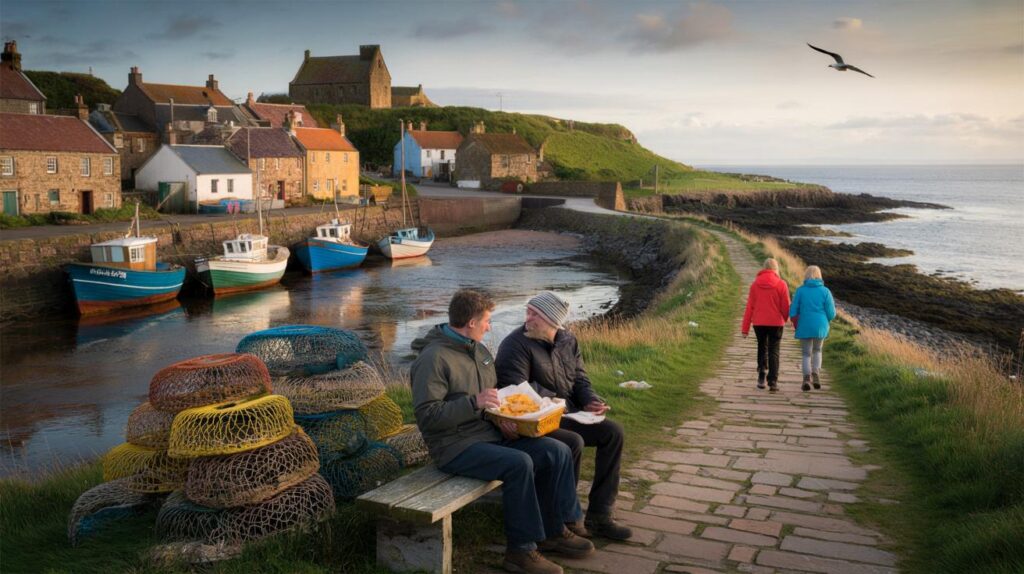
Crail’s fishing harbour hides at the foot of steep lanes. Boats nudge their moorings. Stacks of lobster creels sit in neat pyramids. Honey-coloured stone reflects soft Scottish light, especially on clear evenings. You can linger on the wall and watch gulls ride the breeze. You can trace lines of cottages that seem to lean towards the sea.
Many visitors say this is the UK’s most beautiful harbour, and it earns that praise when you walk it slowly.
Low tide changes the scene. Mudflats show their seams. Work carries on. This remains a living harbour, not a museum set. Photographers favour early morning for calm water and warm colour. Families lean toward late afternoon when the breeze drops and fish suppers taste best on a bench.
A high street that refuses to fade
Step back up the slope and the main street answers with life. You find a proper butcher, an artisan bakery and a grocer that knows its regulars by name. There are cafés with steamed-up windows on wet days, and a small gallery that turns heads. Pottery sits in glazed rows. In summer, the Crail Food Festival brings queues, chatter and very little waste.
Independent shops keep doors open on the high street, so residents have daily choice and visitors meet real character.
- Fresh bread and pies baked before breakfast
- Local shellfish served from simple counters near the shore
- Small-batch pottery and prints made within walking distance
- Coffee, ice cream and window seats for storm-watching days
Trade feels steady because day-trippers arrive in waves from St Andrews and Anstruther, and walkers drift in from the Fife path. That mix supports year-round opening hours, which in turn keeps the village practical for people who live here.
A small place with a long memory
Crail’s story stretches back more than a millennium. It became a royal burgh in 1310 under Robert the Bruce, a mark of status and trade. Parts of the parish church date to the 12th century, and you can read layers of stone like a timeline. Marketgate, the broad central space, once ranked among Europe’s largest market squares. The scale still surprises first-time visitors.
Golfers have reasons to smile as well. The Crail Golfing Society counts among the oldest clubs on the planet, with sea views sneaking into every hole. The wind plays a part. The scent of salt sits in fairways and rough alike.
| Fact | Figure |
|---|---|
| Distance from St Andrews | About 10 miles (16 km) |
| Drive time from Edinburgh | Roughly 90 minutes |
| Fife Coastal Path length | 117 miles (188 km) |
| Royal burgh charter | 1310 |
| Parish church origins | 12th century |
| Marketgate claim | Once among Europe’s largest market squares |
How to get there and when to go
Most visitors drive from Edinburgh across the Queensferry Crossing, then follow signs for the East Neuk villages. Roads narrow near Crail and parking fills on bright weekends, so arrive early or late. Regular buses link Crail with St Andrews and Anstruther, handy if you plan a one-way coastal walk. Cyclists favour the quieter back roads; the gradients test legs near the harbour.
Spring brings primroses in verges and calmer seas. Summer packs the harbour wall with families and day-trippers. Autumn delivers big skies and fewer queues. Winter gives you room and drama. Dress for wind at any time, because the sea rarely keeps still.
If you want space, pick weekday mornings. If you want bustle, aim for festival weekends and school holidays.
A simple day plan
- Start with coffee and a bun on the high street.
- Walk the lanes to the harbour and watch the boats move with the tide.
- Pick up fish and chips and find a sheltered bench.
- Follow the coastal path towards Fife Ness for seabirds and big views.
- Return via Marketgate to see how wide the old trading space still feels.
Practical tips and risks
Cobbles get slick in rain, so wear shoes with grip. The harbour edge has drops, so keep children close and avoid climbing on creels. Wind can lift napkins, hats and receipts into the water; carry a tote and mind your litter. Many smaller shops stay card-friendly, but a few still prefer cash for small spends.
The village road network is tight. Use marked car parks rather than squeezing into lanes. Respect driveways and turning circles for working vehicles. If you plan to sketch or photograph, check tide times. Low water reveals shapes; high water gives mirror reflections. Either helps a good frame.
Why this high street still matters
Across Britain, many small towns fight to keep footfall. Crail shows how craft, food and local services can pull in trade without turning the place into a theme park. The butcher serves weekday suppers as much as weekend treats. The baker keeps routine alive for school runs. That balance draws people all year, not just on sunny Saturdays.
For comparison, nearby Anstruther and Pittenweem share similar DNA, with harbours, art and seafood. A short hop along the coast gives you a different take on the same shore. You can string them together on foot, by bike or by bus and still be back in Crail for tea.
Make it count
Support the businesses that keep lights on in winter. Buy a loaf, not just a postcard. Ask about where the shellfish comes from before you order. Take your time on the path and give way on narrow points. The village feels special because people care for it day after day. Visitors play a part when they tread lightly and spend wisely.
If you need a reason to swap your city routine for a day, the numbers speak plainly: 10 miles from St Andrews, 117 miles of coastline at your feet, and over 1,000 years of lived history around you. That combination is rare. And it sits within reach of your next free Saturday.



Take my city rent and swap it for honey-coloured stone and a working harbour. 117 miles of path, lobster creels and cheap chips—definately tempting.