
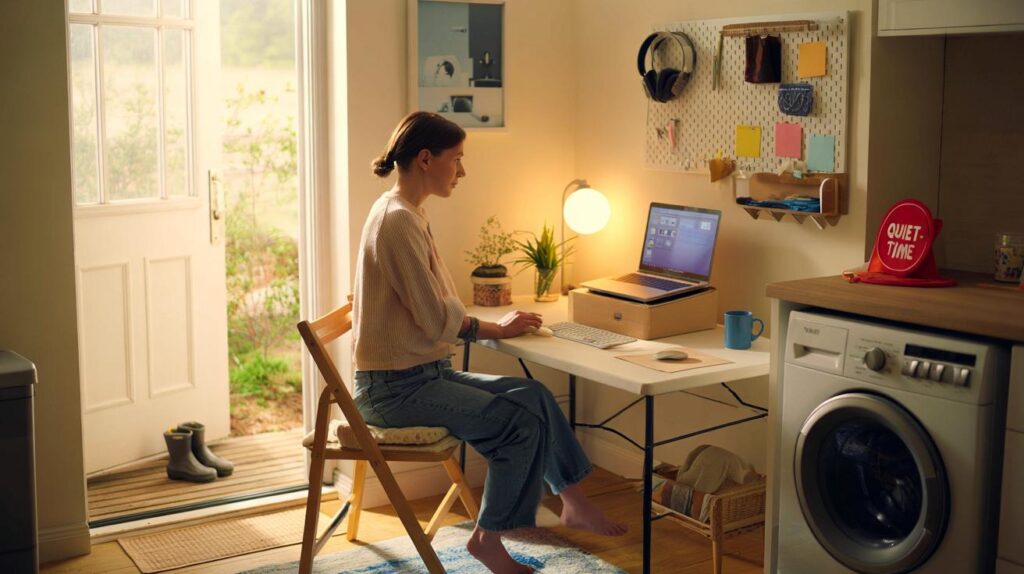
The kitchen table is a battlefield of crayons, receipts and cold toast. Your inbox blinks like a needy neighbour. You love your work, adore your kids, and still find yourself working from a wobbling chair with a laptop balanced on a stack of cookbooks. The budget is tight, the day is tighter, and what you want most is a pocket of calm where things get done without the guilt fog. A home office that respects real life, not the pristine version on Instagram. One that makes space for ambition and snack time. One that carries you, not the other way round.
I watched a mum in Manchester fold away a high chair, slide out a slim IKEA tabletop, and transform the corner by the boiler into a quiet, competent command centre. Two mugs of tea, one for her, one unattended just in case. The baby monitor hummed. Shoes were a little muddy by the back door, and it looked like life, not a showroom. She opened her laptop and her shoulders dropped by an inch. The air shifted. She had a space that said, “Work happens here.” The kettle clicked.
Make space work harder than your schedule
The biggest win isn’t buying a new desk. It’s drawing a clear line between “work mode” and “everything-else mode”, even if that line is a £10 rug. A foldable table tucked behind the sofa, a laptop stand on a windowsill, or a narrow console in the hallway can become a basecamp. Add one visual cue—a desk lamp, a cork board, a plant—and your brain learns the signal. You step in, you crack on. You step out, you breathe.
Anna, a freelance copywriter in Leeds, set up a £35 second-hand table and a £12 pegboard beside the washing machine. She stuck a postcard of the sea at eye level and taped her working hours—11:00 to 14:30—on the wall. Her six-year-old knows the “traffic-light” post-it system: green means “ask me”, amber means “two minutes”, red means “shh, call”. ONS figures suggest roughly four in ten people did some home working in 2023. The ones who thrive tend to do what Anna did: give the work a clear home, even in a tiny corner.
Here’s why it works. Boundaries cut down on context switching, which eats time and spikes stress. A defined zone—no matter how small—reduces the micro-frictions that rob energy: searching for a charger, clearing crumbs, hunting for a pen. It also trains the household. If the lamp is on, Mum’s in focused mode. If the lamp is off, she’s open. You’re not asking for silence; you’re teaching a rhythm. That rhythm becomes habit, and habit is free productivity.
Practical, budget tricks that pay off daily
Your chair matters more than the desk. If a proper task chair isn’t in the budget, add a firm cushion for seat height and a rolled towel for lumbar support. Use a sturdy box or stack of old books to raise your screen to eye level. A baking tray under your laptop diffuses heat. Clip cables to the edge with binder clips and label them with washi tape. Place a lamp at 10 o’clock to your keyboard to avoid glare and headaches. Your home office doesn’t need to be picture-perfect to work.
We’ve all had that moment when a headset disappears five minutes before a call. So make a “last-minute box” for essentials: earbuds, spare pen, sticky notes, phone charger, lip balm, one cereal bar. Keep it within reach. Build a two-minute reset ritual at the end of each session—wipe the surface, park the chair, stack the papers. Let’s be honest: nobody really does that every day. Aim for most days. The calm it buys you tomorrow is worth five tidy seconds tonight.
“Small, repeatable wins beat big, complicated systems,” said a productivity coach I spoke to, a mum of two who runs meetings from the landing. “If you can find your notebook in five seconds, you’ve bought back a slice of peace.”
Pick one friction and solve it today. Your future self will say thank you.
- £0–£10 quick wins: binder clips for cables, a tea towel as a wrist rest, a shoebox monitor riser.
- £10–£30 upgrades: second-hand task lamp, pegboard, a pack of Command hooks for vertical storage.
- Time savers: a timer app for 25-minute sprints; pre-set “I’m on a call” message on your phone.
- Kid-friendly cue: a coloured coaster on your desk—green to chat, red for quiet moments.
A humane rhythm for mums at home
Think less “perfect office”, more “predictable flow”. Block work in 40–90 minute chunks that fit around naps, nursery runs, or school pickups. Protect one anchor slot each day—the hour that usually goes right—and build around it. If noise is an issue, aim your desk so your mouth points to the mic and your kids to your back, then use a cheap foam draught excluder under the door. A plant softens the view. Natural light lifts mood. If you can, choose a chair facing away from the sink. Out of sight, out of mind, dishes and guilt alike.
| Point clé | Détail | Intérêt pour le lecteur |
|---|---|---|
| Define a micro-zone | Use a rug, lamp, or pegboard to mark your “work here” spot | Reduces mental load and signals focus to family |
| Ergonomics on a budget | Cushion + towel support, shoebox riser, side lamp | Less pain, clearer head, more energy |
| Two-minute reset | End each session with a quick tidy ritual | Faster starts tomorrow, lower stress overall |
FAQ :
- What’s the cheapest way to create a “desk” without buying a desk?Use a fold-out wall shelf, a sturdy ironing board at hip height, or a £6 pine shelf across two KALLAX cubes. Add a lamp to mark it as work territory.
- How do I reduce noise on calls with kids at home?Use a wired headset with in-line mic, sit with your back to the room, lay a rug to absorb sound, and stick a “red card” cue for quiet. White noise on a spare phone outside the door helps too.
- Can I get a decent ergonomic setup on £0–£50?Yes: cushion for height, rolled towel for lumbar, shoebox or cookbooks as a monitor riser, a tea towel wrist rest, and a second-hand lamp. Keep knees at 90 degrees and screen at eye level.
- How do I set boundaries without feeling like the bad guy?Use a friendly script: “Mum’s on the red coaster for 15 minutes, then it’s snack time.” Praise the wait. Put a small “quiet toy” box under the desk for emergencies.
- What storage stops the daily clutter explosion?One in-tray for papers, one pencil pot, one “everything” box for grab-and-go items. Vertical storage—hooks, pegboards—keeps the surface clear and the brain calm.



Love the idea of the £10 rug as a boundary—simple and genious. The “traffic-light” post-it for kids is such a kind, doable script. I tried a tiny desk lamp cue today and my six-year-old actually paused before interrupting. Small miracle. Thanks for writing something that respects real life mess without the Insta gloss.