
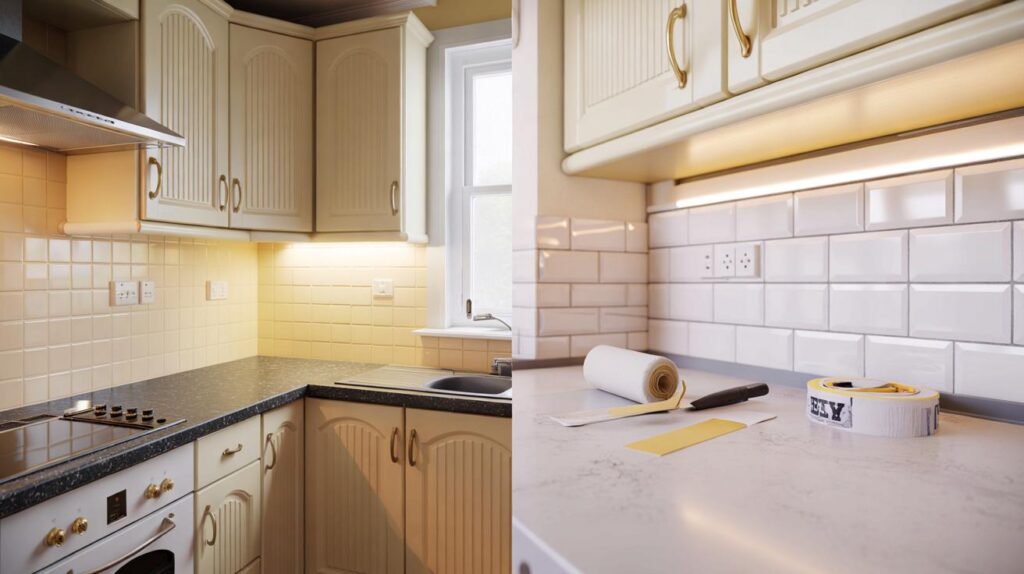
A tired 90s kitchen, a tight budget, and a weekend to spare — here’s how one woman reset the room that runs her life, without crossing the £300 line.
On a grey Saturday in Leeds, the kettle clicked off and the kitchen felt like it had given up. Beige cabinets stared back, the laminate worktop was scratched into a map of old meals, and the tiles had that faint, greasy sheen you only notice when the sun lands on them. Emma Hughes looked at the room that swallows mornings and spits out weeknights and thought: it doesn’t need to be perfect, it just needs to feel alive again.
She didn’t call a builder. She went to B&Q, opened Amazon on her phone, and played Tetris with her budget. Two tins of cabinet paint, a primer she trusted, peel‑and‑stick tiles, brass handles that felt surprisingly weighty, a roll of marble-look vinyl, and a strip of LED lights. The shopping list looked ordinary. The transformation did not. Two days later, the room looked brighter, lighter, and oddly bigger. One number makes it stick.
From dated to day-bright: the logic of a £287 kitchen
Emma’s kitchen wasn’t broken. It was bored — tired wood-effect doors, yellowing grout, that particular 2008 energy that sits between practical and joyless. She targeted the largest surfaces first: doors, worktop, splashback. Colour and texture do the heavy lifting in small British kitchens, so she went for crisp white on the units and soft marble on the top. Light bounces, shadows soften, and your eye stops tripping over old details.
We’ve all had that moment where you stir a tea bag and realise a room has been slowly sapping you. Emma clocked that feeling at 8:11am, then did the maths. Full UK kitchen refits average four to five figures; even a “cosmetic refresh” can push £1,500. Her total? £287 — including a B&Q primer (£22), cabinet paint (£56 for two tins), rollers and tape (£13), Amazon peel-and-stick metro tiles (£28), 20 brass T-bar handles (£36), marble-effect vinyl wrap (£44 for two rolls), LED strip lights (£15), grout pen and cleaner (£7), and a tube of white sealant (£6). £287 doesn’t buy new cabinets. It buys better mornings.
There’s a quiet trick to these fast makeovers. You’re not rebuilding a kitchen; you’re reframing it. Focus on what your brain reads first: cabinet colour, worktop pattern, and the glint of hardware. Then cut the visual noise — dark grout, shadows under cupboards, mismatched handles — with small, low-cost fixes. **No builders, no skip, no drama.** The result isn’t a showroom. It’s a room you actually want to stand in at 7am.
What she actually did — and how to borrow it
Day one began with cleaning, not colour. Sugar soap took the grease; a light scuff with 240‑grit gave the primer something to hold. Emma popped doors off, labelled hinges in pencil, and rolled on a quick-drying primer in even, thin coats. Once dull and ready, two coats of cabinet paint went on with a foam roller, edges cut with a small brush. She dried doors on old chairs while the frames set. The rhythm was simple: thin coats, long strokes, don’t chase drips. **She spent £287, all in.**
Handles were the punchline. Those old curved ones made every door look older; swapping to brushed brass T‑bars from Amazon lifted the whole run for less than the cost of a takeaway. She lined up a masking tape guide and drilled slowly, then filled the old holes with a dab of wood filler before touching in paint. For the splashback, peel-and-stick metro sheets clicked into a neat grid; a grout pen took the faux grout from beige to bright. Let’s be honest: nobody really does that every day. Yet for one weekend, it’s worth the faff.
The worktop wrap was the tensest hour. A marble-look vinyl (two rolls) went down with a felt squeegee, seams tucked with a hairdryer’s gentle heat, edges sealed with crisp white silicone to keep steam out. The final flourish was light: a slim LED strip under the wall units warmed the new white and made the vinyl read more expensive.
“I thought I needed thousands,” Emma told me, laughing as she peeled the last bit of tape. “The first coat was terrifying. Then the room started smiling back.”
- B&Q primer: £22
- Cabinet paint (2 tins): £56
- Rollers, brushes, masking tape: £13
- Peel-and-stick tiles: £28
- Brass T-bar handles (20): £36
- Marble-look vinyl (2 rolls): £44
- LED strip light: £15
- Sugar soap, sandpaper, grout pen, sealant: £33
- Total: £287
Why this resonates now
Money is tight, time is tighter, and the kitchen gets more use than any other room. Small, reversible upgrades speak to the moment: they’re renter-friendly, flexible, and they patch the ache of wanting better without waiting years. **The trick is patience, not perfection.** A slightly wobbly brush line won’t ruin your dinner. A brighter cabinet will change your mood.
There’s also the pride piece. Making a space with your own hands gives a quiet kind of agency most of us miss on screens. Swap a handle and you start to see other things you can change. Paint a door and the room meets you halfway. Kitchens hold family arguments and birthday candles and Monday leftovers; when they look fresh, everything else feels a notch lighter. The budget is the limit, the result feels limitless.
What Emma did isn’t magic. It’s a string of realistic choices anyone can copy with a Saturday and a playlist. Go for surfaces that shout. Favour light over dark in a small space. Use warm metal to add a little joy. If your kitchen is beige and beige again, a £300 burst won’t fix the oven, yet it might fix your morning. And that’s worth chasing.
| Point clé | Détail | Intérêt pour le lecteur |
|---|---|---|
| Target the big surfaces | Cabinets, worktop, splashback first | Maximum visual change for minimal spend |
| Use smart materials | Primer, cabinet paint, vinyl wrap, tile stickers | DIY-friendly, renter-safe, fast results |
| Finish with light and hardware | LED strip + new handles | Upscales the whole look for under £60 |
FAQ :
- Can cabinet paint really last in a busy kitchen?With a good degrease, proper primer, and thin coats, yes. Expect a few touch-ups in high-traffic spots after a year, which is a five-minute job.
- Will peel-and-stick tiles damage my wall?Most reputable brands lift cleanly from painted plaster or existing tiles if warmed with a hairdryer. Test one tile in a corner first.
- How long did this take from start to finish?Emma split it over a weekend: day one for cleaning, priming, first coat; day two for second coat, handles, tiles, vinyl, and lighting.
- My doors are “wood effect” laminate — can I paint them?Yes. Key the surface lightly with fine sandpaper, use a bonding primer, then a cabinet-rated paint. Avoid heavy sanding that can break the laminate.
- What basic tools do I need?Foam rollers, a small angled brush, screwdriver/drill, masking tape, sugar soap, fine sandpaper, squeegee, and a hairdryer for vinyl edges.



Love how she targeted the “big reads” first—doors, worktop, splashback. The brass T-bars and that warm LED strip are doing heavy lifting for pennies. £287 buying better mornings is such a mood. Saving this for my own tired laminate cave; thanks for the step-by-step and the honest maths.
Question for folks who’ve done vinyl wrap: how does it hold up by the hob and sink? Doesn’t it scuff alot or lift on corners even with silicone? I’m tempted, but I cook daily and steam is my mortal enermy.