
Some mornings unravel before the kettle boils. The alarm bleeds into emails, your brain sprints while your body lags, and by 9 a.m. you’re on your second coffee and still not quite there. A mindful yoga routine won’t magic away deadlines or school runs. It can, though, give you a pocket of steadiness that makes the rest feel navigable.
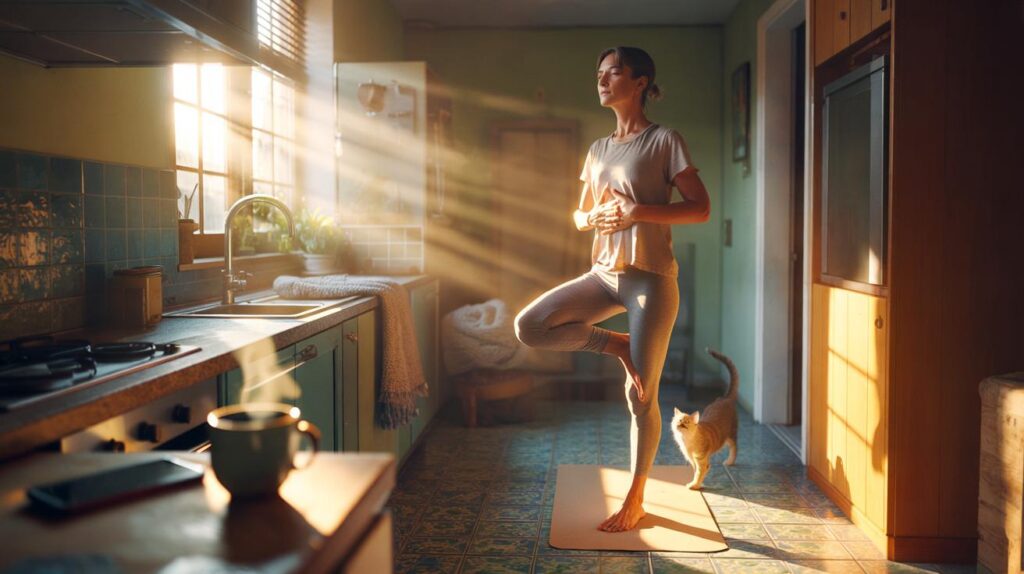
The first light creeps across the kitchen tiles. You’re barefoot on a mat that’s seen better days, phone facedown, mug steaming on the counter. The cat circles like a fuzzy metronome. You place one hand on your ribs, one on your belly, and breathe as if the flat itself is breathing with you. Inhale for three. Pause. Exhale for four. Your shoulders drop an inch you didn’t know they were holding. The city hasn’t quite woken up, but you have. You stretch, slow and simple, and time stretches with you. What would happen if this took seven minutes?
The quiet power of a mindful start
Morning is the hinge on which the rest of the day swings, and yoga turns that hinge quietly. Gentle movement cues the nervous system to move from tension to readiness, pairing breath and posture like two notes finding harmony. It’s not just about flexibility; it’s about deciding the pace before the world does. Done with intention, even a handful of minutes can feel like a clear lane through rush-hour thoughts.
Think of Nadia, a commuter from Brixton who used to open Twitter before her eyes had fully focused. She swapped the scroll for a floor-born ritual: three rounds of Cat–Cow, a slow Half Sun Salute, a 60-second seated stillness. Two weeks in, she reports fewer jaw clenches on the Victoria line, and she’s stopped missing her stop because she’s calmer and actually paying attention. We’ve all had that moment when the morning gets away from us; she simply changed the first moment.
There’s logic under the quiet. Short, predictable routines are easier to maintain because they reduce decision fatigue and friction, which is why “same sequence, same spot” works better than improvising daily. Breathing out longer than you breathe in nudges the parasympathetic system, which is why a four-count exhale eases the buzz without making you drowsy. When movement, breath, and a micro-pause become a ritual, you’re training a cue that triggers calm on contact.
A routine you’ll actually keep
Build a three-part arc and keep it tiny: breath, move, still. Start seated with 60–90 seconds of 3–4 breathing (inhale 3, exhale 4), then flow for five minutes through Cat–Cow, Low Lunge, Half Lift, Forward Fold, and a slow Mountain Pose reset. Finish with one minute of seated attention, eyes soft, palms on heart or belly. No fancy kit, no playlists required, just a corner you claim and a timer you trust.
Common traps sneak in: aiming for 30 minutes when seven would stick, opening your phone “for the timer” and falling into notifications, stretching cold like you’re still 16. Let’s be honest: nobody actually does this every single day. Go easy on the rules, generous with the restart. If you miss a day, you didn’t break the streak; you tested its strength. Place your mat where you’ll trip over it, and put the kettle on as your cue.
Think of it as a morning handshake with yourself, steady and familiar. Keep the order the same so your body knows what’s coming, and allow it to be unglamorous. You’re building a pocket of presence, not an Olympic programme.
“Consistency beats intensity before 9 a.m. Move like you’re tuning an instrument, not performing a concert.”
- Set a 7–10 minute timer before you start.
- Repeat the same 5–6 poses each weekday; vary only on weekends.
- Keep a warm layer nearby so your body isn’t fighting the room.
- Use 3–4 or 4–6 breathing for the first 60–90 seconds.
- End with one clear intention: one sentence you can remember at lunch.
Let it travel with you
Rituals gain power when they leak into the rest of the day. Notice how your breath behaves at the bus stop or in a Teams call, and borrow that 3–4 pattern for one minute before you speak. Swap a mid-morning scroll for a single Standing Forward Fold by your desk, knees soft, head heavy, two rounds of breath, then up slowly like a dimmer switch. Share your morning with someone else, not to show off, but to anchor it in a story you’ll remember when you’re tempted to skip it tomorrow.
| Key points | Details | Interest for reader |
|---|---|---|
| Keep it short | 7–10 minutes with a fixed three-part arc | Easier to start, easier to repeat |
| Use breath first | 3–4 or 4–6 breathing to set the nervous system | Calmer focus without caffeine jitters |
| Make it visible | Mat out, timer ready, same spot daily | Reduces friction and decision fatigue |
FAQ :
- How long should a morning yoga routine be?Seven to ten minutes is a sweet spot for most people. Long enough to shift your state, short enough to survive real life.
- What if I’m stiff when I wake up?Start on the floor and move in small arcs: wrists, neck, spine. Warm your breath first, then increase range gently during the flow.
- Do I need a yoga mat or special gear?No. A towel on carpet works, and a cushion can support seated work. The habit matters more than the hardware.
- Can I do it after coffee or breakfast?Yes, though many people find it easier before screens and snacks. If you’ve eaten, keep twists light and focus on standing shapes.
- What poses are best for energy, not sleepiness?Cat–Cow, Half Sun Salutes, Low Lunge with a gentle backbend, and Mountain Pose with strong footing. Pair them with longer exhales only at the end.



Tried the 3–4 breathing this mornign and wow—my shoulders actually dropped; this is definately sticking. Thanks!