
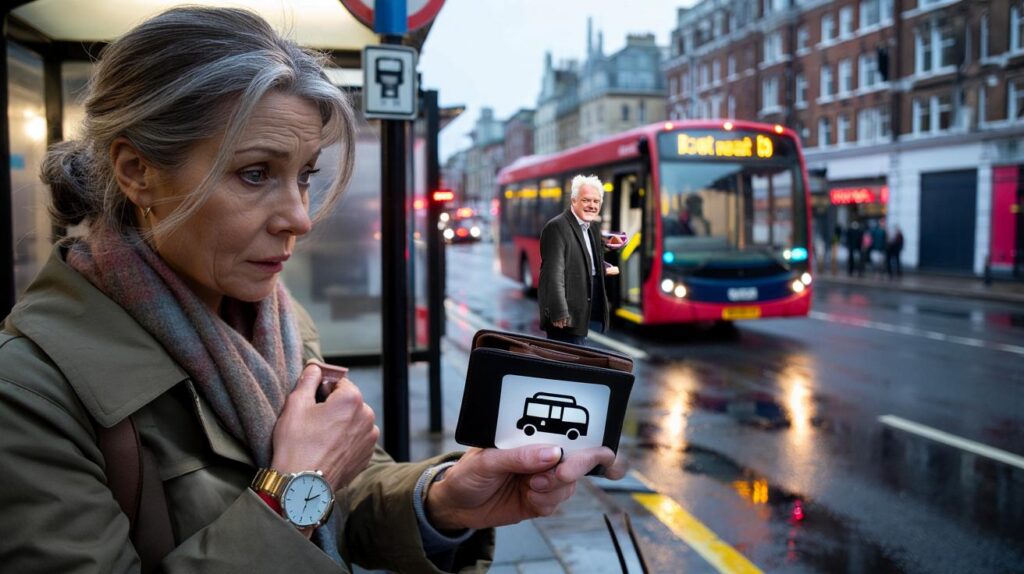
Free bus travel shapes daily life for older residents, but shifting rules, squeezed budgets and fierce campaigns are redrawing where the lines sit.
From April 2026, the age you qualify for a free bus pass in England will move in step with the State Pension timetable. That change will push many people’s eligibility back by up to a year, while local schemes and devolved nations keep different rules.
Eligibility for free bus travel shifts with pension age
The Department for Transport has confirmed England will align older people’s concessionary bus passes with the phased rise in State Pension age. The State Pension age will increase from 66 to 67 between 2026 and 2028, following the timetable set in the Pensions Act 2014. As a result, many people who expected a pass at 66 will need to wait until their 67th birthday.
From April 2026, most new applicants in England will become eligible for a free bus pass only when they reach the State Pension age that applies to them.
This change does not apply in the same way across the UK. Concessionary travel policy is devolved, so each nation runs a separate scheme with its own eligibility rules. England’s statutory scheme ties eligibility to the State Pension age; Scotland, Wales and Northern Ireland keep a lower threshold for older residents.
Who will wait longer and by how much
The shift matters most to people born from 6 March 1961 to 5 April 1977. Under the 2014 legislation, this group reaches State Pension age at 67. That means the free bus pass will also arrive at 67 for them if they live in England and rely on the national scheme.
Born between March 1961 and April 1977 in England? Your free pass age moves to 67, not 66.
- If you turn 66 before April 2026, you should still qualify at 66 under current rules.
- If you turn 66 after April 2026, you will likely qualify at 67, in line with your State Pension age.
- Local schemes may offer earlier eligibility, so check your council’s concessions.
The Department for Transport says it recognises the value of free passes for older people and points to wider bus service reforms aimed at reliability and affordability. The national concession costs around £700 million each year, so ministers frame any change in terms of sustainability and local choice.
What stays the same
England’s statutory offer, the English National Concessionary Travel Scheme (ENCTS), remains in place. When you qualify by age or disability, you get free off-peak travel on local buses in England.
ENCTS covers off-peak journeys: 9:30am to 11pm on weekdays, and all day at weekends and bank holidays.
You still apply through your local council or combined authority. The pass is valid on local buses within England; cross-border rules vary, and long-distance or coach services usually sit outside the scheme.
England versus the devolved nations
The age threshold differs around the UK. England is moving with the State Pension age. Other nations keep broader access for older residents.
| Nation | Minimum age for older person’s free bus travel | Notes |
|---|---|---|
| England | State Pension age (rising to 67 by 2028) | Off-peak only under ENCTS; some councils add local extras. |
| Scotland | 60 | National entitlement at 60; separate under-22 scheme exists. |
| Wales | 60 | National scheme for 60+ residents. |
| Northern Ireland | 60 (SmartPass) | 60+ SmartPass for free or discounted travel. |
These differences fuel a steady campaign in England for a return to age 60. A petition calling for 60+ free travel outside London has passed 100,000 signatures and awaits a debate. Supporters argue older drivers downsize their car use earlier, so public transport access should match that reality.
Local discretion: where you might still get help at 60
English councils can add discretionary concessions if they pay for them. Some areas have long-standing offers aimed at residents in their early sixties, with well-known examples in London and parts of Merseyside.
Councils can lower the age for local schemes, but they must fund any extra concessions from local budgets.
The government recently announced a £1 billion package for buses, with £712 million allocated to local authorities to support service improvements. Officials say councils can use a share of that support to extend local concessions, though many areas will prioritise reliability, frequency and driver recruitment.
The petition and the politics
The 100,000-signature petition demands parity with Scotland, Wales and Northern Ireland by setting England’s eligibility at 60. Ministers highlight the cost of the national scheme and say any statutory changes must protect financial stability. A parliamentary debate will test appetites across parties for a shift, and whether funding can match expectations while the State Pension age rises further to 68 in the 2040s.
How to check your entitlement now
- Confirm your State Pension age using your date of birth; this now drives the free bus pass age in England.
- Check your council’s website for local concessions. London’s 60+ Oyster and some city-region passes start earlier than ENCTS.
- If you have an eligible disability, apply under the disability criteria; those rules do not depend on age.
- Gather proof: identity, residence, date of birth, and a passport-style photo. Many councils accept online applications.
- Plan journeys around the off-peak rules to maximise free travel.
Worked example: born in June 1961
Imagine you live in England outside London and were born on 15 June 1961. You turn 67 in mid-2028. Under the 2014 timetable, your State Pension age is 67. Your free bus pass would start from your 67th birthday, not at 66. If you lived in London, you could use the 60+ Oyster from 60, funded locally, then move onto the older person’s pass when you reach the national eligibility age.
What this means for passengers and bus networks
Raising the qualifying age may delay free travel for hundreds of thousands of people over the next three years. Some will keep driving or pay fares for longer, which could change off-peak demand. Others might adjust travel times to make use of discounted tickets, day caps and multi-operator passes.
Operators and councils will watch ridership closely. Free travel for older people brings steady daytime patronage and social value. A later start may dent those numbers in the short term, but it could also push more funding into service reliability, which benefits every passenger.
Key details to keep in mind
If you qualify through disability, your entitlement is unchanged by the State Pension age rise.
- Most national coach services are excluded from ENCTS; always check the operator’s policy.
- Crossing local boundaries can be tricky: the pass covers local buses in England, but rules differ near borders.
- Keep your pass updated; expired cards can lead to refused boarding even if you still qualify.
Planning ahead and practical tips
Build a calendar reminder three months before you reach eligibility so you can apply in time. If you fall into the cohort moving to 67, map alternative savings: look for off-peak day tickets, weekly caps, and senior railcards where applicable. Ask your council about companion passes if you support a relative with mobility needs.
If your area offers a local 60+ scheme, weigh its conditions carefully. Some cards limit use to the local network or charge an administration fee, while others mirror national acceptance. A quick check of routes, time limits and renewal rules can save money and frustration.



Quick check: I turn 66 in March 2026—do I still qualify at 66, or will the new alignment make me wait until 67?
This feels like the goverment moving the goalposts to plug budget holes. Why not match Scotland and Wales at 60 if we’re serious about modal shift?