
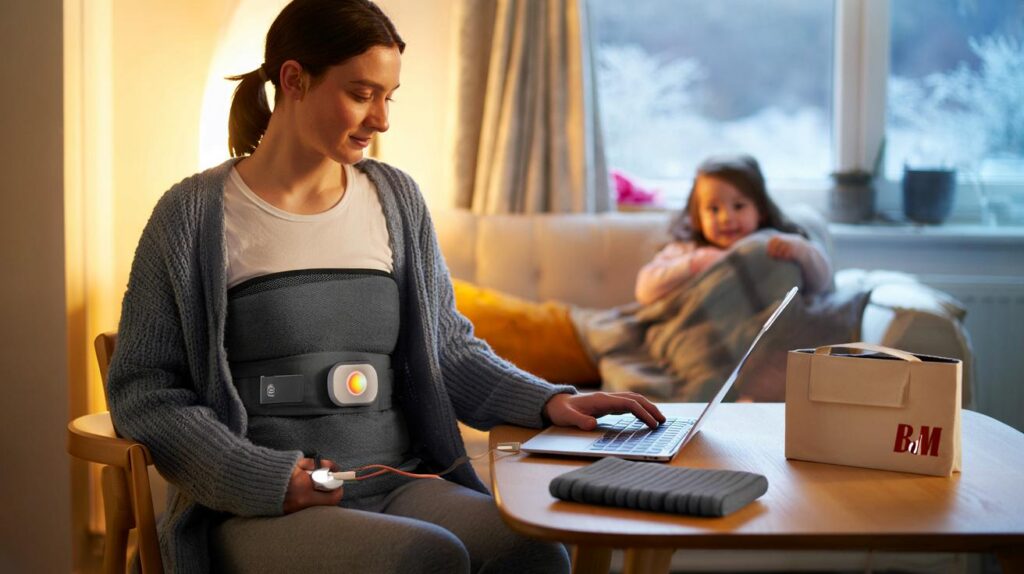
As the chill sets in, households are hunting cheap warmth hacks that spare the boiler while easing everyday aches and tensions.
One £10 buy from B&M, inspired by Martin Lewis’s call to “heat the human, not the home”, is emerging as a timely winter ally for anyone trying to dodge big heating bills without shivering at the desk or on the sofa.
The £10 waist wrap that targets your core
B&M’s heated waist wrap focuses warmth on the torso, where keeping the core cosy makes the whole body feel warmer. The wrap fastens with Velcro, so you can pull it snug over a T‑shirt or under a jumper and still move freely. A simple USB lead powers the pad. Plug it into a wall adaptor when you’re near a socket or slip a power bank into the front pocket and stay mobile. That same pocket does double duty as a hand warmer between emails or TV ad breaks.
The wrap offers three heat settings controlled by a single button. A small light changes colour to show the mode, making it easy to nudge the temperature up or down as the room cools or your activity changes. For many, that flexibility is the difference between reaching for the thermostat and staying off the boiler.
Costing £10 in B&M stores, the heated waist wrap brings targeted warmth, three settings and USB flexibility to everyday life.
People using the belt while working from home report they’ve delayed turning on the central heating. Warmth on the lower back and abdomen is not just about comfort either. Gentle heat can soothe back discomfort and period pain, which adds practical value on long sitting days.
How the settings and power work
Although exact wattage varies by model, most USB-powered warming pads run at low power. That suits long, steady use and pairs well with a modest power bank. The colour-coded button helps avoid guesswork and stops you overheating. Start low, settle in, then step up if you feel a draft.
- Adjustable fit with Velcro fastening to hug the core
- USB power for plug or power-bank use
- Three heat levels indicated by a coloured light
- Front pocket that can hold a power bank or warm your hands
- Soft-touch fabric that sits comfortably under layers
A £6 hot-water option without cables
Not a fan of cables at all? Greater Manchester-based Online Home Shop sells adjustable ribbed hot water bottle belts in multiple colours for £6. The belt’s fleece-like fabric sits softly against clothing, while the bottle rests at the waist to warm the core and ease niggling aches. It’s the same principle as the heated wrap, only using hot water instead of electricity. Fill from a kettle, secure the belt, and you’re set for reading, gaming or WFH stints.
A £6 ribbed hot water bottle belt offers wire-free warmth and a gentle, soothing heat right where you need it.
Choose this if you like the ritual of a hot water bottle, don’t want to think about charging a power bank, or prefer to avoid electrical heat entirely. Replace the water when it cools and keep the stopper tight. As with any hot water bottle, check for wear and use a cover to protect your skin.
Will this actually cut your heating use?
Heating a whole home is energy-intensive. Heating a person is not. That’s why Martin Lewis’s mantra resonates in colder months. Targeted heat lets you sit comfortably at a lower room temperature, which can reduce how often or how long you run the boiler.
The running costs can be small. Here’s an illustration to frame the decision. Your numbers will vary based on device power, water volume, energy tariffs and home size.
| Option | What it uses | Indicative cost | Assumptions |
|---|---|---|---|
| USB heated waist wrap | Low-watt electric heat | About 1–2p for 8 hours | Approx. 10W draw; 8h use; 22p/kWh electricity |
| Hot water bottle belt | Kettle energy to heat water | Roughly 7–9p per fill | 0.8–1.0L water; 22p/kWh; typical kettle efficiency |
| Central heating (gas) | Whole-room or whole-home heat | 50p–£1 per hour | Typical UK semi; 7–12 kWh/h; current price cap range |
Two patterns help most. First, wearing a heated belt means you can sit comfortably at 17–18°C rather than nudging the thermostat to 20–21°C. Second, you can delay the “first fire-up” of the day until later, then warm the house for a short, well-timed window in the evening. That blend keeps pipes safe while trimming hours of boiler use.
Safety, comfort and care
- Check the wrap’s fabric and cable for wear and follow the manufacturer’s instructions.
- Do not fall asleep with an electric heating pad switched on.
- If you use a power bank, store it in the pocket without sharp objects and avoid crushing it.
- With hot water bottles, never use boiling water straight from the kettle; let it cool slightly.
- Replace hot water bottles regularly and inspect the stopper and seams.
- People with reduced heat sensitivity or certain medical devices should seek advice before using heated wearables.
Who will benefit most
This kind of targeted warmth suits anyone spending long stints in one place. Home workers can stay comfy at the keyboard without heating every room. Students in shared houses can keep warm in their own space. Parents on the school run can pair a belt with layered clothing for frosty sidelines. People with lower back tightness or period cramps often find gentle heat calms muscles and reduces discomfort during daily tasks.
Stock, value and what to watch for
B&M’s heated waist wrap is on shelves now, so stock will vary by store. At £10, it is priced aggressively compared with many electric wearables. If you prefer wire-free heat or you’re buying for someone who won’t use a power bank, the £6 ribbed hot water bottle belt from Online Home Shop is a neat alternative.
When comparing options, look at comfort first. A belt that sits well and stays in place will be used more often, which is where the savings live. Check sizing and adjustability, fabric feel, and whether the pocket is large enough for your power bank. If you are often on the go, USB flexibility is useful. If you settle in for a couple of hours and don’t mind refilling, hot water wins on simplicity.
How to squeeze more warmth for less
Pair the belt with basics: a thermal top, warm socks and a blanket over your legs beat cranking the boiler. Close doors to keep draughts at bay and run the heating in short bursts to top up the air temperature when needed. If you own a smart thermostat, set a lower base temperature and schedule one or two brief boosts. These small tweaks, combined with a £10 wearable, can keep you comfortable through the coldest weeks without shocking your energy bill.
Heat the person, not every cubic metre of your home. That’s the simple shift that keeps bills in check.
If you want to gauge your personal savings, try a quick simulation. Track one week with the belt and a lower thermostat, then one week without. Note boiler run times on your smart meter or the thermostat’s app, plus how many kettle fills you used for a bottle. Even a reduction of one hour of heating a day across a cold month can add up to a meaningful cut in costs, while the day‑to‑day comfort of a warm core makes the routine easier to stick with.



Tried the B&M waist wrap today while WFH and it actually kept me toasty at 17°C — Martin Lewis was right! Saved me from cranking the boiler. Only wish the pocket was a tad bigger for my chunky powerbank. 🙂