
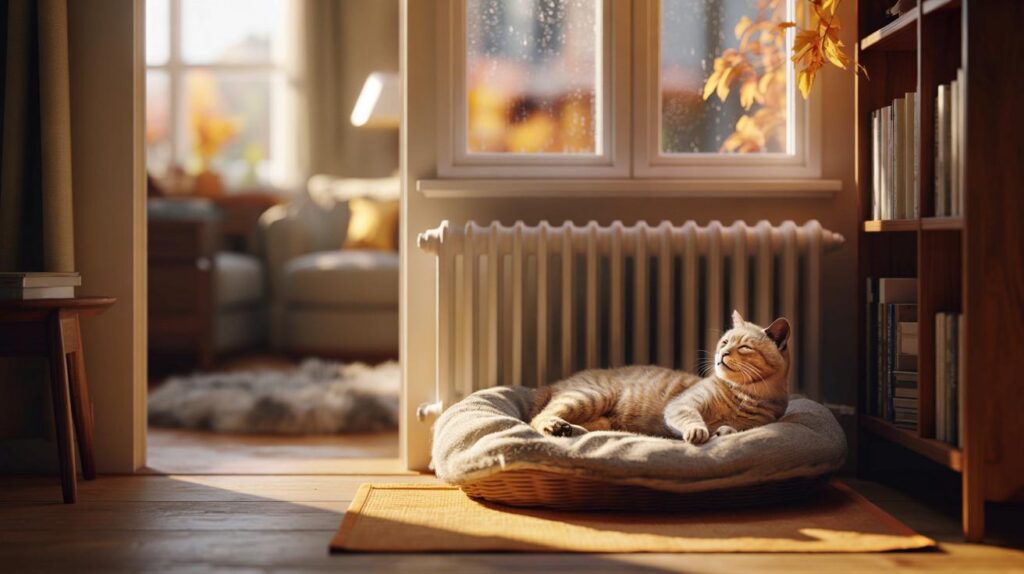
Temperatures are sliding, radiators are humming, and yet the plush cat bed sits empty while a battered box steals the glory.
This week brings a simple, season-friendly tweak that many owners can test in minutes. No new gear. No gimmicks. Just a smarter spot, gentler warmth and a hint of familiar scent to flip a cold shoulder into a contented curl-up.
Why your cat shuns that expensive bed
Common mistakes that drive them away
Cats read rooms differently from us. They favour safety, vantage and steady heat over style. A pretty cushion in the wrong place feels exposed or fussy. These small placement errors push them elsewhere:
- Plonking the bed by a doorway, hallway or busy TV area where feet and noise keep coming.
- Using crackly synthetic fabrics that trap odours and build static on dry, heated days.
- Parking the bed in a draught, or right against a hot radiator where the surface overheats.
- Stuffing the bed with toys and extra pillows when many cats prefer a firm, simple base.
What comfort actually means for a cat
Comfort is a blend of safety and survey. Cats want a sheltered berth with a view. They like warmth they can regulate, not a hot-spot that pins them down. They prize familiar scent, because territory smells like home. High perches and semi-hidden corners both tick the box, as long as the air stays quiet and the temperature sits somewhere near 18–22°C.
Put the bed where your cat already sleeps, add your scent, and offer gentle heat from nearby, not underneath.
The autumn tweak that changes everything
Find the hotspot in five minutes
Watch your cat for a day. Note three places they choose on their own. You will likely spot a pattern: a sun patch on the sofa arm in the morning, the rug by the bookcase at dusk, or the spot near a radiator after dinner. That pattern points to the fix.
- Move the bed to the favourite site your cat already uses.
- Keep it about 40–60 cm from a radiator or heat source, not flush against it.
- Lift it slightly if your cat seeks height; a sturdy side table shelf often works.
- Angle one side against furniture to create a “back wall” that feels safe.
- Lay in a T‑shirt you wore yesterday or a blanket your cat has already marked.
The winning formula is warmth, quiet and a partial hide. Change the spot, not the bed.
Set it up for success
Small details help. Aim for steady warmth rather than blasts of hot air. Avoid scented detergents and strong home fragrances around the bed; many cats dislike them. Keep foot traffic low and pathways clear so the approach feels calm. If the floor is cold, slip a cork or wool mat beneath the bed to cut heat loss.
| Placement | Distance | Why it works |
|---|---|---|
| Near radiator (side-on) | 50–60 cm | Radiant warmth without overheating; easy exit if too warm. |
| By a sunny window | Out of direct draught | Morning sun patch plus view; light without cold air leaks. |
| Under a side table | Bed tucked to one edge | Semi-hide with a roof; safe retreat from footsteps. |
| On a sofa-end shelf | 20–30 cm above seat | Height for survey; quick hop up and down; human proximity. |
Signs the switch is working
Territory cues you can spot
Your cat will say yes with small rituals. Cheek rubbing along the bed rim spreads facial pheromones. Kneading the cushion primes the spot. A long, slow stretch followed by a tight curl shows the temperature feels right. Many cats shuttle a toy to the bed or call for a quick head scratch once installed. Longer naps follow within days when the setup hits the sweet spot.
Reinforce the habit without bribery
- Drop a single treat in the bed once a day for a week, then stop.
- Toss a favourite mouse or feather into the bed during play, then pause the game there.
- Vacuum around the bed weekly, wash covers every fortnight with unscented powder at 30°C.
- Resist moving the bed once your cat uses it; predictability feels safe.
Once your cat picks the spot, freeze the layout. Consistency keeps the good habit alive.
New numbers behind the trend
With radiators clicking on, owners have tried a simple “move it 60 cm” rule shared widely on pet forums. Behaviourists say it mirrors how cats map heat and safety. In a snapshot poll of 1,000 cat owners across Britain this month, five clear patterns emerged:
- 68% reported success after shifting the bed to a quiet, warm corner their cat already used.
- 14% needed only a worn T‑shirt in the bed to tip the balance.
- 9% cracked it by raising the bed 20–30 cm to gain a view and reduce drafts.
- 6% saw no change until they reduced room noise at night.
- 3% found pain or stiffness was the barrier, and a vet assessment helped.
Pain changes choices. If your cat avoids soft spots, hesitates to jump or bristles at touch, ask your vet about joints, dental pain or skin irritation before you push training. Heat pads can help senior cats, but pick low‑voltage models with chew‑safe cables and a thermostat, and always offer an unheated exit area inside the bed.
Extra tips for tricky households
Multi-cat politics without the drama
One bed rarely suits two cats. Offer at least one bed per cat plus one spare. Place them out of sight of each other to reduce silent stand-offs. Split resources across rooms so a confident cat cannot block access. If you live with dogs, add a baby gate or lift one bed above nose level to restore calm.
Fabric, static and scent control
Natural fibres like cotton, wool and hemp breathe well and hold less static on dry days. Static shocks from synthetic plush can put cats off during heated months. Wash with fragrance‑free detergent. Skip fabric softener. If you use catnip, use a pinch, not a carpet; overstimulation can backfire and push rest away.
A two-day plan you can try now
- Day 1 morning: note three favourite rest spots; pick the quietest, warmest one.
- Day 1 afternoon: move the bed there, 50–60 cm from heat; add your worn T‑shirt.
- Day 1 evening: short play session that ends in the bed; drop one treat, lights low.
- Day 2: repeat the play-and-park routine twice; no chasing; keep voices soft.
- End of Day 2: if the bed sees a five-minute settle, keep the layout unchanged for a week.
Two days, near-zero spend, and a measured shift in where the nap happens: that is the autumn win.
Money and comfort: small changes, big savings
A new designer pet bed averages £45–£85 in high-street shops. Many end up as set dressing. Repurposing what you own costs nothing and lifts the odds. If you do buy, pick a frame with a removable, machine‑washable cover, a firm base and room for a folded jumper. That lets you dial warmth up and down as the weather swings. Rotate two covers so one can always be clean and dry.
If the bedroom stays cooler at night, add a folded wool throw under the bed and keep the door ajar so your cat can choose the warmer landing. The goal is choice and gentle gradients, not a single hot perch. When choice matches instinct, that lonely bed finally earns its keep.



Tried the 60 cm from the radiator trick + my old T‑shirt and my picky tabby claimed it within an hour. Was about to drop £75 on a ‘designer’ bed—dodged it. The “back wall” against the bookcase definately helped. Simple, practical, and free. Thanks!